
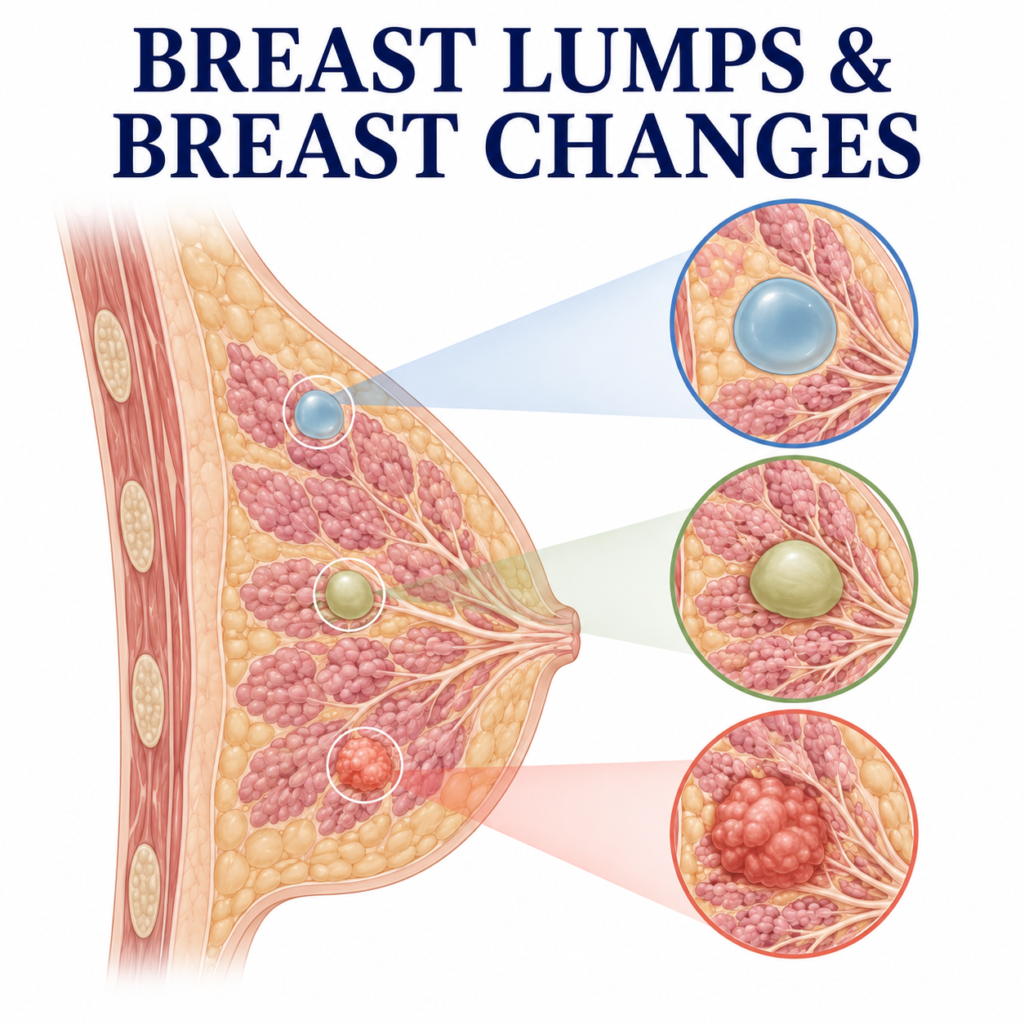
Breast Lumps and Breast Changes: What's Normal, What's Not, and When to See a Doctor
Discovering a breast lump or noticing a change in your breast can be frightening, but most breast changes are not caused by cancer. Hormonal fluctuations, cysts, fibroadenomas, infections, and normal aging are much more common causes. Still, every new breast lump or persistent breast change deserves medical evaluation to determine the cause.
This guide explains the different types of breast lumps and changes, common causes, warning signs, how they are evaluated, treatment options, and when to seek medical attention.
What Are Breast Lumps and Breast Changes?
Breast tissue naturally changes throughout life due to hormones, aging, pregnancy, breastfeeding, and menopause.
Breast changes may include:
- A new lump
- Thickened tissue
- Swelling
- Pain
- Skin changes
- Nipple discharge
- Changes in breast size or shape
Many of these changes are benign (noncancerous), but some require further evaluation.
Common Causes of Breast Lumps
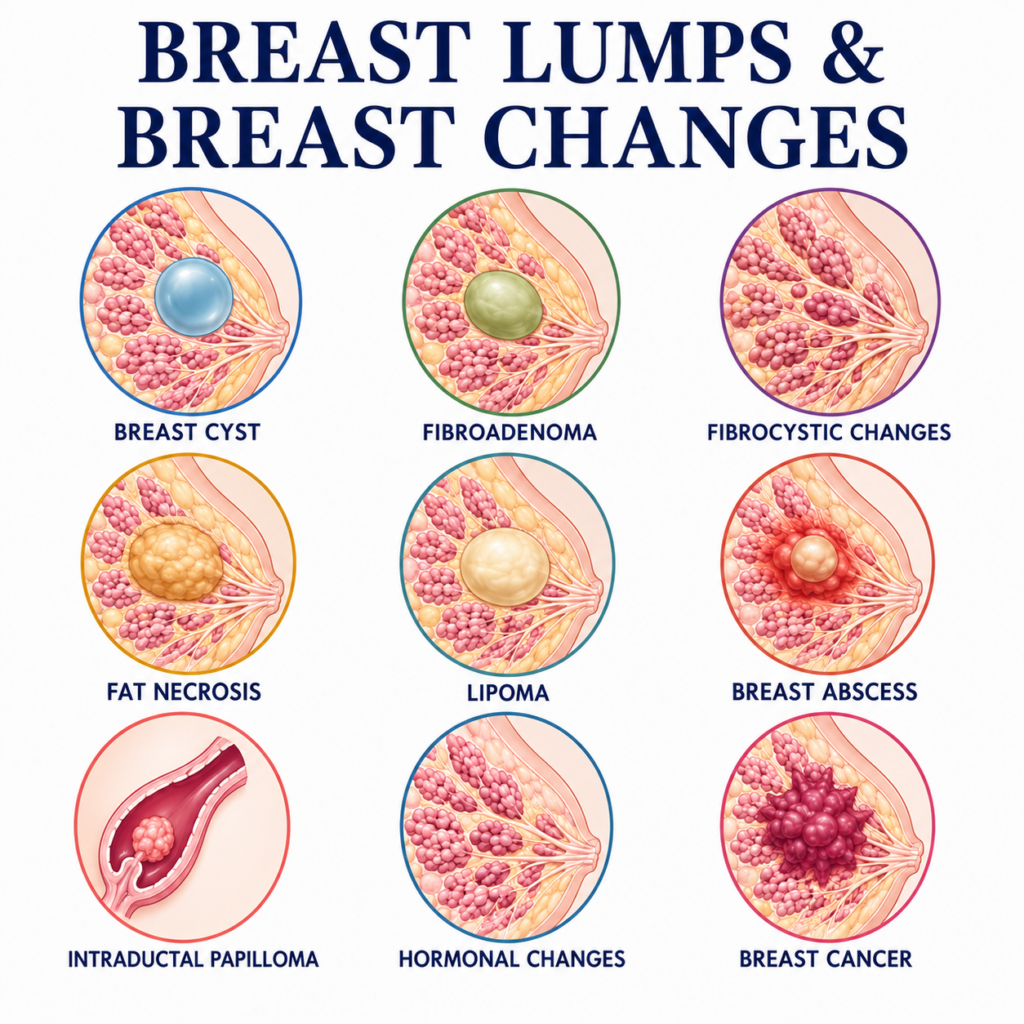
| Cause | Typical Features |
|---|---|
| Breast cyst | Smooth, fluid-filled lump that may be tender |
| Fibroadenoma | Firm, rubbery, movable lump; common in younger women |
| Fibrocystic changes | Generalized lumpiness that changes with the menstrual cycle |
| Fat necrosis | Lump after trauma or breast surgery |
| Lipoma | Soft, fatty, slow-growing lump |
| Breast abscess | Painful lump with redness, warmth, and possible fever |
| Intraductal papilloma | Small growth near a milk duct, may cause nipple discharge |
| Breast cancer | Often a hard, irregular, fixed lump; may occur without pain |
Add Your Heading Text Here
Common Breast Changes
| Change | Possible Causes |
| Breast swelling | Hormones, infection, pregnancy |
| Skin redness | Mastitis, abscess, inflammatory breast cancer |
| Skin dimpling | Scar tissue or breast cancer |
| Nipple inversion | Congenital or acquired conditions |
| Bloody nipple discharge | Intraductal papilloma or cancer |
| Breast asymmetry | Normal variation or underlying condition |
| Orange-peel skin (peau d’orange) | Inflammatory breast cancer (rare but urgent) |
Benign vs. Concerning Breast Lumps
![p;]75](https://guides.ecurahealth.com/wp-content/uploads/2026/06/p75-1024x683.png "Breast Lumps and Breast Changes")
| Usually Benign | More Concerning |
| Smooth | Irregular |
| Round or oval | Irregular shape |
| Moves easily | Fixed in place |
| Soft or rubbery | Hard |
| Changes with menstrual cycle | Persists or enlarges |
These characteristics are only general guidelines. Imaging or biopsy may be needed to determine the exact cause.
Breast Changes During Different Life Stages
| Life Stage | Common Changes |
| Puberty | Breast development, tenderness |
| Menstrual years | Cyclical swelling and lumpiness |
| Pregnancy | Enlargement, fullness, tenderness |
| Breastfeeding | Engorgement, plugged ducts, mastitis |
| Perimenopause | Hormonal fluctuations, cysts |
| Menopause | Fatty replacement of breast tissue |
Symptoms That Should Not Be Ignored
- New breast lump
- Lump that continues to grow
- Bloody nipple discharge
- New nipple inversion
- Skin dimpling
- Thickened skin
- Persistent breast swelling
- Orange-peel appearance
- Enlarged lymph nodes in the armpit
How Are Breast Lumps Evaluated?
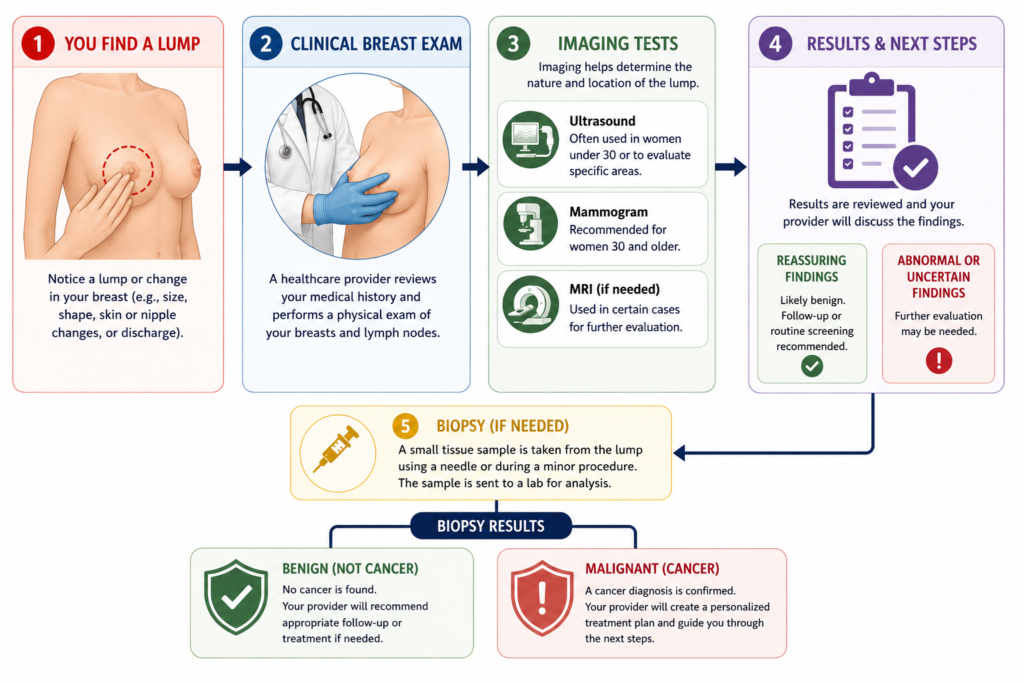
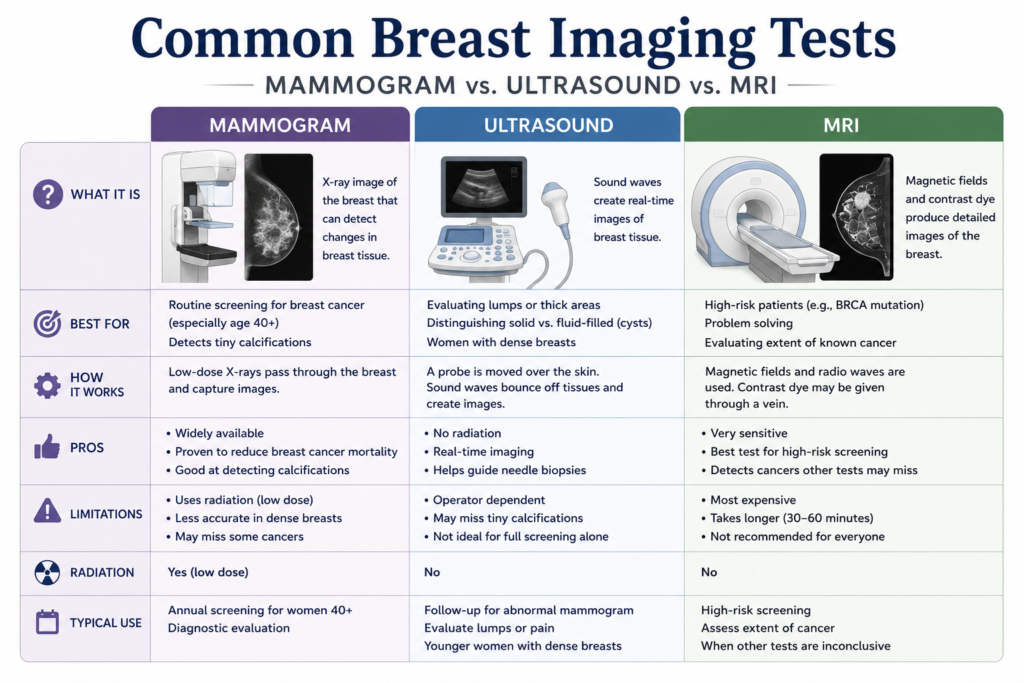
Your healthcare professional may perform:
- Clinical breast examination
- Diagnostic mammogram
- Breast ultrasound
- Breast MRI (selected cases)
- Needle biopsy if indicated
Treatment Options
Treatment depends entirely on the underlying cause.
| Diagnosis | Possible Treatment |
| Breast cyst | Observation or drainage if symptomatic |
| Fibroadenoma | Monitoring or surgical removal in selected cases |
| Mastitis | Antibiotics |
| Breast abscess | Drainage and antibiotics |
| Fat necrosis | Observation |
| Breast cancer | Surgery, radiation, chemotherapy, endocrine therapy, targeted therapy, or immunotherapy depending on stage and tumor characteristics |
When Should You Seek Medical Attention?
Seek prompt evaluation if you notice:
☐ A new breast lump
☐ Lump that continues growing
☐ Bloody nipple discharge
☐ New nipple inversion
☐ Skin dimpling
☐ Persistent redness
☐ Swelling of one breast
☐ Orange-peel skin
☐ Enlarged lymph nodes in the armpit
☐ Breast changes that persist after one menstrual cycle
What Should You Do Next?
Most breast lumps and breast changes are caused by benign conditions, but it is impossible to determine the cause based on appearance or feel alone. If you discover a new lump or notice persistent changes in your breasts, schedule an evaluation with your healthcare professional. Early assessment allows many conditions to be treated promptly and provides reassurance when findings are benign.
References
American College of Radiology (ACR). ACR Appropriateness Criteria®: Palpable Breast Masses.
https://acsearch.acr.org/docs/69495/Narrative/American College of Obstetricians and Gynecologists (ACOG). Benign Breast Disorders.
https://www.acog.org/womens-health/faqs/benign-breast-problems-and-conditionsNational Comprehensive Cancer Network (NCCN). NCCN Guidelines for Patients: Breast Cancer Screening and Diagnosis.
https://www.nccn.org/patients/guidelines/content/PDF/breast-screening-patient.pdfAmerican Cancer Society. Breast Lumps and Other Breast Changes.
https://www.cancer.org/cancer/risk-prevention/screening-tests-and-early-detection/signs-and-symptoms-of-cancer/breast-changes.htmlMayo Clinic. Breast Lump: Symptoms and Causes.
https://www.mayoclinic.org/diseases-conditions/breast-lumps/symptoms-causes/syc-20370284UpToDate. Evaluation of a Palpable Breast Mass in Women.
https://www.uptodate.com/contents/evaluation-of-a-palpable-breast-mass-in-womenAmerican Academy of Family Physicians (AAFP). Common Breast Problems.
https://www.aafp.org/pubs/afp/issues/2019/0415/p505.html