
Menstrual Cramps: Causes, Symptoms, Treatment, and When to Be Concerned
What Are Menstrual Cramps?
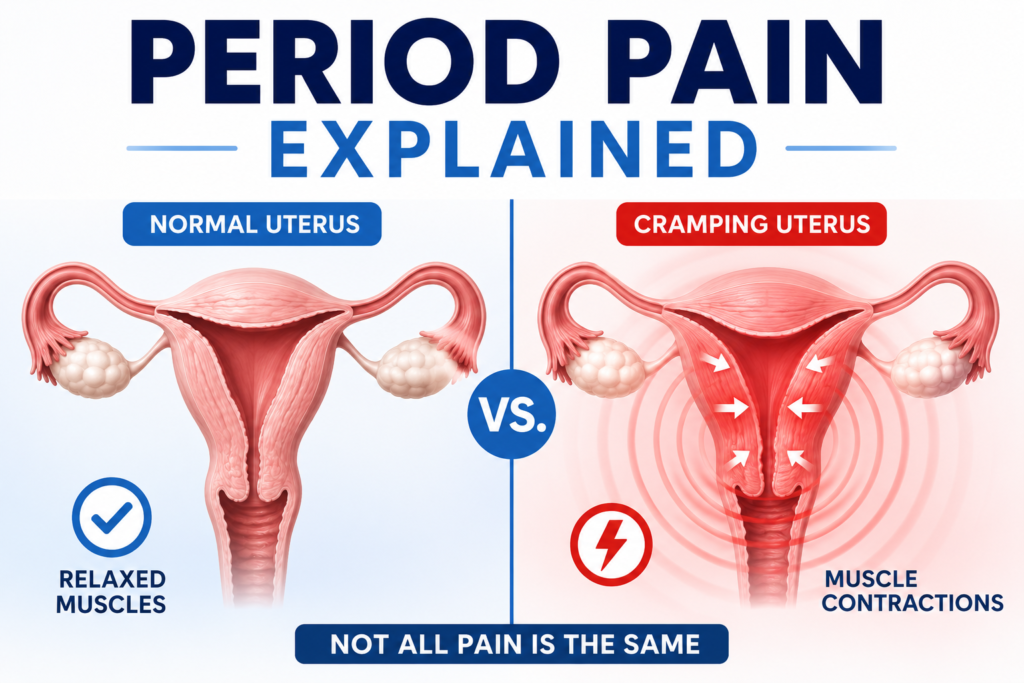
Menstrual cramps, also called dysmenorrhea, are pain or cramping in the lower abdomen that occurs before or during your menstrual period.
The pain happens because your uterus contracts to shed its lining each month.
Many people experience cramps during their reproductive years.
Why Do Menstrual Cramps Happen?
Your body produces chemicals called prostaglandins during your period.
These chemicals cause the muscles of the uterus to tighten. Stronger contractions can reduce blood flow to the uterus for a short time, leading to cramping and pain.
Higher prostaglandin levels are often linked to more severe cramps.
Common Symptoms
Menstrual cramps can feel different from person to person.
You may experience:
- Cramping or aching in the lower abdomen
- Pain that spreads to the lower back
- Pain that radiates into the thighs
- Nausea
- Diarrhea
- Headache
- Fatigue
Symptoms usually begin one to two days before your period or shortly after bleeding starts.
Menstrual Cramps at a Glance
| Mild Cramps | More Severe Cramps |
|---|---|
| Mild discomfort | Pain that interferes with daily activities |
| Improves with heat or medication | Pain that does not improve with treatment |
| Lasts 1 to 3 days | Lasts several days or worsens over time |
| Able to continue normal activities | Misses work, school, or other activities |
Did You Know?
Many people get the best pain relief when they start taking an NSAID at the first sign of their period or even a few hours before cramps begin, rather than waiting until the pain becomes severe.
What Helps Relieve Menstrual Cramps?
Several treatments can help reduce pain.
| Treatment | How It Helps |
| NSAIDs (ibuprofen, naproxen) | Reduce prostaglandins that cause cramps |
| Heating pad | Relaxes uterine muscles |
| Light exercise | Improves blood flow and may reduce pain |
| Staying hydrated | May help some people feel better |
| Adequate sleep | Supports recovery and overall well-being |
For many people, NSAIDs are the first choice because they treat the cause of menstrual cramps by lowering prostaglandin levels.
Always take NSAIDs exactly as directed. They should be taken with food if recommended to help reduce stomach irritation.
When Are Hormonal Birth Control Pills Used?
If NSAIDs do not provide enough relief, your healthcare provider may recommend hormonal birth control.
These medications can:
- Reduce menstrual cramps
- Make periods lighter
- Decrease prostaglandin production
- Reduce or stop ovulation
Not everyone needs hormonal birth control, and it may not be appropriate for everyone.
What Can Make Cramps Worse?
Some conditions can cause more painful periods.
These include:
- Endometriosis
- Adenomyosis
- Uterine fibroids
- Pelvic inflammatory disease (PID)
If your pain has become much worse than it used to be or started later in life, it is important to be evaluated.
Myths vs. Facts
| Myth | Fact |
| Severe menstrual pain is always normal. | Pain that prevents normal activities should be evaluated. |
| Menstrual cramps only affect the uterus. | Cramps can cause back pain, nausea, diarrhea, and headaches. |
| You should wait until the pain is severe before taking medication. | NSAIDs work best when started early. |
| Exercise makes cramps worse. | Light activity often helps reduce pain for many people. |
When Should You See a Healthcare Provider?
Schedule an appointment if you:
- Have severe pain that keeps you from work, school, or daily activities
- Develop painful periods after years of mild cramps
- Have very heavy menstrual bleeding
- Have pain that lasts well after your period ends
- Do not improve with NSAIDs
- Have fever, unusual vaginal discharge, or severe pelvic pain
These symptoms could suggest another medical condition that needs evaluation.
Frequently Asked Questions
Yes. Mild to moderate cramps are very common. However, severe pain that affects your daily life should not be ignored.
Are NSAIDs better than acetaminophen?
NSAIDs often work better because they reduce prostaglandins, which are responsible for causing menstrual cramps.
Can heat really help?
Yes. Heating pads or warm compresses can relax the uterine muscles and provide significant pain relief for many people.
Will menstrual cramps improve as I get older?
For many people, cramps become less severe with age or after pregnancy. However, everyone’s experience is different.
References
American College of Obstetricians and Gynecologists. Dysmenorrhea: Painful Periods
https://www.acog.org/womens-health/faqs/dysmenorrhea-painful-periods
Office on Women’s Health. Menstrual Cramps
https://www.womenshealth.gov/menstrual-cycle/period-problems/menstrual-cramps
American Academy of Family Physicians. Dysmenorrhea
https://familydoctor.org/condition/menstrual-cramps/
MSD Manual Consumer Version. Menstrual Cramps
https://www.msdmanuals.com/home/women-s-health-issues/menstrual-disorders/menstrual-cramps