
Seasonal Allergies (Allergic Rhinitis): Symptoms, Triggers, Treatment, and Prevention
If you find yourself sneezing, rubbing itchy eyes, or reaching for tissues every spring or fall, you’re not alone. Seasonal allergies, also known as seasonal allergic rhinitis or hay fever, affect millions of people each year. Although they are not usually dangerous, they can significantly impact sleep, work, school performance, and overall quality of life.
The good news is that seasonal allergies are highly manageable. Understanding what triggers your symptoms and knowing which treatments work best can help you spend more time enjoying the outdoors and less time battling congestion and itchy eyes.
What Are Seasonal Allergies?
Seasonal allergies occur when your immune system mistakenly identifies harmless airborne substances, such as pollen, as dangerous. This causes the immune system to release chemicals, including histamine, leading to inflammation of the nose, eyes, and airways.
Unlike a cold or the flu, seasonal allergies are not caused by a virus and are not contagious.
What Causes Seasonal Allergies?
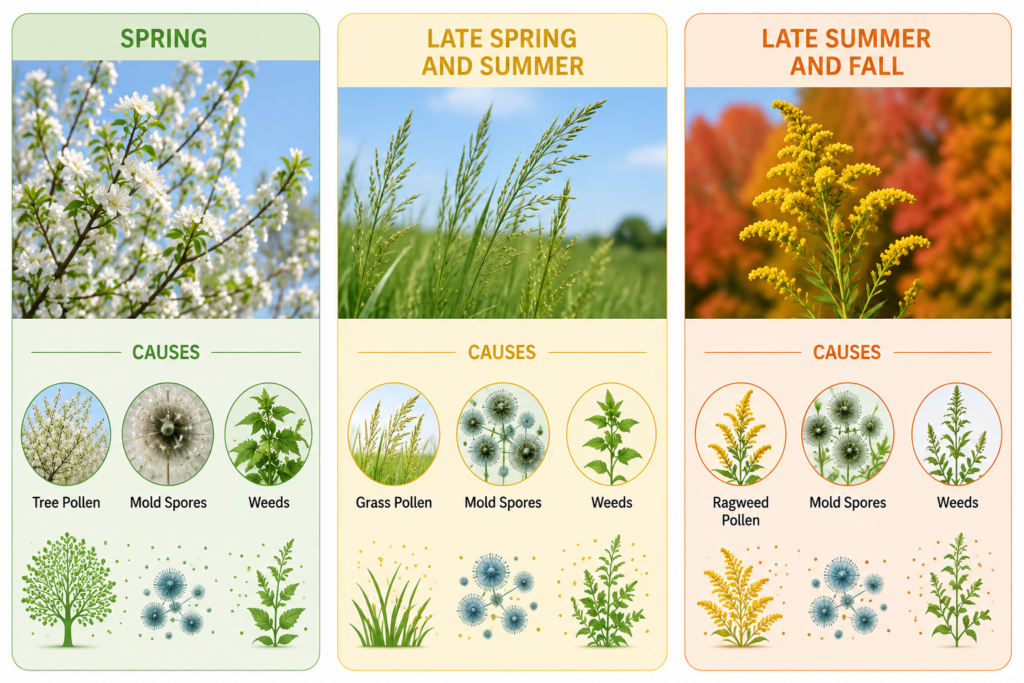
Image displays common causes of seasonal allergies
Different plants release pollen during different times of the year.
Common seasonal triggers include:
Spring
- Tree pollen
- Oak
- Birch
- Maple
- Cedar
- Elm
Late Spring and Summer
- Grass pollen
- Timothy grass
- Kentucky bluegrass
- Bermuda grass
Late Summer and Fall
- Weed pollen
- Ragweed
- Sagebrush
- Pigweed
The timing varies depending on where you live and local weather patterns.
Risk Factors
Seasonal allergies are more common in people who have:
- A family history of allergies
- Asthma
- Eczema
- Other allergic conditions
- Frequent exposure to pollen
- Early-life allergic disease
Common Symptoms
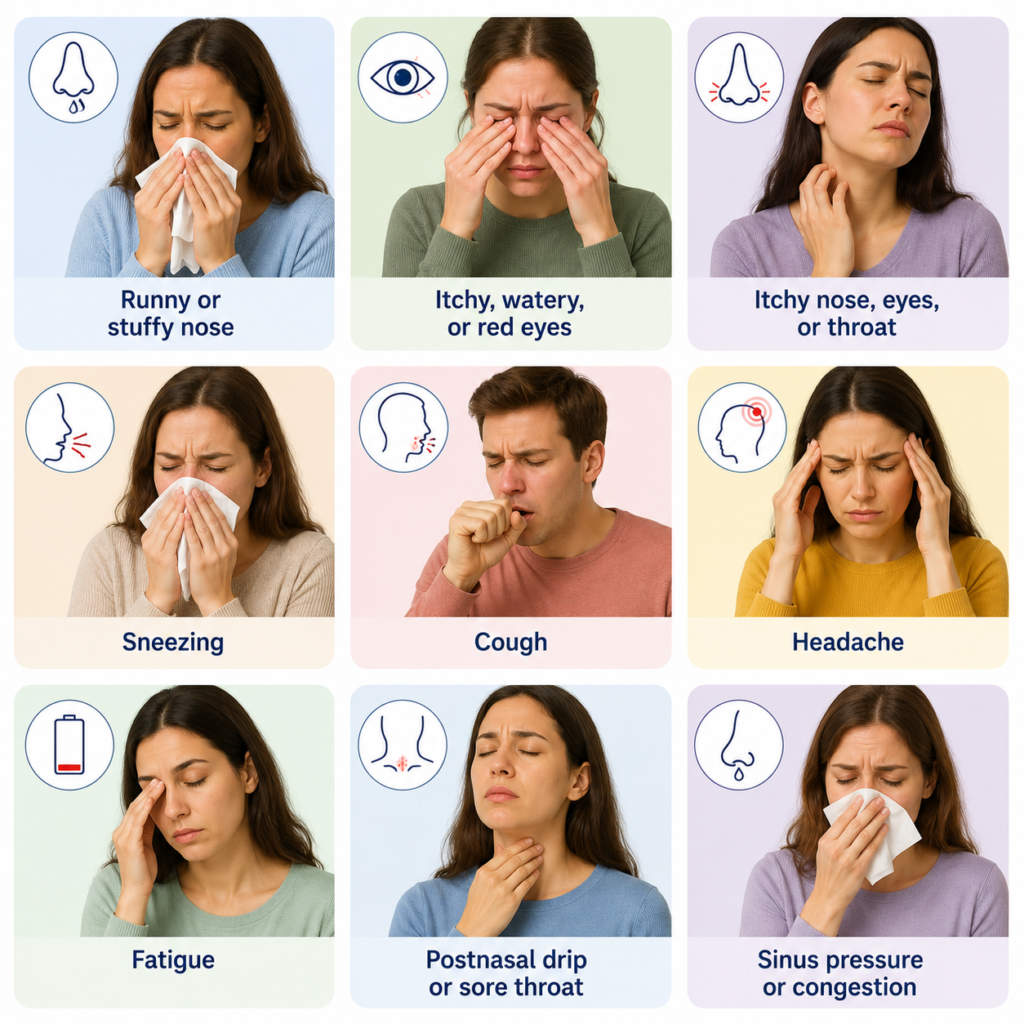
Image depicts common symptoms of seasonal allergies
Symptoms often begin shortly after exposure to pollen.
Common symptoms include:
- Sneezing
- Runny nose
- Stuffy nose
- Itchy nose
- Itchy eyes
- Red, watery eyes
- Itchy ears
- Scratchy throat
- Postnasal drip
- Cough
- Fatigue
- Reduced sense of smell
Many people notice symptoms worsen on dry, windy days when pollen counts are highest.
Symptoms That Are Less Likely to Be Allergies
The following symptoms are more suggestive of an infection:
- Fever
- Body aches
- Thick green mucus by itself
- Chills
- Severe sore throat
- Symptoms lasting only a few days before improving
How Seasonal Allergies Differ From a Cold
| Seasonal Allergies | Common Cold |
|---|---|
| Triggered by pollen | Triggered by viruses |
| Not contagious | Contagious |
| Itchy eyes common | Itchy eyes uncommon |
| Sneezing common | Sneezing possible |
| Fever rare | Sometimes present |
| Symptoms continue while exposed | Usually improves within 7–10 days |
| Clear nasal drainage common | Nasal drainage may become thicker over time |
How Allergies Affect the Body
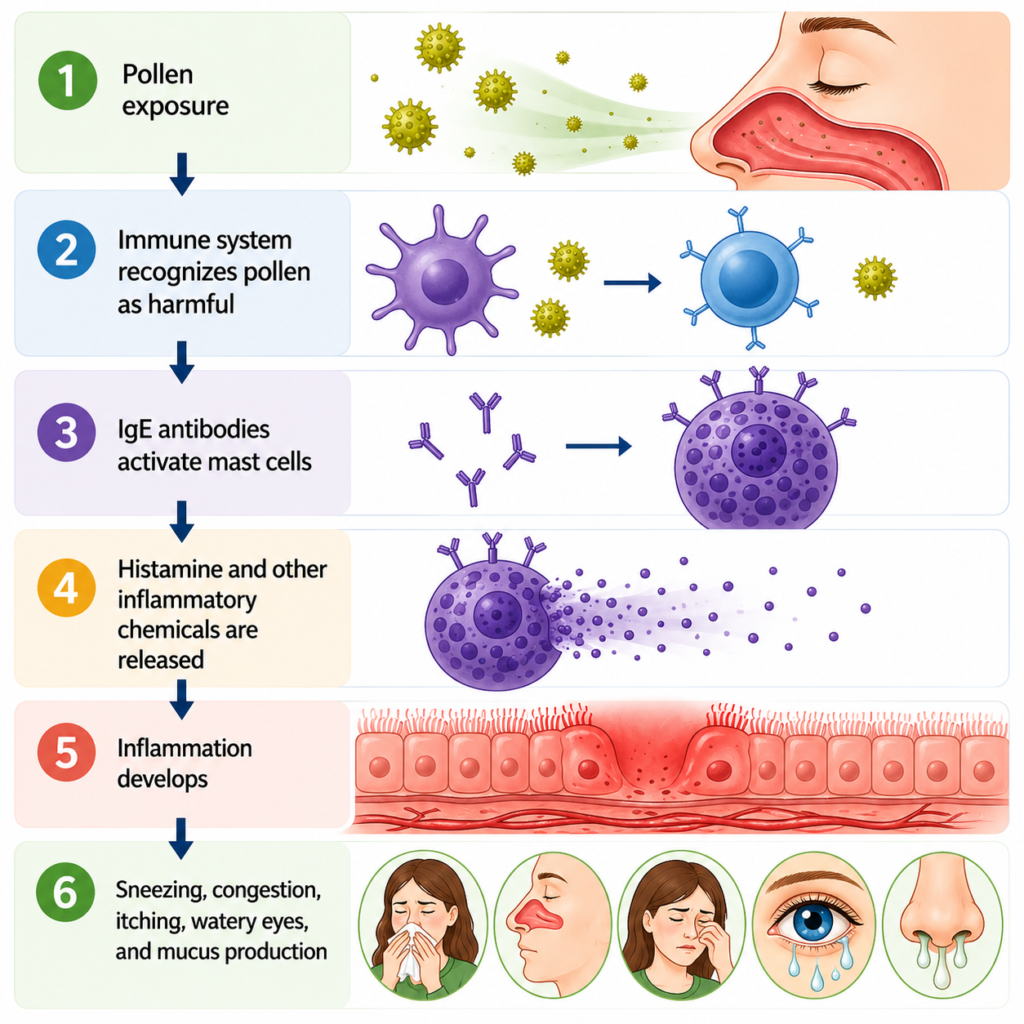
Image depicts a flow diagram of how allergies affect body
Possible Complications
Poorly controlled allergies may contribute to:
- Chronic sinus inflammation
- Sinus infections
- Sleep disruption
- Daytime fatigue
- Difficulty concentrating
- Reduced work or school performance
- Asthma flare-ups
- Ear fullness or pressure
How Seasonal Allergies Are Diagnosed
Many people can be diagnosed based on their symptoms and timing.
Your healthcare provider may ask:
- When symptoms occur
- Whether symptoms return every year
- Which environments worsen symptoms
- Family history of allergies
- Response to allergy medications
If the diagnosis is uncertain or symptoms are severe, allergy testing may be recommended.
Testing options include:
- Skin prick testing
- Blood testing for allergen-specific IgE
Treatment Options
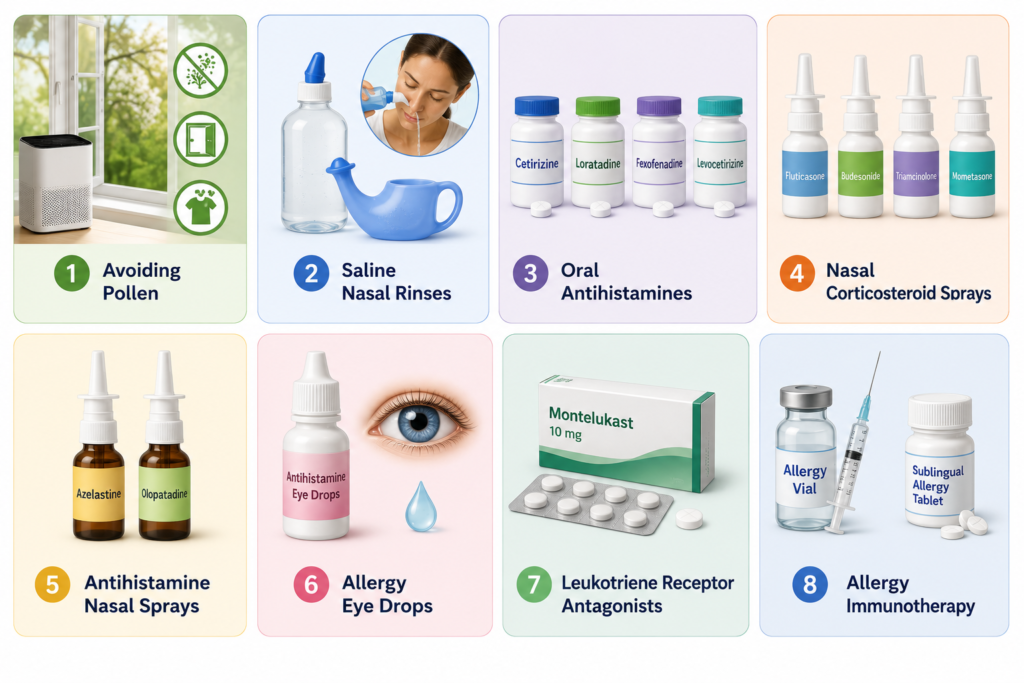
Image shows common treatment options for seasonal allergies
Treatment depends on symptom severity and frequency.
1. Avoiding Pollen
Reducing exposure is one of the most effective strategies.
Consider:
- Monitoring daily pollen counts
- Keeping windows closed during high-pollen days
- Using air conditioning
- Showering after spending time outdoors
- Changing clothes after outdoor activities
- Washing bedding regularly
- Wearing sunglasses outdoors
- Drying laundry indoors during peak pollen seasons
2. Saline Nasal Rinses
Saline irrigation helps remove pollen from the nasal passages.
It may reduce:
- Congestion
- Sneezing
- Postnasal drip
Always use sterile, distilled, or previously boiled water when preparing nasal rinses.
3. Oral Antihistamines
These medications reduce the effects of histamine.
Common options include:
- Cetirizine
- Loratadine
- Fexofenadine
- Levocetirizine
Some older antihistamines, such as diphenhydramine, can cause significant drowsiness and are generally not preferred for routine allergy management.
4. Nasal Corticosteroid Sprays
These are considered the most effective medication for persistent allergic rhinitis.
Examples include:
- Fluticasone
- Budesonide
- Triamcinolone
- Mometasone
These medications work best when used consistently rather than only when symptoms become severe.
5. Antihistamine Nasal Sprays
Prescription nasal antihistamines may provide rapid symptom relief.
Examples include:
- Azelastine
- Olopatadine
6. Allergy Eye Drops
For itchy, watery eyes, antihistamine eye drops may be helpful.
7. Leukotriene Receptor Antagonists
Medications such as montelukast may be considered in selected patients, particularly those who also have asthma. Because montelukast carries a boxed warning for potential serious neuropsychiatric side effects, it is generally reserved for patients who do not respond adequately to other therapies.
8. Allergy Immunotherapy
People with persistent symptoms despite medications may benefit from immunotherapy.
Options include:
- Allergy shots
- Sublingual allergy tablets for selected allergens
Treatment usually continues for several years and may reduce symptoms long term.
Lifestyle Tips
You can often reduce symptoms by:
- Tracking pollen forecasts
- Limiting outdoor activities during peak pollen times
- Wearing a hat and sunglasses outdoors
- Keeping pets clean after they spend time outside
- Vacuuming with a HEPA filter
- Using HEPA air filtration indoors
- Avoiding mowing the lawn during peak pollen seasons
When Should You See a Healthcare Provider?
Seek medical evaluation if:
- Symptoms interfere with daily life
- Symptoms persist despite treatment
- You frequently develop sinus infections
- You have wheezing or shortness of breath
- You are unsure whether symptoms are allergies or another condition
- You are considering allergy testing or immunotherapy
Seek Emergency Medical Care Immediately If
Call emergency services or seek immediate medical attention if you experience:
- Difficulty breathing
- Swelling of the lips, tongue, or throat
- Severe wheezing
- Chest pain
- Signs of anaphylaxis, such as widespread hives, trouble breathing, dizziness, or fainting after exposure to an allergen
Can seasonal allergies develop later in life?
Yes. Although allergies often begin during childhood or young adulthood, they can develop at any age.
Are seasonal allergies contagious?
No. Allergic rhinitis is caused by an immune response to allergens and cannot be spread from person to person.
Why are my allergies worse on windy days?
Wind carries pollen through the air, increasing exposure and often making symptoms more severe.
Does rain help allergies?
Often yes. Rain can temporarily wash pollen out of the air, although pollen levels may rise again after the rain stops.
Can allergies cause fatigue?
Yes. Chronic inflammation, poor sleep from nasal congestion, and some allergy medications can all contribute to fatigue.
Will I eventually outgrow seasonal allergies?
Some people experience improvement over time, while others continue to have symptoms throughout adulthood.
What Should You Do Next?
Seasonal allergies are one of the most common chronic health conditions, but they don’t have to control your daily life. Identifying your triggers, minimizing pollen exposure, and using the right medications consistently can greatly reduce symptoms. If over-the-counter treatments are not providing enough relief or your symptoms are affecting your quality of life, talk with your healthcare provider about additional treatment options, including allergy testing or immunotherapy.
References
American Academy of Allergy, Asthma & Immunology. Allergic Rhinitis (Hay Fever). https://www.aaaai.org/tools-for-the-public/conditions-library/allergies/allergic-rhinitis
American College of Allergy, Asthma & Immunology. Hay Fever (Allergic Rhinitis). https://acaai.org/allergies/allergic-conditions/hay-fever/
American Academy of Otolaryngology–Head and Neck Surgery Foundation. Clinical Practice Guideline: Allergic Rhinitis (Executive Summary). https://journals.sagepub.com/doi/10.1177/0194599814562166
Centers for Disease Control and Prevention. Allergies. https://www.cdc.gov/allergies/
UpToDate. Patient education: Allergic rhinitis (Beyond the Basics). https://www.uptodate.com/contents/allergic-rhinitis-beyond-the-basics
Wallace DV, Dykewicz MS, Oppenheimer J, et al. Rhinitis 2020: A Practice Parameter Update. Journal of Allergy and Clinical Immunology. https://www.jacionline.org/article/S0091-6749(20)30479-0/fulltext