
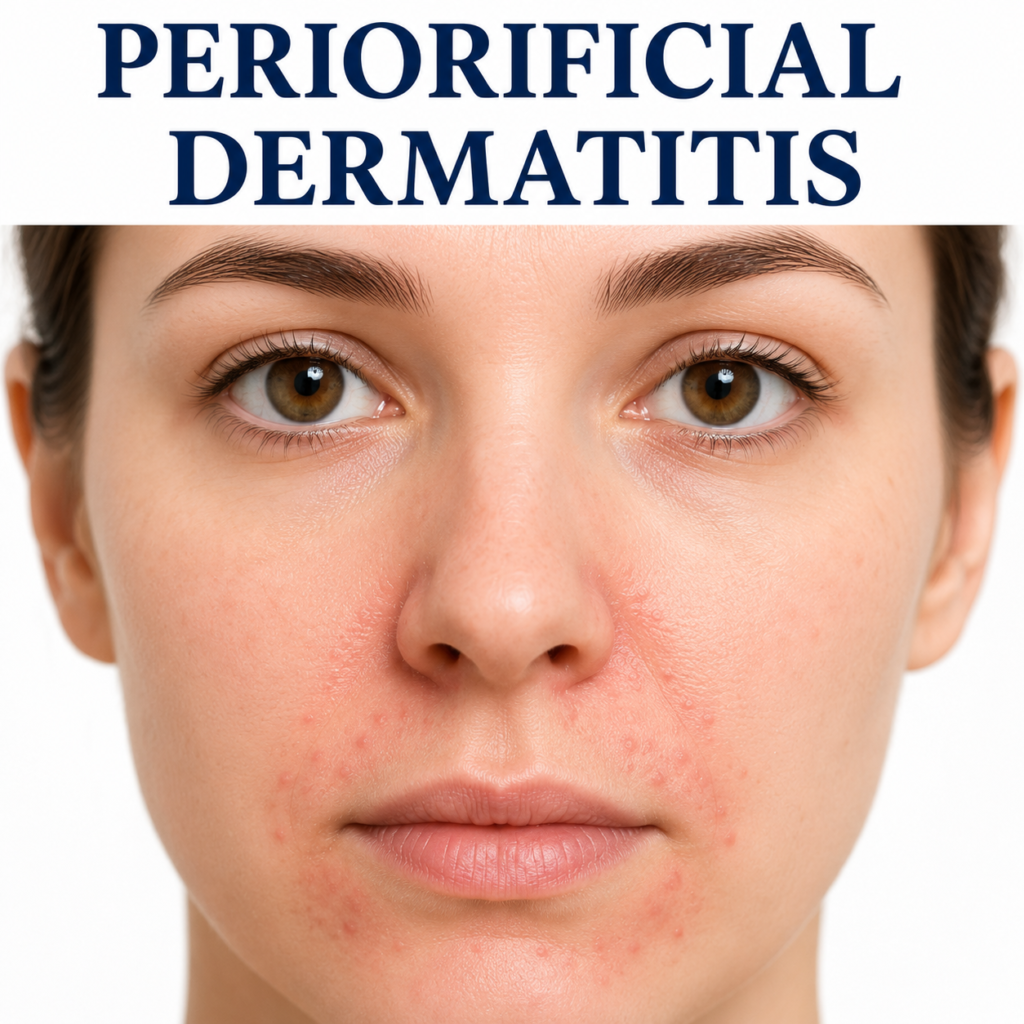
Periorificial Dermatitis: Symptoms, Causes, Treatment & Prevention
Periorificial dermatitis is a common inflammatory skin condition that most often affects the skin around the mouth but can also occur around the nose and eyes. It typically appears as clusters of small red bumps that may burn, sting, or feel dry. Because it resembles acne, rosacea, or eczema, it is often misdiagnosed.
Although the rash can be frustrating and sometimes slow to improve, periorificial dermatitis is treatable. The first step is identifying and removing the triggers, followed by appropriate skincare and, when necessary, prescription medications.
What Is Periorificial Dermatitis?
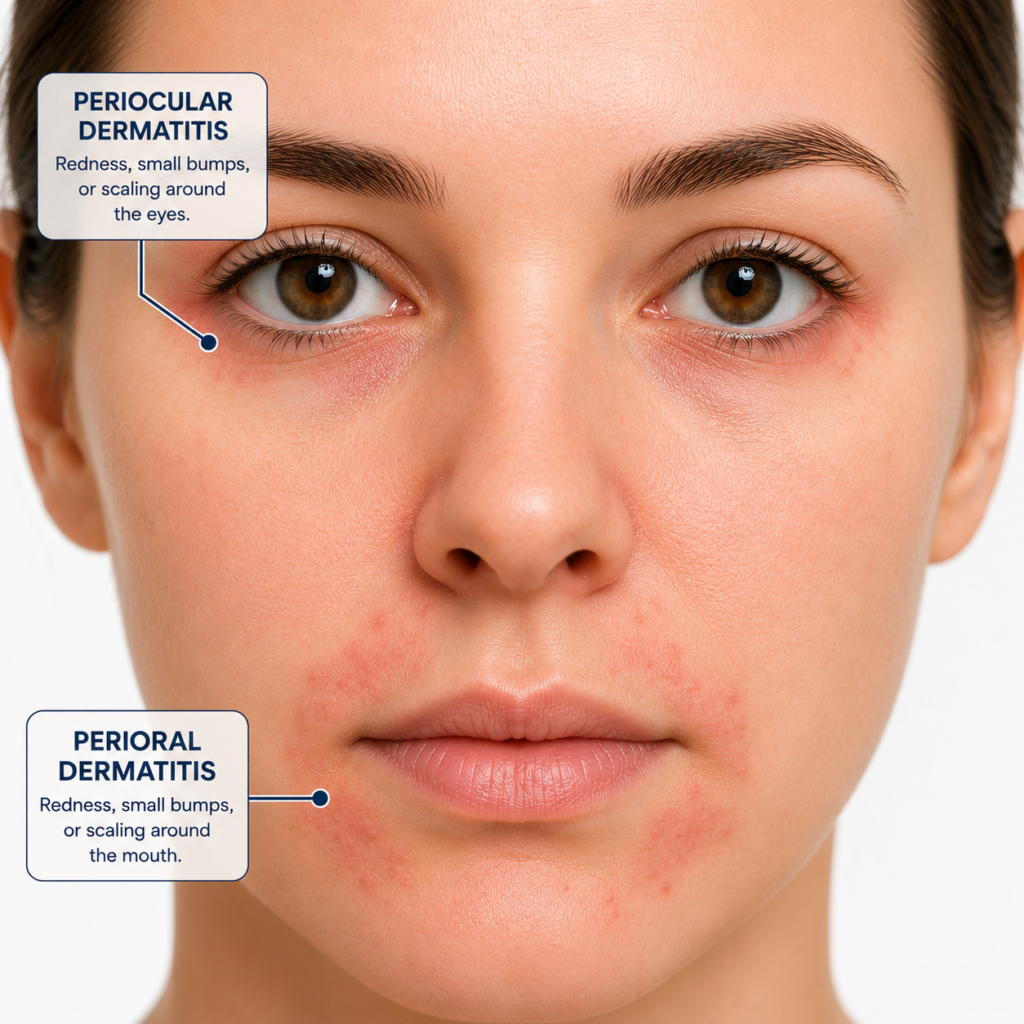
Image depicts typical location of periorificial acne
Periorificial dermatitis is a chronic inflammatory skin condition that develops around the natural openings (“orifices”) of the face.
The rash most commonly affects:
- Around the mouth (perioral dermatitis)
- Around the nose
- Around the eyes (periocular dermatitis)
The skin immediately next to the lips is often spared, creating a narrow ring of normal-appearing skin. This feature helps distinguish periorificial dermatitis from some other facial rashes.
What Does Periorificial Dermatitis Look Like?
The rash typically consists of:
- Small red or pink bumps
- Tiny pus-filled bumps (pustules)
- Dry, flaky skin
- Mild redness
- Rough skin texture
Unlike acne, blackheads and whiteheads are usually absent.
Common Symptoms
Symptoms may include:
- Small red bumps around the mouth, nose, or eyes
- Burning or stinging sensation
- Mild itching
- Dry, flaky skin
- Skin tightness
- Increased skin sensitivity
- Occasional tenderness
Many people notice that the rash worsens after applying moisturizers, makeup, or topical steroid creams.
Who Gets Periorificial Dermatitis?
Periorificial dermatitis can affect anyone but is most common in:
- Women between 20 and 45 years of age
- People with sensitive skin
- Individuals using topical corticosteroids
- People with a history of eczema or rosacea
Children can also develop the condition, particularly after using steroid creams or inhaled steroid medications.
What Causes Periorificial Dermatitis?
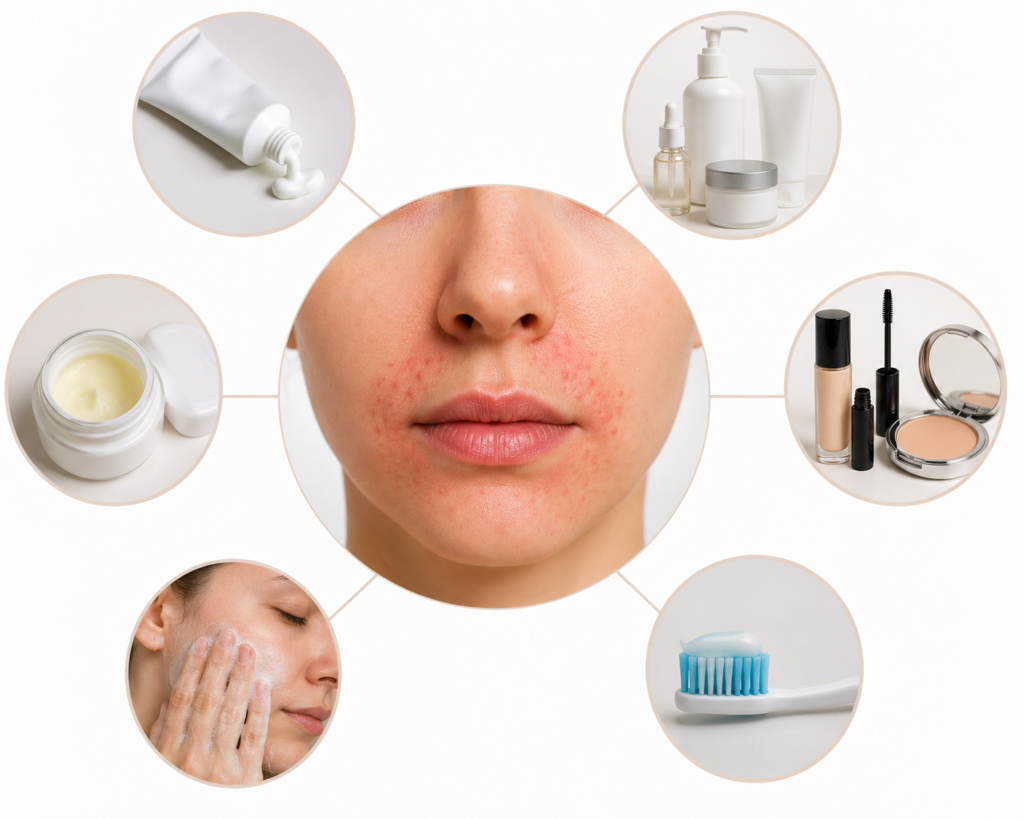
Image depicts various of treatment options for periorificial dermatitis
The exact cause is not fully understood, but the condition appears to result from inflammation of the skin barrier combined with environmental triggers.
Several factors can contribute to its development.
1. Topical Steroid Creams
One of the most common causes is the use of corticosteroid creams on the face.
Examples include:
- Hydrocortisone
- Triamcinolone
- Betamethasone
- Clobetasol
While steroid creams may initially improve the rash, symptoms often return and become worse when the medication is stopped.
Never discontinue a prescription steroid without first discussing it with your healthcare provider, especially if it has been used for a prolonged period.
2. Skin Care Products
Certain products may trigger or worsen the condition, including:
- Heavy moisturizers
- Thick facial creams
- Oily cosmetics
- Sunscreens that clog pores
- Fragranced skincare products
3. Toothpaste
Some people notice improvement after switching from fluoridated or heavily flavored toothpaste, although the evidence is mixed.
4. Other Possible Triggers
Additional triggers include:
- Hormonal changes
- Excessive face washing
- Harsh exfoliants
- Cosmetic procedures
- Wind and sun exposure
- Face masks worn for prolonged periods
- Inhaled corticosteroids that contact the skin around the mouth
Is Periorificial Dermatitis Contagious?
No.
Periorificial dermatitis is not contagious and cannot be spread through touching, kissing, or sharing personal items.
How Is It Diagnosed?
A healthcare provider can usually diagnose periorificial dermatitis by examining the skin.
Testing is rarely necessary but may occasionally include:
- Skin scraping to rule out fungal infection
- Bacterial culture if infection is suspected
- Skin biopsy in unusual cases
Periorificial Dermatitis vs Acne
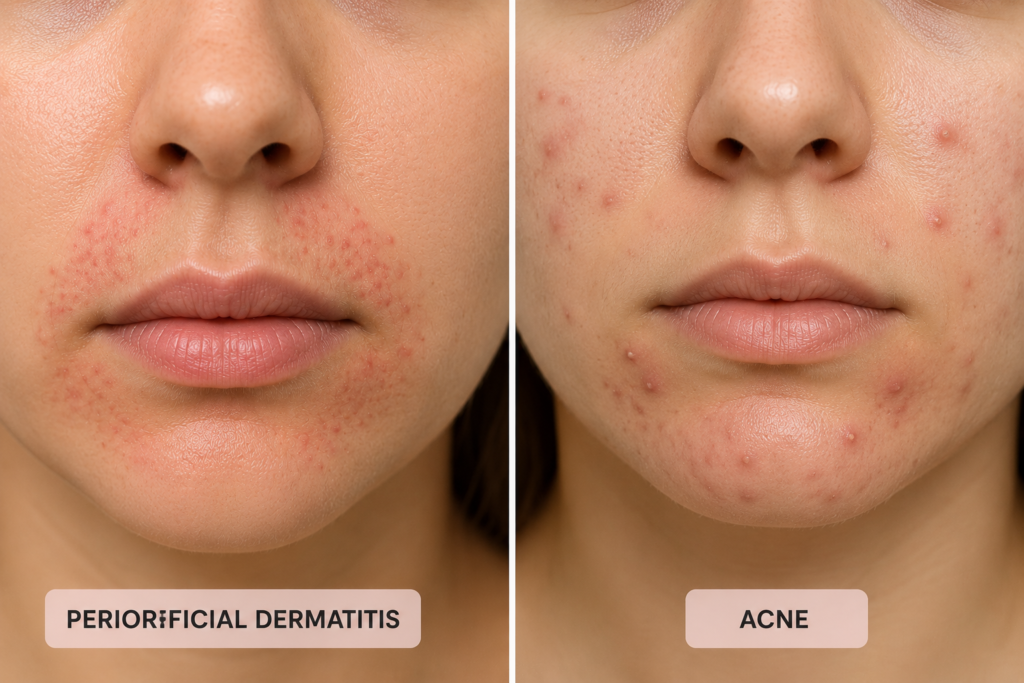
Image depicts comparison of periorificial dermatitis and acne
Although they may appear similar, there are important differences.
| Periorificial Dermatitis | Acne |
|---|---|
| Small, uniform bumps | Pimples of varying sizes |
| Around mouth, nose, or eyes | Anywhere on the face, chest, or back |
| Lips usually spared | No typical sparing pattern |
| No blackheads | Blackheads and whiteheads are common |
| Burning or stinging | Tenderness is more common than burning |
Treatment
Successful treatment usually involves removing triggers and reducing inflammation.
1.Stop Triggering Products
Your healthcare provider may recommend temporarily stopping:
- Steroid creams
- Heavy moisturizers
- Facial scrubs
- Fragranced skincare products
- Thick cosmetics
This “zero therapy” approach allows the skin barrier to recover.
It is common for the rash to temporarily worsen during the first one to two weeks after stopping topical steroids.
2. Gentle Skin Care
Choose:
- Mild fragrance-free cleanser
- Light non-comedogenic moisturizer if needed
- Mineral sunscreen designed for sensitive skin
Avoid over-cleansing or scrubbing the skin.
3. Topical Medications
Prescription creams or gels commonly include:
- Metronidazole
- Azelaic acid
- Clindamycin
- Erythromycin
- Pimecrolimus
- Tacrolimus
- Ivermectin (selected cases)
Improvement usually takes several weeks.
4. Oral Antibiotics
Moderate or severe cases often respond well to oral antibiotics.
Common options include:
- Doxycycline
- Minocycline
- Tetracycline
These medications reduce inflammation rather than simply treating infection.
Treatment typically lasts 6 to 12 weeks.
Pregnant individuals and young children may require alternative antibiotics.
Skin Care Tips During Recovery
While your skin heals:
✔ Wash with lukewarm water.
✔ Avoid harsh soaps.
✔ Skip facial scrubs.
✔ Avoid exfoliating acids unless instructed by your provider.
✔ Use gentle fragrance-free products.
✔ Avoid picking or squeezing bumps.
✔ Wear sunscreen every day.
How Long Does It Take to Heal?
Most people begin noticing improvement within:
- 2 to 4 weeks after starting treatment
Complete clearing often requires:
- 6 to 12 weeks
Severe cases may take several months.
Even after successful treatment, the condition can return if triggers are reintroduced.
Possible Complications
Most people recover without permanent damage.
Rare complications include:
- Persistent redness
- Recurring flare-ups
- Skin irritation from inappropriate treatments
- Emotional distress related to appearance
Unlike severe acne, permanent scarring is uncommon.
Can It Be Prevented?
Although not always preventable, you can lower your risk by:
- Avoiding unnecessary steroid creams on the face
- Using gentle skincare products
- Limiting harsh exfoliation
- Removing makeup before bed
- Choosing non-comedogenic cosmetics
- Following your prescribed treatment plan
When Should You Seek Medical Attention?
Schedule an evaluation if:
- The rash lasts more than two weeks.
- Over-the-counter acne treatments are making it worse.
- The rash spreads around the eyes.
- Your skin becomes painful or swollen.
- You develop pus, fever, or signs of infection.
- You are uncertain whether the rash is acne, rosacea, eczema, or another skin condition.
Seek urgent medical care if you develop significant swelling around the eyes, vision changes, or signs of a severe allergic reaction.
Key Takeaways
- Periorificial dermatitis is a common inflammatory facial rash that usually affects the skin around the mouth, nose, or eyes.
- Topical steroid creams are one of the most common triggers.
- The rash often resembles acne but usually lacks blackheads and whiteheads.
- Gentle skincare and prescription medications are often effective.
- Most people improve within several weeks, although complete clearing may take a few months.
What Should You Do Next?
If you have a persistent rash around your mouth, nose, or eyes that does not improve with over-the-counter acne treatments, schedule an evaluation with a healthcare provider. An accurate diagnosis can help you avoid treatments that may worsen the condition and start a plan that promotes healthy skin and long-term improvement.
References
American Academy of Dermatology. Perioral (Periorificial) Dermatitis: Diagnosis and Treatment. https://www.aad.org/public/diseases/a-z/perioral-dermatitis-overview
DermNet NZ. Periorificial Dermatitis. https://dermnetnz.org/topics/periorificial-dermatitis
StatPearls Publishing. Perioral Dermatitis. https://www.ncbi.nlm.nih.gov/books/NBK525968/