
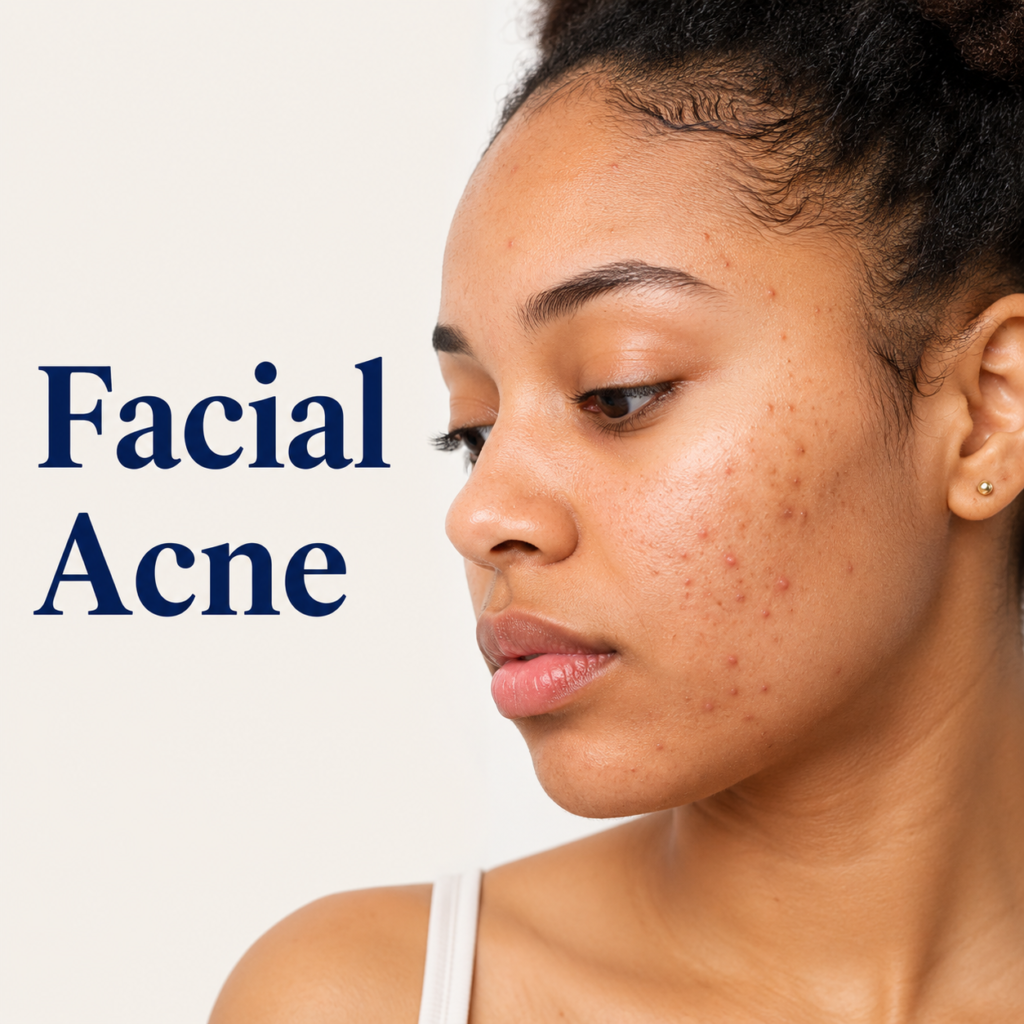
Acne: Causes, Types, Treatment, and Prevention
Acne is a common skin condition that develops when hair follicles become clogged with oil, dead skin cells, and bacteria. While acne often begins during puberty, it can affect people at any age, including adults. Breakouts can range from a few occasional pimples to widespread inflammation that may lead to permanent scarring.
Understanding what causes acne and choosing the right treatment can significantly improve both your skin and your confidence. Most people can achieve good control with consistent skin care, over-the-counter products, prescription medications, or a combination of treatments.
What Is Acne?
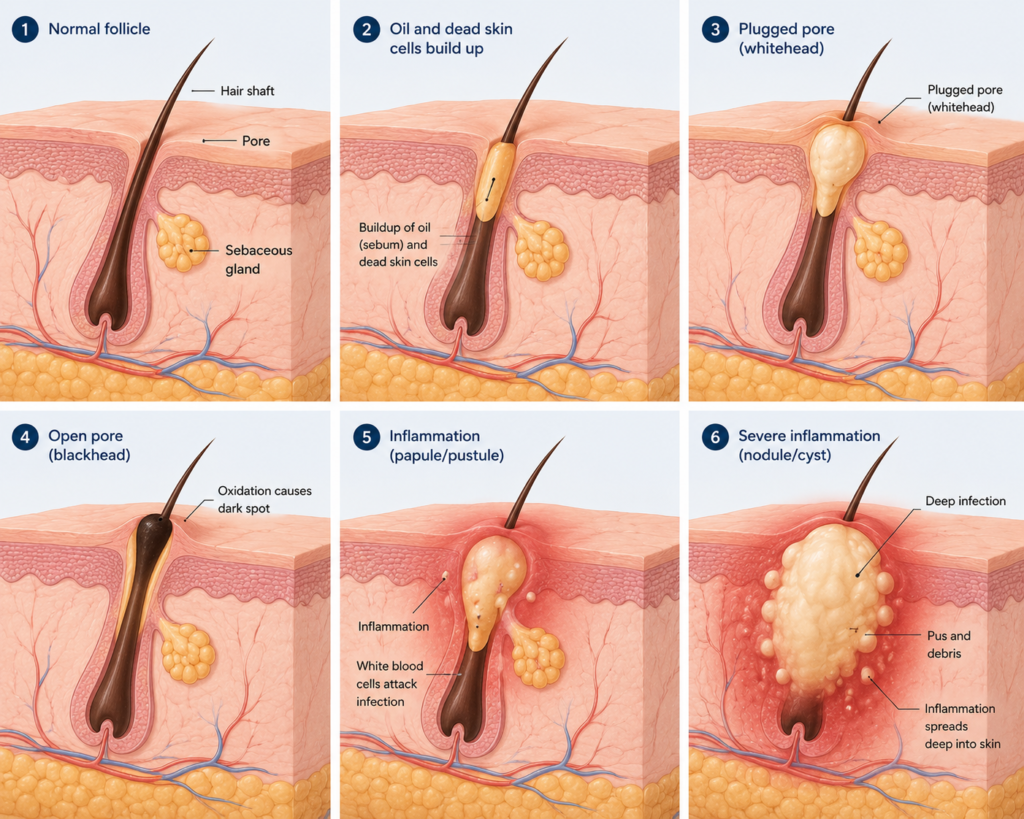
Image shows the formation of acne
Acne, also called acne vulgaris, is a chronic inflammatory condition of the hair follicles and oil (sebaceous) glands.
Normally, skin oil (sebum) travels through tiny openings called pores to keep the skin moisturized. When these pores become blocked, oil and dead skin cells become trapped. This creates an environment where bacteria naturally found on the skin, particularly Cutibacterium acnes, can multiply, leading to inflammation and pimples.
Acne is not contagious and is not caused by poor hygiene.
What Causes Acne?
Several factors work together to cause acne.
1. Excess Oil Production
Hormones stimulate the sebaceous glands to produce more oil. Excess oil increases the likelihood of clogged pores.
2. Clogged Hair Follicles
Dead skin cells can accumulate inside pores, trapping oil and forming the first stage of acne lesions.
3. Bacteria
Cutibacterium acnes is a normal skin bacterium that can multiply inside blocked pores, triggering inflammation.
4. Inflammation
The body’s immune response causes redness, swelling, tenderness, and pus formation.
5. Hormones
Hormonal changes increase oil production and are a common trigger for acne during:
• Puberty
• Menstrual cycles
• Pregnancy
• Menopause
• Polycystic ovary syndrome (PCOS)
Who Gets Acne?
Acne affects nearly everyone at some point.
It is especially common in:
• Teenagers
• Young adults
• Women with hormonal fluctuations
• People with oily skin
• Individuals with a family history of acne
• Those taking certain medications, including corticosteroids and lithium
Types of Acne Lesions
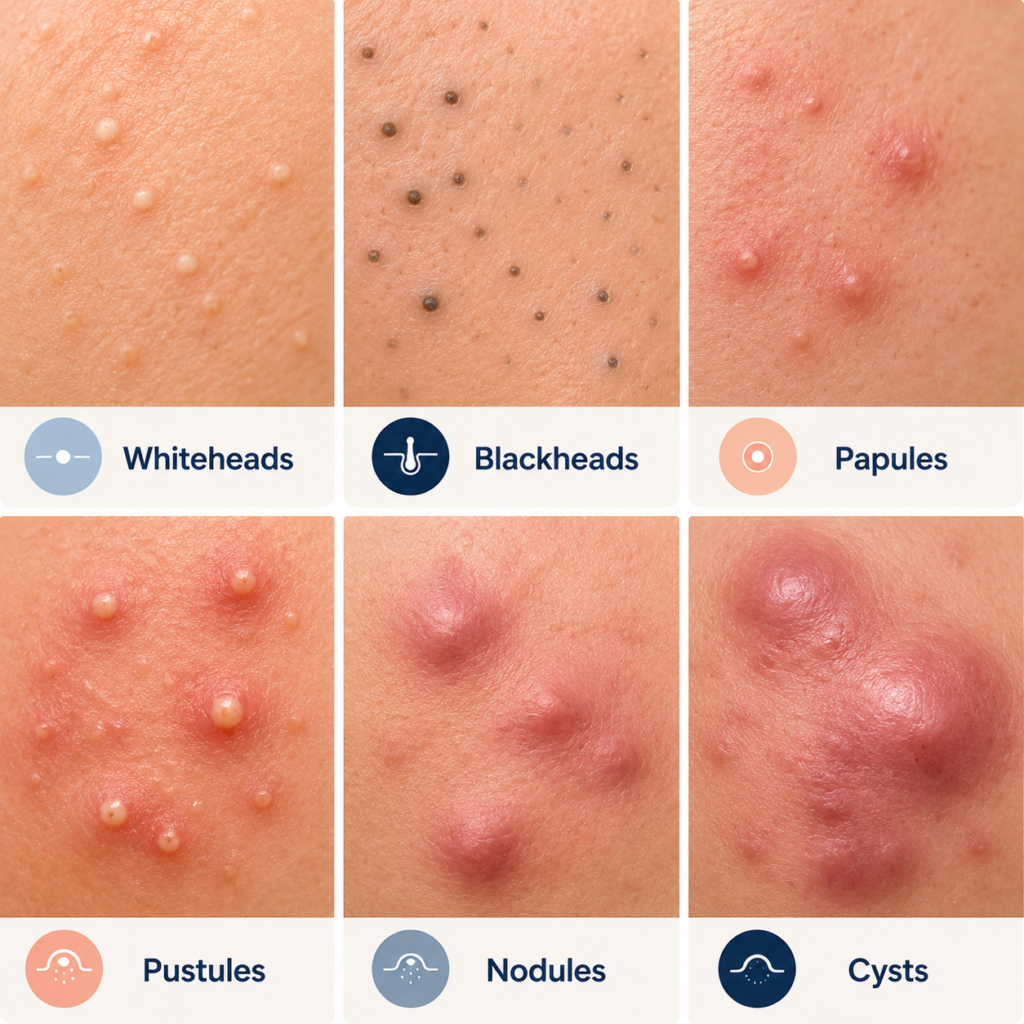
Image of different types of acne lesions
Understanding the different types of acne helps guide treatment.
1. Whiteheads (Closed Comedones)
Pores remain blocked beneath the skin surface, creating small white bumps.
2. Blackheads (Open Comedones)
The pore remains open, allowing the trapped material to oxidize and appear black. The color is caused by oxidation—not dirt.
3. Papules
Small, red, inflamed bumps without visible pus.
4. Pustules
Red pimples containing white or yellow pus.
5. Nodules
Large, painful lumps that develop deep beneath the skin.
6. Cysts
Large, inflamed, pus-filled lesions that often lead to scarring.
Where Does Acne Occur?
Acne commonly affects areas with many oil glands.
These include:
• Face
• Forehead
• Chin
• Nose
• Chest
• Upper back
• Shoulders
Acne Severity
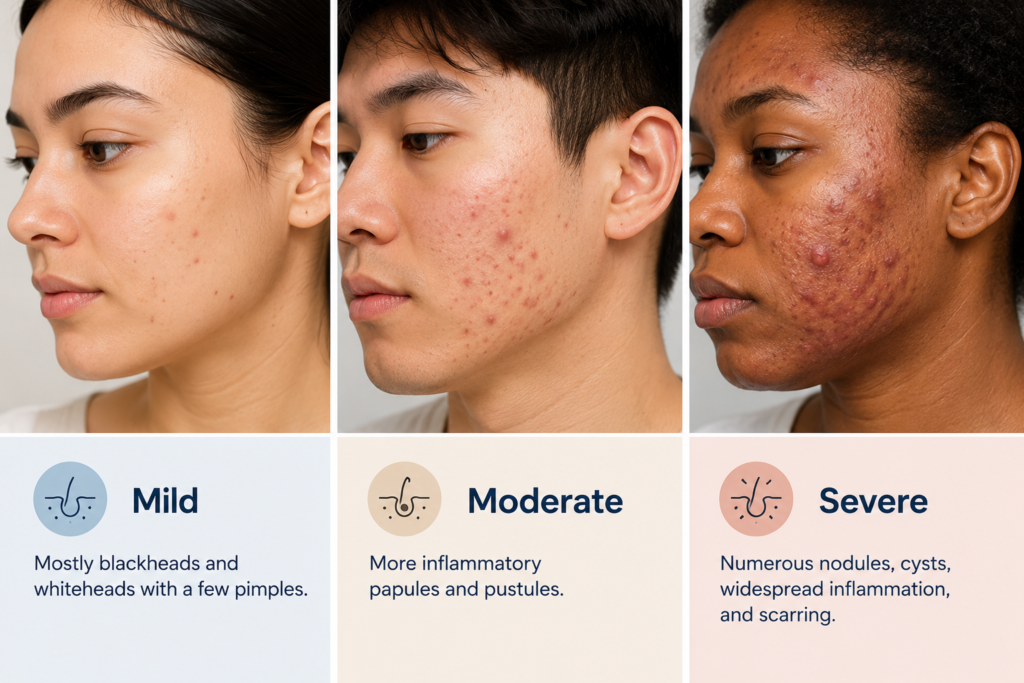
Image depicts the comparison of acne severity amongst different models
Healthcare providers often classify acne as:
Mild
Mostly blackheads and whiteheads with a few pimples.
Moderate
More inflammatory papules and pustules.
Severe
Numerous nodules, cysts, widespread inflammation, and scarring.
Common Acne Triggers
Certain factors may worsen acne.
These include:
• Hormonal changes
• Stress
• Sweating
• Tight clothing or sports equipment
• Oily cosmetics
• Picking or squeezing pimples
• Some medications
• High-glycemic foods in some individuals
Does Diet Cause Acne?
Diet alone does not cause acne, but research suggests that certain foods may worsen acne in some people.
Possible dietary contributors include:
• Sugary beverages
• White bread
• Processed carbohydrates
• Skim milk in some individuals
Eating a balanced diet rich in fruits, vegetables, whole grains, and lean proteins supports overall skin health.
Acne Myths
Myth: Acne is caused by dirty skin.
Fact: Acne is not caused by poor hygiene. Excessive washing can actually irritate the skin.
Myth: Chocolate always causes acne.
Fact: No single food has been proven to cause acne in everyone.
Myth: Tanning clears acne.
Fact: Sun exposure may temporarily reduce redness but often worsens skin damage and can increase post-inflammatory pigmentation.
Myth: Popping pimples helps them heal faster.
Fact: Picking or squeezing acne increases the risk of infection, scarring, and dark spots.
How Is Acne Diagnosed?
Acne is usually diagnosed during a skin examination.
Laboratory testing is generally unnecessary unless hormonal disorders are suspected.
Women with irregular periods, excessive facial hair, or other signs of hormone imbalance may require additional evaluation.
Treatment
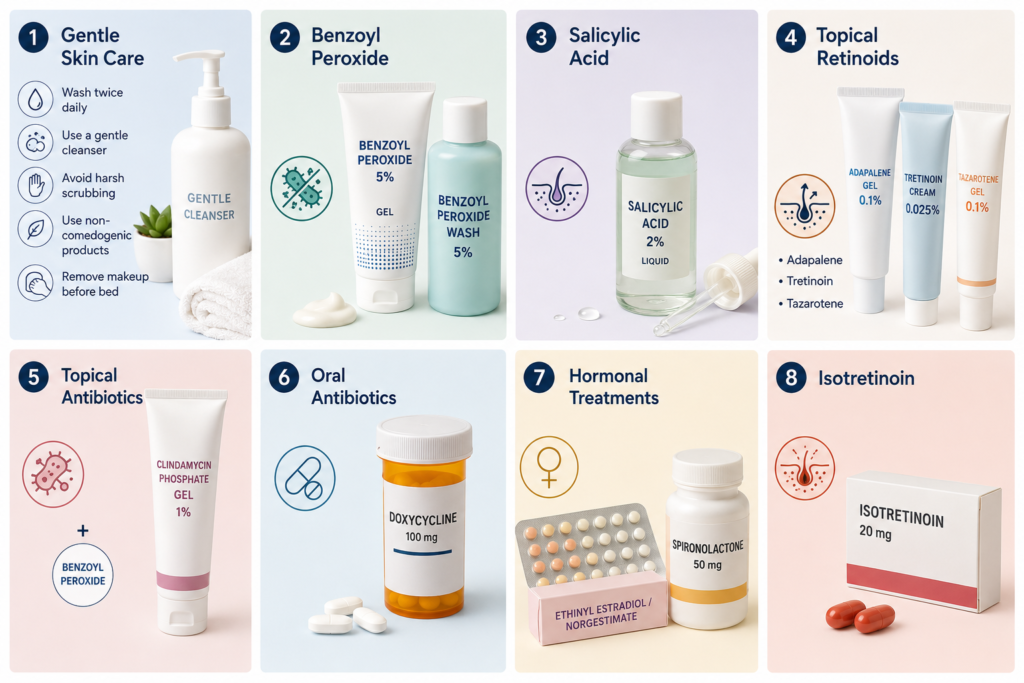
Image shows various of treatment options for acne
Treatment depends on acne severity.
Improvement often takes 6 to 12 weeks, so consistency is important.
1. Gentle Skin Care
Basic skin care is an essential part of acne treatment.
Recommendations include:
• Wash twice daily
• Use a gentle cleanser
• Avoid harsh scrubbing
• Use non-comedogenic skin care products
• Remove makeup before bed
2. Benzoyl Peroxide
Helps reduce bacteria and inflammation.
Available in washes, gels, and creams.
3. Salicylic Acid
Helps unclog pores and reduce blackheads and whiteheads.
4. Topical Retinoids
Examples include:
• Adapalene
• Tretinoin
• Tazarotene
These medications help prevent clogged pores and reduce inflammation.
5. Topical Antibiotics
Prescription medications such as clindamycin reduce acne-causing bacteria.
They are usually combined with benzoyl peroxide to reduce antibiotic resistance.
6. Oral Antibiotics
Moderate to severe inflammatory acne may require oral antibiotics for a limited period.
7. Hormonal Treatments
Some women benefit from:
• Combination birth control pills
• Spironolactone
These treatments reduce hormone-related oil production.
8. Isotretinoin
Severe cystic acne that does not respond to other treatments may require isotretinoin.
Because it can cause serious birth defects, pregnancy prevention and regular monitoring are required during treatment.
Acne Scars
Inflammation can damage deeper layers of the skin.
Types of acne scars include:
• Ice pick scars
• Boxcar scars
• Rolling scars
• Raised (hypertrophic) scars
Early treatment reduces the risk of permanent scarring.
Daily Skin Care Tips
Healthy habits can improve acne control.
• Wash gently twice daily
• Moisturize with non-comedogenic products
• Wear sunscreen every day
• Avoid picking pimples
• Clean makeup brushes regularly
• Shower after heavy sweating
• Keep hair products away from the fac
When Should You See a Healthcare Provider?
Seek medical evaluation if:
• Acne is painful or severe
• You develop nodules or cysts
• Acne leaves scars
• Over-the-counter treatments have not helped after 2 to 3 months
• Breakouts are affecting your mental health or self-esteem
• You suspect a hormonal cause
Key Takeaways
• Acne develops when pores become clogged with oil, dead skin cells, and bacteria.
• Hormones, genetics, inflammation, and excess oil production all contribute.
• Acne can affect teenagers and adults.
• Treatment may include gentle skin care, benzoyl peroxide, retinoids, antibiotics, hormonal therapy, or isotretinoin.
• Improvement usually takes several weeks, so consistency is important.
• Early treatment helps prevent permanent acne scars.
What Should You Do Next?
If your acne is persistent, painful, causing scars, or affecting your confidence, schedule an evaluation with your healthcare provider or a dermatologist. A personalized treatment plan can improve your skin and reduce the risk of long-term scarring. Even if over-the-counter products have not worked, prescription treatments are available that can effectively manage most types of acne.
References
American Academy of Dermatology. Acne: Diagnosis and Treatment.
https://www.aad.org/public/diseases/acne/derm-treat/treat
American Academy of Dermatology. What Causes Acne?
https://www.aad.org/public/diseases/acne/causes/acne-causes
Mayo Clinic. Acne: Symptoms and Causes.
https://www.mayoclinic.org/diseases-conditions/acne/symptoms-causes/syc-20368047
Mayo Clinic. Acne: Diagnosis and Treatment.
https://www.mayoclinic.org/diseases-conditions/acne/diagnosis-treatment/drc-20368048