
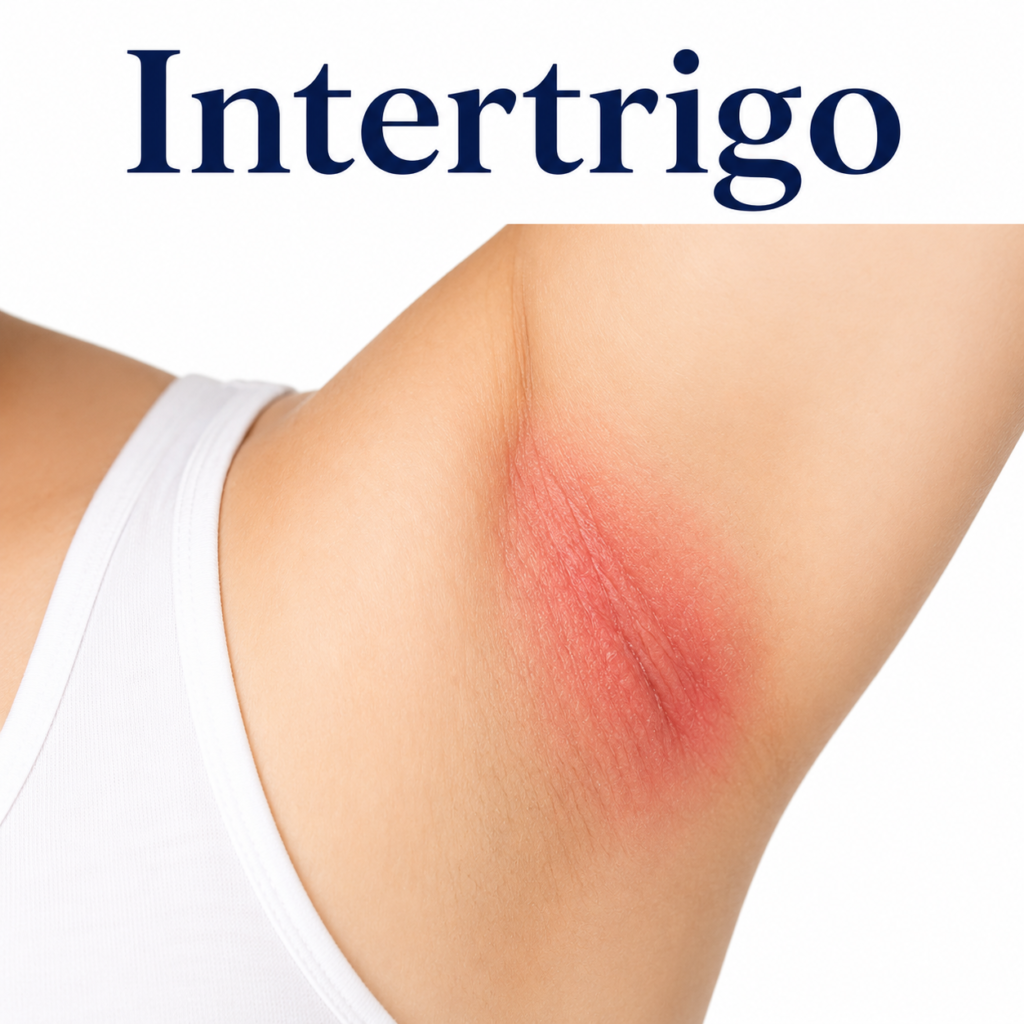
Intertrigo: Causes, Symptoms, Treatment, and Prevention of Skin Fold Rashes
Intertrigo is a common inflammatory skin condition that develops where two areas of skin rub together. Heat, moisture, friction, and trapped sweat create the perfect environment for irritation and the growth of yeast or bacteria. Although intertrigo can affect anyone, it is especially common in people with obesity, diabetes, excessive sweating, or limited mobility.
The good news is that most cases improve with proper skin care, reducing moisture, and treating any underlying infection.
What Is Intertrigo?
Intertrigo is inflammation that occurs within skin folds due to friction, moisture, and lack of air circulation. The affected skin becomes irritated, allowing microorganisms such as yeast or bacteria to grow more easily.
While intertrigo itself is inflammation rather than an infection, secondary infections are common and often require treatment.
Where Does Intertrigo Occur?
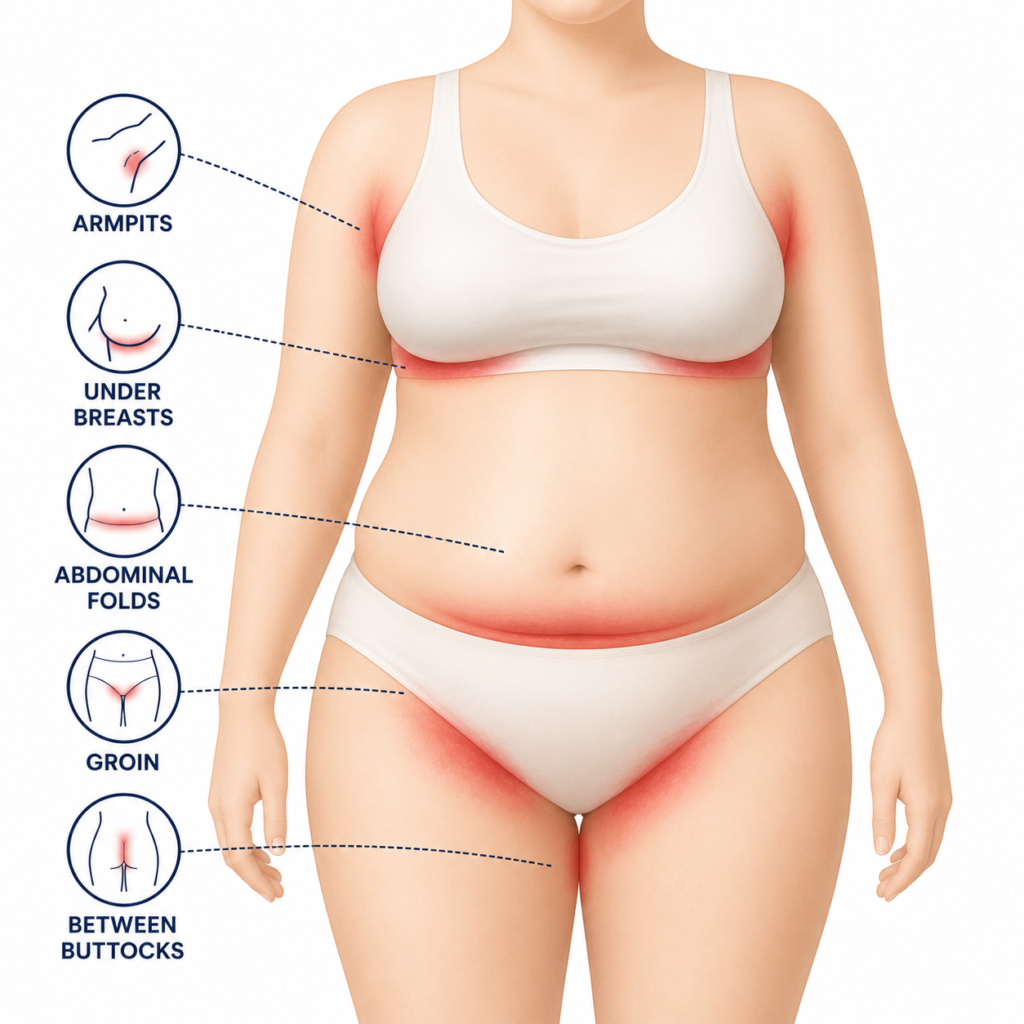
Image shows common location of intertrigo
Intertrigo develops wherever skin surfaces remain in close contact.
Common locations include:
• Under the breasts
• Groin
• Between the buttocks
• Armpits
• Between abdominal skin folds
• Between the toes
• Neck folds
• Between the fingers (less common)
Infants may also develop intertrigo in neck folds and the diaper area.
What Causes Intertrigo?
Several factors work together to cause intertrigo:
1. Friction
Repeated rubbing damages the outer layer of the skin.
2. Moisture
Sweat becomes trapped within skin folds, softening the skin and making it easier to injure.
3. Heat
Warm environments encourage inflammation and microbial growth.
4. Limited Airflow
Poor ventilation prevents moisture from evaporating.
5. Yeast and Bacteria
Damaged skin allows organisms such as Candida yeast or bacteria to overgrow, worsening inflammation.
Symptoms
Symptoms depend on the severity and whether an infection is present.
Common symptoms include:
• Red rash
• Burning sensation
• Itching
• Skin tenderness
• Moist or weeping skin
• Cracking or fissures
• Unpleasant odor
• White patches or satellite bumps if yeast is present
• Pain with movement
What Does Intertrigo Look Like?
Early intertrigo usually appears as:
• Mild redness
• Slight skin irritation
• Tenderness
As inflammation worsens, the skin may become:
• Bright red
• Moist
• Shiny
• Cracked
• Oozing
• Covered with white or yellow material
Yeast infections often produce small red bumps surrounding the main rash, known as satellite lesions.
Who Is at Risk?
Anyone can develop intertrigo, but risk increases with:
• Obesity
• Diabetes
• Excessive sweating
• Hot, humid climates
• Tight clothing
• Limited mobility
• Urinary or bowel incontinence
• Wearing absorbent products for prolonged periods
• Large skin folds
• Weakened immune system
Intertrigo vs. Yeast Infection
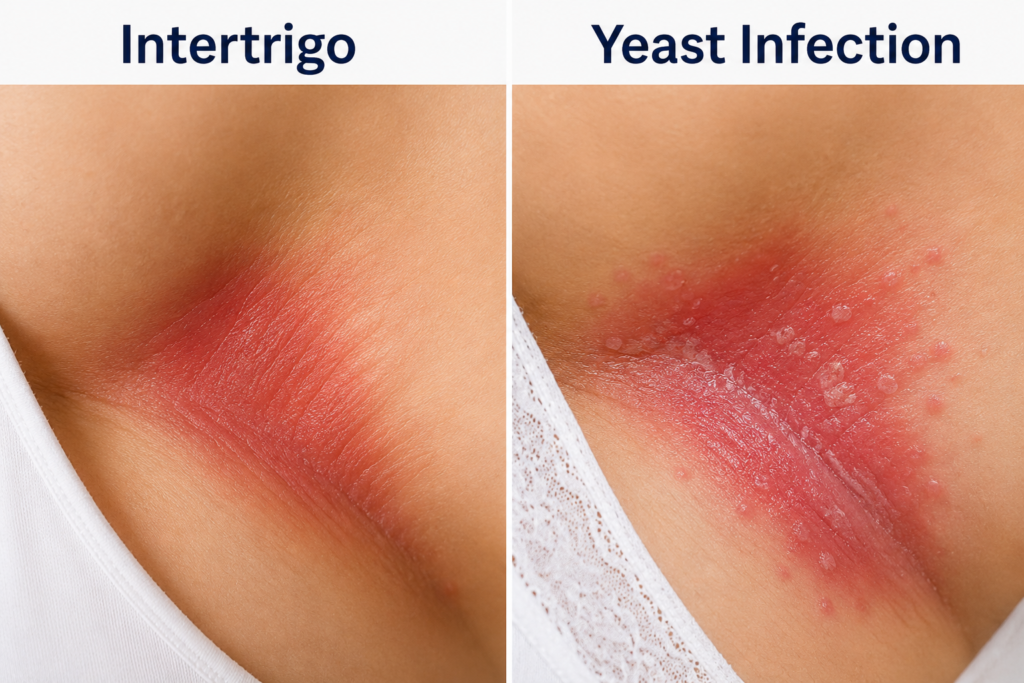
Image depicts the differences between intertrigo and yeast infection of the skin
Although they often occur together, they are not exactly the same.
| Intertrigo | Yeast Infection |
|---|---|
| Caused by friction and moisture | Caused by overgrowth of Candida yeast |
| May occur without infection | Infection is always present |
| Usually mild redness initially | Often bright red with satellite lesions |
| Can become infected later | Requires antifungal treatment |
Intertrigo vs. Jock Itch
| Intertrigo | Jock Itch |
|---|---|
| Develops within skin folds | Usually affects the inner thighs and groin |
| Caused by friction and moisture | Caused by a fungal infection (dermatophytes) |
| Often moist | Usually dry with a raised border |
| May involve yeast or bacteria | Does not involve Candida |
How Is Intertrigo Diagnosed?
Healthcare providers usually diagnose intertrigo by examining the affected skin.
If infection is suspected, they may perform:
• Skin scraping
• Fungal testing
• Bacterial culture
These tests help determine the most appropriate treatment.
Treatment
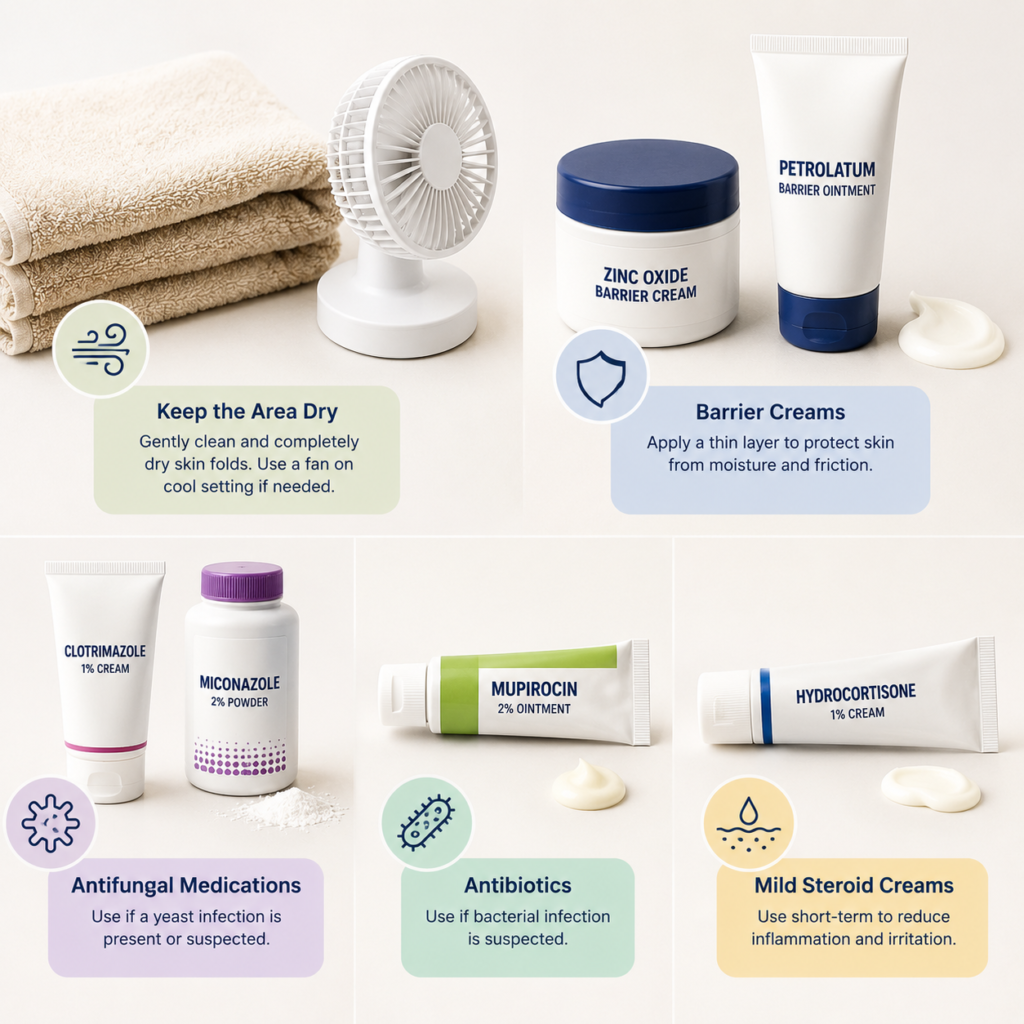
Image of treatment options for intertrigo
Treatment depends on whether inflammation alone or an infection is present.
1. Keep the Area Dry
This is the most important step.
Helpful measures include:
• Dry skin thoroughly after bathing
• Wear loose clothing
• Use moisture-wicking fabrics
• Place soft cotton or gauze between skin folds when appropriate
2. Barrier Creams
Barrier creams protect the skin from moisture and friction.
Examples include:
• Zinc oxide
• Petroleum jelly
These are especially useful when urine or sweat contributes to irritation.
3. Antifungal Medications
If yeast is present, your healthcare provider may recommend:
• Clotrimazole cream
• Miconazole cream
• Ketoconazole cream
More severe infections occasionally require oral antifungal medication.
4. Antibiotics
If bacteria have infected the skin, topical or oral antibiotics may be necessary.
5. Mild Steroid Creams
A low-potency corticosteroid may be used briefly to reduce inflammation.
These should only be used under medical guidance, especially when infection is present.
Daily Prevention Tips
Intertrigo often returns unless contributing factors are addressed.
To reduce flare-ups:
• Keep skin folds clean and dry
• Dry thoroughly after showering
• Change out of sweaty clothing promptly
• Wear breathable fabrics
• Lose weight if appropriate
• Manage diabetes
• Use moisture-absorbing powders if recommended
• Reduce prolonged skin-to-skin contact
Possible Complications
Without treatment, intertrigo may lead to:
• Chronic skin irritation
• Yeast infection
• Bacterial infection
• Skin breakdown
• Painful ulcers
• Cellulitis (rare)
When Should You See a Healthcare Provider?
Seek medical evaluation if:
• The rash is spreading
• You have severe pain
• There is pus or drainage
• Fever develops
• Home treatment has not helped after one to two weeks
• The rash frequently returns
• You have diabetes or a weakened immune system
Frequently Asked Questions

Is intertrigo contagious?
No. The inflammation itself is not contagious. However, if a fungal or bacterial infection develops, the organisms may spread under certain circumstances.
Is intertrigo caused by poor hygiene?
No. It is primarily caused by friction, moisture, and trapped sweat rather than poor hygiene.
Can losing weight help?
Yes. Reducing skin folds can decrease friction and moisture, lowering the risk of recurrent intertrigo.
Does baby powder help?
Routine use of talcum powder is generally not recommended. If moisture control is needed, your healthcare provider may recommend a specific drying powder or barrier product.
Can intertrigo keep coming back?
Yes. Without addressing moisture and friction, recurrent flare-ups are common.
Key Takeaways
• Intertrigo is inflammation that develops where skin folds rub together.
• Heat, moisture, friction, and trapped sweat are the primary causes.
• Yeast and bacterial infections commonly develop on top of inflamed skin.
• Keeping the area clean and dry is the cornerstone of treatment.
• Barrier creams, antifungal medications, or antibiotics may be needed depending on the cause.
• Preventing moisture buildup can greatly reduce future flare-ups.
What Should You Do Next?
If you have a persistent rash in a skin fold that is painful, itchy, or not improving with good skin care, schedule an evaluation with your healthcare provider. Prompt treatment can relieve discomfort, prevent infection, and reduce the chance of recurrent flare-ups. If you have diabetes or a weakened immune system, early evaluation is especially important, as skin infections can become more severe.
References
American Academy of Dermatology. Rashes in Skin Folds (Intertrigo): Self-Care and Prevention.
https://www.aad.org/public/everyday-care/itchy-skin/rash/rashes-skin-foldsMerck Manual Consumer Version. Intertrigo.
https://www.merckmanuals.com/home/skin-disorders/fungal-skin-infections/intertrigoMayo Clinic. Intertrigo. https://my.clevelandclinic.org/health/diseases/21693-intertrigo