
Breast Pain: Common Causes, When to Be Concerned, and When to See a Doctor
Breast pain is a common concern that affects many women at some point in their lives. Although it can be alarming, especially because many people worry about breast cancer, most cases of breast pain are not caused by cancer. Instead, hormonal changes, muscle strain, cysts, medications, and other benign conditions are much more common causes.
Understanding the different types of breast pain and knowing when to seek medical attention can help you determine the next steps and provide peace of mind.
What Is Breast Pain?
Breast pain, also called mastalgia, refers to discomfort, tenderness, aching, burning, or sharp pain involving one or both breasts. The pain may come and go with your menstrual cycle or occur independently.
Breast pain can originate from:
- Breast tissue
- Chest wall muscles
- Ribs
- Nerves
- Skin
- Hormonal changes
Although breast pain is common, it is only rarely associated with breast cancer.
Types of Breast Pain
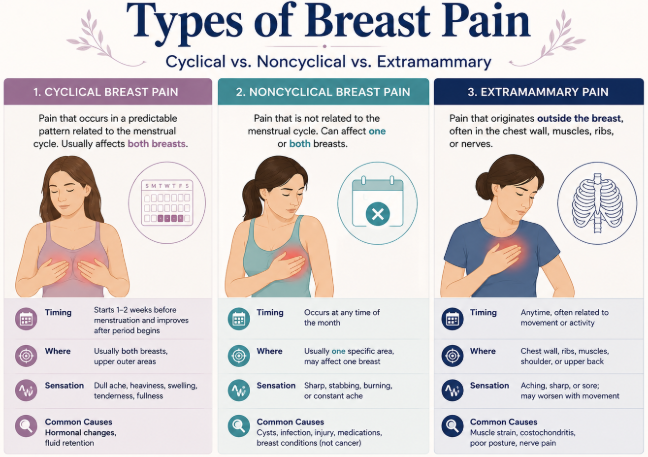
| Type | Description | Common Cause |
|---|---|---|
| Cyclical | Occurs before menstruation and improves afterward | Hormonal changes |
| Noncyclical | Unrelated to menstrual cycle | Cysts, injury, medications, infections |
| Extramammary | Pain originates outside the breast | Muscle strain, rib or nerve pain |
Common Causes of Breast Pain
| Cause | Typical Features |
| Hormonal changes | Pain before menstrual periods, often affects both breasts |
| Breast cysts | Localized tenderness with a fluid-filled lump |
| Fibrocystic breast changes | Lumpy, tender breasts that fluctuate with the menstrual cycle |
| Pregnancy | Breast fullness, tenderness, and enlargement |
| Breastfeeding | Engorgement, plugged ducts, or mastitis |
| Menopause | Hormonal fluctuations may cause intermittent discomfort |
| Chest muscle strain | Pain worsens with movement or lifting |
| Poorly fitting bra | Generalized soreness, especially after activity |
| Breast injury | Pain following trauma or surgery |
| Medications | Some hormone therapies, fertility medications, and certain antidepressants |
| Mastitis | Pain, redness, warmth, swelling, often with fever |
| Rarely, breast cancer | Usually associated with other breast changes rather than pain alone |
Cyclical vs. Noncyclical Breast Pain
| Feature | Cyclical Pain | Noncyclical Pain |
| Related to menstrual cycle | Yes | No |
| Usually affects | Both breasts | One breast more commonly |
| Pain pattern | Comes and goes monthly | Persistent or intermittent |
| Common age | 20–50 years | More common after menopause |
| Typical cause | Hormones | Local breast condition or chest wall pain |
Breast Pain by Age
| Age Group | Most Common Causes |
| Teens | Hormonal changes, breast development |
| 20s–30s | Menstrual cycle, pregnancy, fibrocystic changes |
| 40s | Cysts, hormonal fluctuations, perimenopause |
| After menopause | Medications, chest wall pain, less commonly breast disease |
Symptoms
Breast pain varies from person to person and may include:
- Aching
- Tenderness
- Burning sensation
- Sharp or stabbing pain
- Heaviness
- Swelling
- Pain in one or both breasts
- Pain that radiates to the armpit
Some women notice pain only during certain times of the month, while others experience persistent discomfort.
How Is Breast Pain Evaluated?
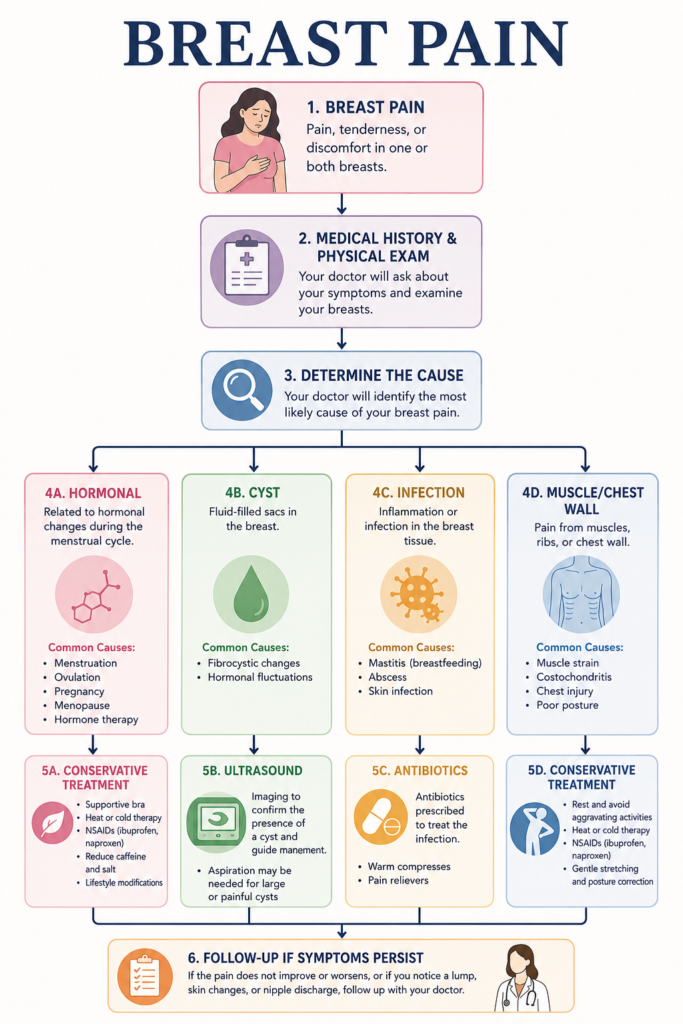
Your healthcare professional will ask questions about:
- When the pain started
- Whether it changes with your menstrual cycle
- The exact location of the pain
- Whether you feel a lump
- Recent injury or exercise
- Current medications
- Family history of breast cancer
A physical examination is usually performed.
Depending on your age, symptoms, and examination findings, additional testing may include:
- Diagnostic mammogram
- Breast ultrasound
- Breast MRI (selected situations)
- Biopsy if an abnormal area is identified
Treatment Options
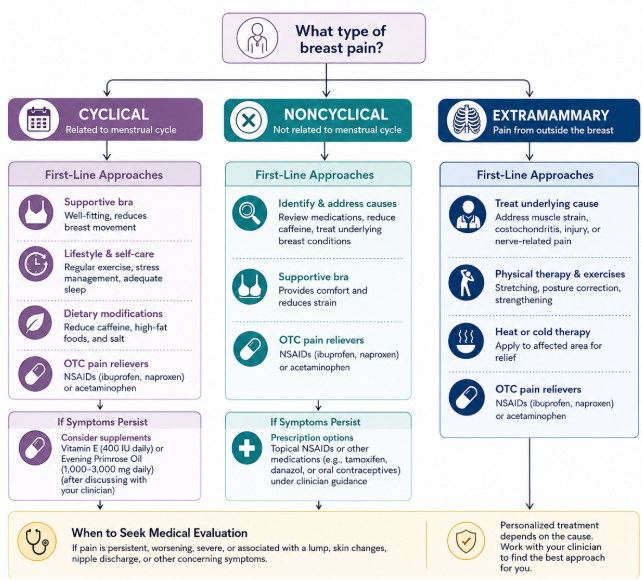
Examples of treatment may include:
- Observation and reassurance for hormonal breast pain
- Supportive bras
- Medication adjustments if appropriate
- Treatment of infections such as mastitis
- Drainage of symptomatic cysts in selected cases
- Physical therapy or anti-inflammatory treatment for chest wall pain
Possible Complications
Most causes of breast pain are not dangerous and resolve without long-term problems.
Possible complications depend on the underlying cause and may include:
- Recurrent breast cysts
- Breast abscess from untreated infection
- Persistent pain affecting daily activities
- Delayed diagnosis if concerning symptoms are ignored
When Should You Seek Medical Attention?
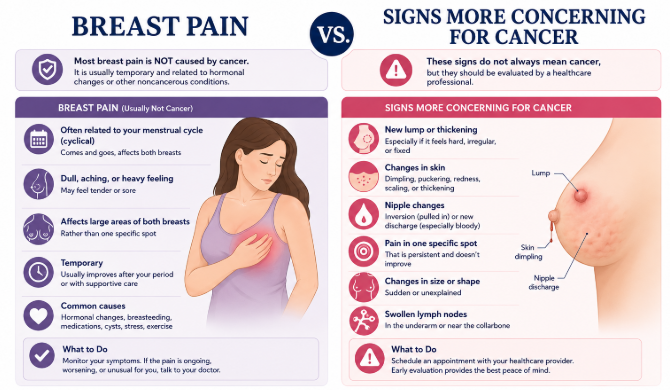
Seek medical evaluation if you experience:
☐ A new breast lump
☐ Persistent pain lasting more than two to four weeks
☐ Redness, warmth, or swelling
☐ Fever with breast pain
☐ Bloody or spontaneous nipple discharge
☐ Skin dimpling or thickening
☐ Nipple pulling inward (new nipple inversion)
☐ Breast pain after significant trauma
☐ One-sided pain that continues to worsen
What Should You Do Next?
Most breast pain is caused by benign conditions rather than breast cancer. However, persistent pain, a new lump, or changes in the appearance of the breast should never be ignored. If your symptoms are new, severe, or do not improve, schedule an evaluation with a healthcare professional. Early assessment can identify the cause of your symptoms, provide appropriate treatment, and offer reassurance when serious conditions have been ruled out.
References
American College of Obstetricians and Gynecologists (ACOG). Benign Breast Disorders.
American College of Radiology (ACR). Appropriateness Criteria®: Breast Pain.
American Cancer Society. Breast Pain and Breast Changes.
Mayo Clinic. Breast Pain (Mastalgia).
UpToDate. Breast Pain (Mastalgia): Evaluation and Management.
Sivarajah R, et al. Evaluation and Management of Mastalgia. American Family Physician.
National Comprehensive Cancer Network (NCCN). Breast Cancer Screening and Diagnosis Guidelines.