
Bartholin Cyst: Symptoms, Causes, Treatment, and When to See a Doctor
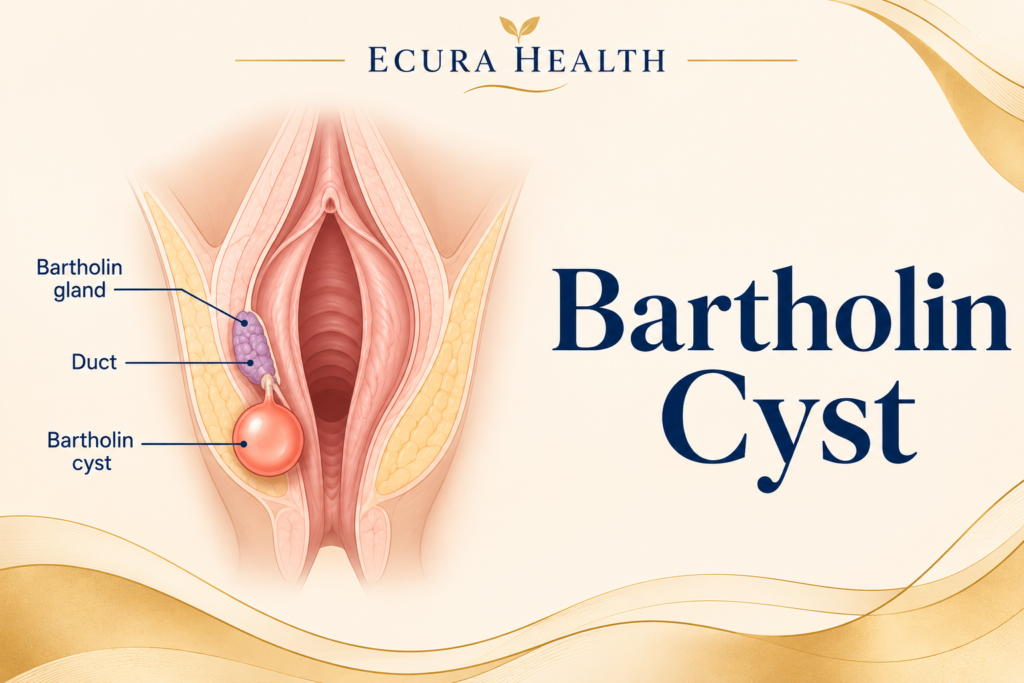
Finding a lump near the vaginal opening can be alarming, but not every lump is cancer or a sexually transmitted infection. One common cause is a Bartholin cyst, which occurs when one of the small glands that help lubricate the vagina becomes blocked. While many Bartholin cysts are painless and resolve on their own, others can become infected and develop into a painful abscess that requires medical treatment.
This guide explains what Bartholin cysts are, why they occur, how they are treated, and when you should seek medical care.
What Is a Bartholin Cyst?
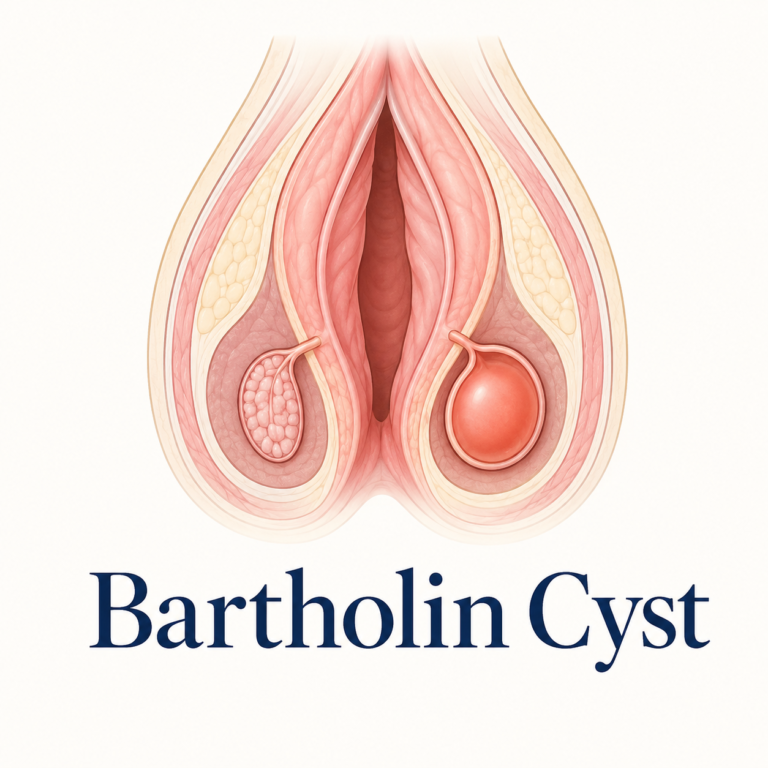
The Bartholin glands are two small glands located on either side of the vaginal opening. Their job is to produce fluid that helps lubricate the vulva during sexual arousal.
Normally, these glands are too small to feel. However, if the duct that drains the gland becomes blocked, fluid can build up inside, forming a Bartholin cyst.
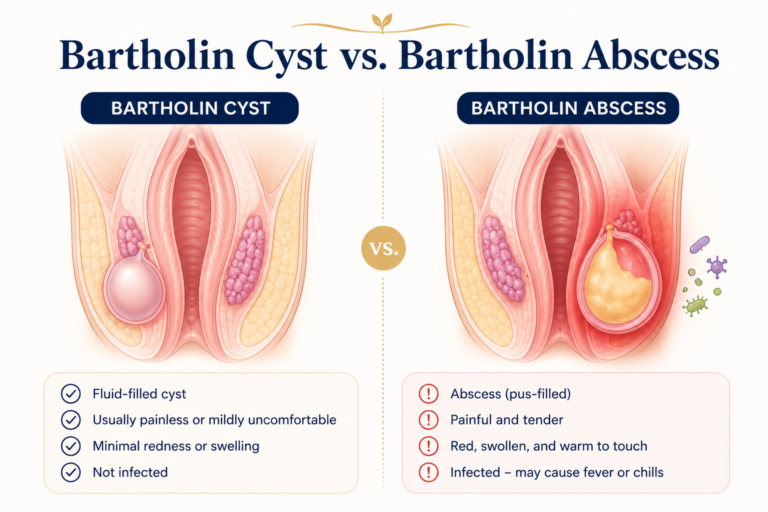
If bacteria enter the trapped fluid, the cyst can become infected and develop into a Bartholin abscess, which is much more painful.
What Causes a Bartholin Cyst?
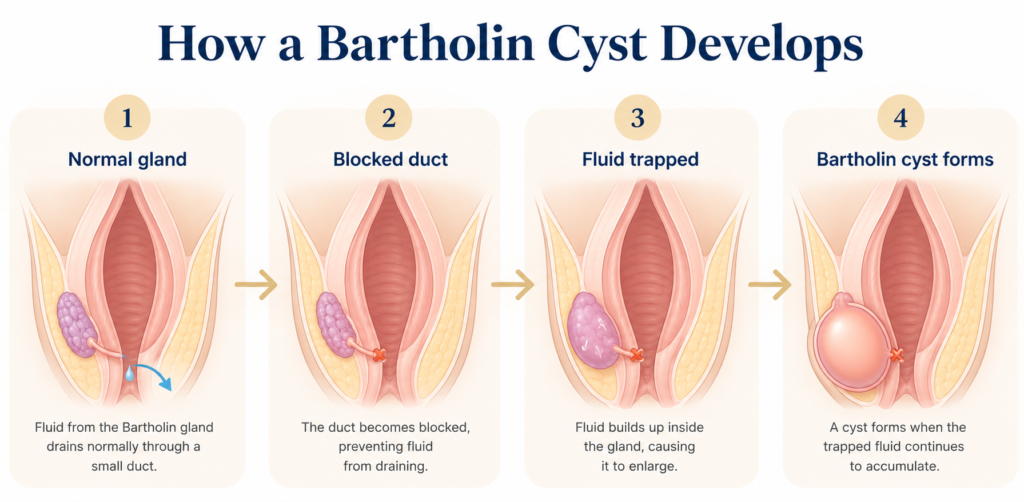
A Bartholin cyst develops when the gland’s drainage duct becomes blocked.
Possible causes include:
• Thickened gland secretions
• Mild inflammation
• Injury to the area
• Scar tissue
• Occasionally bacterial infection
Most cysts develop without a clearly identifiable cause.
Who Is at Risk?
Bartholin cysts are most common in women between the ages of 20 and 40.
Risk factors include:
• Previous Bartholin cysts
• Prior Bartholin abscess
• Local trauma
• Chronic inflammation
• Rarely, sexually transmitted infections such as gonorrhea or chlamydia
Symptoms of a Bartholin Abscess
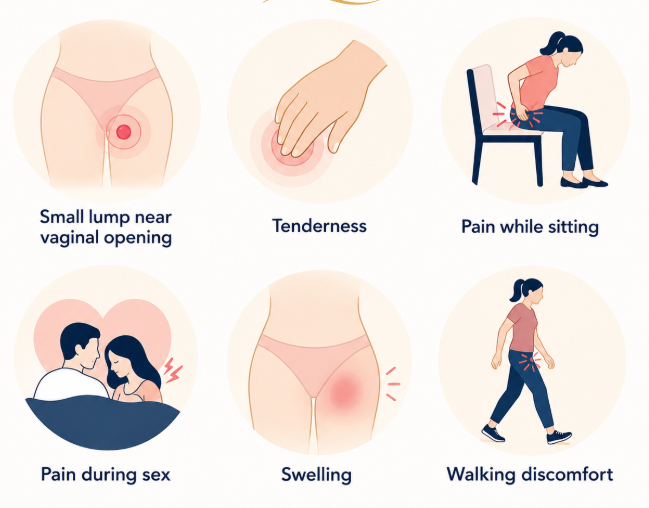
If the cyst becomes infected, symptoms usually worsen quickly.
These may include:
• Severe pain
• Rapid swelling
• Redness
• Warmth
• Difficulty walking or sitting
• Pain with sexual activity
• Drainage of pus
• Fever or chills (less common but important)
An abscess usually requires medical evaluation.
How Is a Bartholin Cyst Diagnosed?
Diagnosis is typically made during a pelvic examination.
Additional testing may be recommended if:
• The cyst appears infected
• Drainage is present
• A sexually transmitted infection is suspected
• The patient is over age 40, as persistent new Bartholin gland masses may require biopsy to exclude rare cancers
Treatment Options
Treatment depends on the size of the cyst and whether it is infected.
Small, Painless Cysts
Many require no treatment.
Home care may include:
• Warm sitz baths several times daily
• Keeping the area clean and dry
• Wearing loose-fitting clothing
• Taking over-the-counter pain relievers if needed
Symptomatic Cysts
If the cyst causes discomfort or continues to enlarge, a healthcare professional may recommend drainage.
Bartholin Abscess
An infected abscess often requires:
• Drainage of the abscess
• Placement of a small catheter (Word catheter) to allow continued drainage
• Occasionally a minor procedure called marsupialization for recurrent cysts
• Antibiotics only in selected situations, such as surrounding skin infection, fever, immune compromise, or specific bacterial infections
Possible Complications
Most Bartholin cysts do not cause long-term problems.
Potential complications include:
• Abscess formation
• Recurrent infections
• Chronic discomfort
• Rarely, Bartholin gland cancer in women over age 40

Frequently Asked Questions
1. Can Bartholin Cysts Come Back?
Yes.
Some women experience recurrent cysts or abscesses.
If cysts repeatedly return, procedures such as marsupialization or surgical removal of the gland may be considered.
2.Is a Bartholin cyst an STI?
No. Most Bartholin cysts are not caused by sexually transmitted infections.
3.Can a Bartholin cyst go away on its own?
Yes. Small cysts often improve without treatment.
4. Can I pop a Bartholin cyst at home?
No. Attempting to squeeze or puncture the cyst can increase the risk of infection and injury.
5. Are Bartholin cysts contagious?
No.
6. Can I have sex if I have a Bartholin cyst?
If the cyst is painless, sexual activity may be possible. However, if it causes pain or becomes infected, avoiding intercourse until it heals is recommended.
When Should You Seek Medical Attention?
Contact a healthcare professional if you have:
• A painful lump near the vaginal opening
• Increasing redness or swelling
• Fever or chills
• Difficulty walking or sitting
• Pus draining from the lump
• A new Bartholin gland lump after age 40
Seek urgent medical care if you develop severe pain, rapidly worsening swelling, high fever, or signs of spreading infection.
What Should You Do Next?
A Bartholin cyst is a common condition and is usually not serious. Many small cysts improve with simple home care, while infected cysts can often be treated with a straightforward office procedure. If you notice a new lump near the vaginal opening, especially if it is painful, enlarging, or occurs after age 40, schedule an evaluation with a healthcare professional for an accurate diagnosis and appropriate treatment.
References:
American College of Obstetricians and Gynecologists. Simulation Module: Marsupialization of Bartholin Cyst and Abscess.
Merck Manual Professional Edition. Bartholin Gland Cyst and Bartholin Gland Abscess.
StatPearls. Bartholin Gland Cyst.
Wechter ME, et al. Management of Bartholin Duct Cyst and Gland Abscess. American Family Physician. 2019.
UpToDate. Bartholin gland masses.
MSD Manual Consumer Version. Bartholin Gland Cyst and Abscess.