
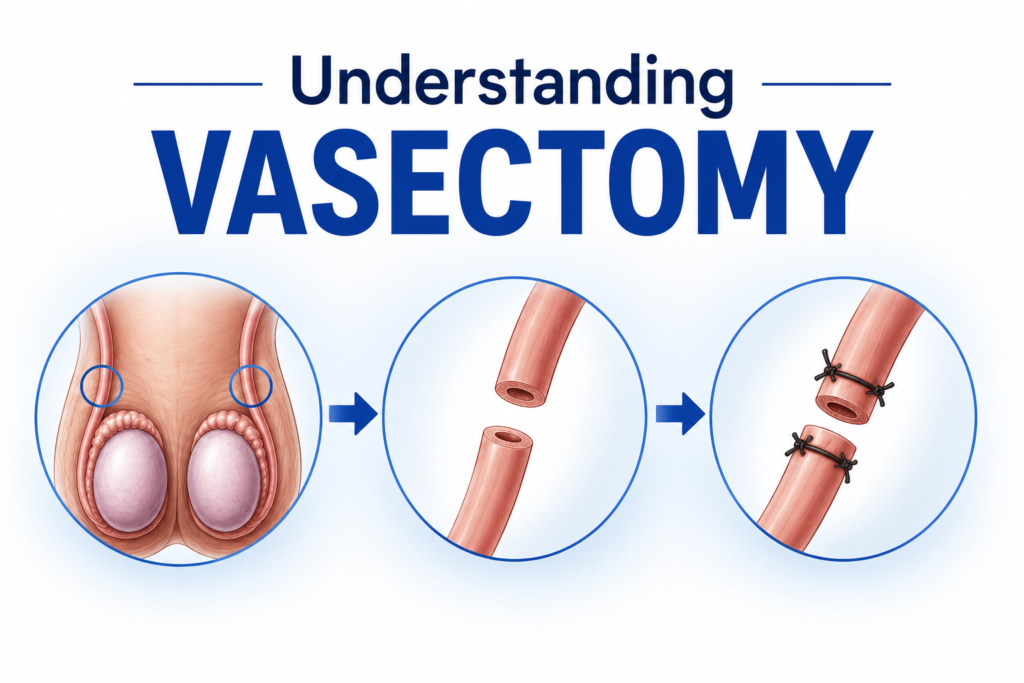
Vasectomy: What to Expect Before, During, and After the Procedure
A vasectomy is one of the most effective forms of permanent birth control for men. It is a simple outpatient procedure that prevents sperm from entering the semen, making pregnancy highly unlikely. Although vasectomy is considered permanent, it does not affect testosterone levels, sexual desire, erections, or ejaculation.
Understanding how a vasectomy works, what to expect during recovery, and when it becomes effective can help you make an informed decision.
What Is a Vasectomy?
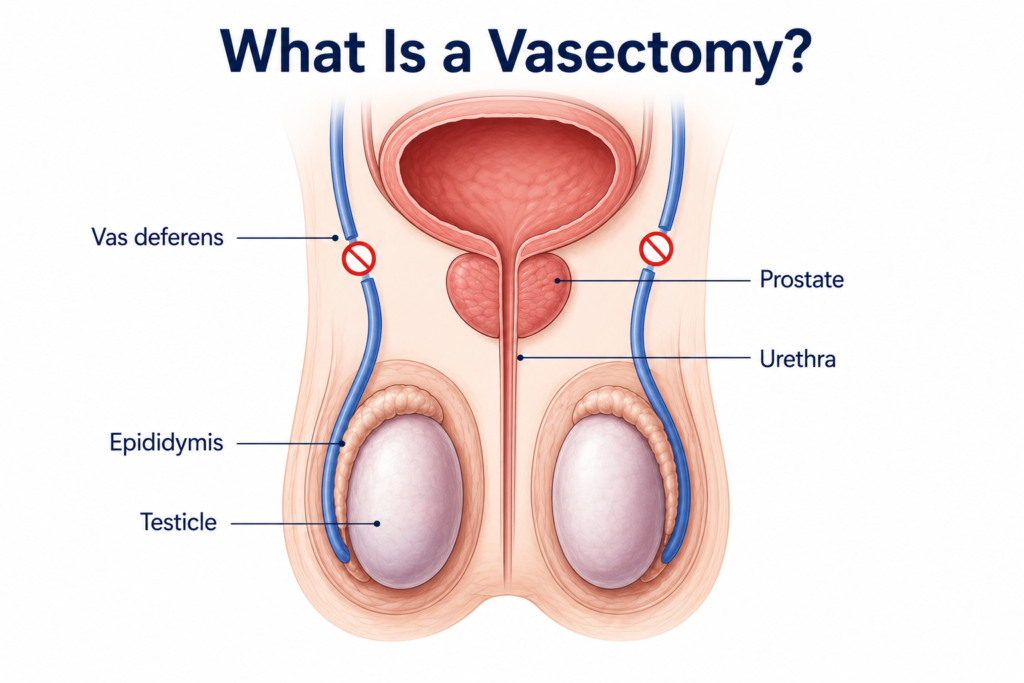
A vasectomy is a minor surgical procedure that blocks or cuts the vas deferens, the tubes that carry sperm from the testicles.
After a vasectomy:
- The testicles continue to produce sperm.
- Sperm are naturally broken down and absorbed by the body.
- Semen continues to be produced, but it no longer contains sperm.
- Testosterone production remains unchanged.
How Effective Is a Vasectomy?
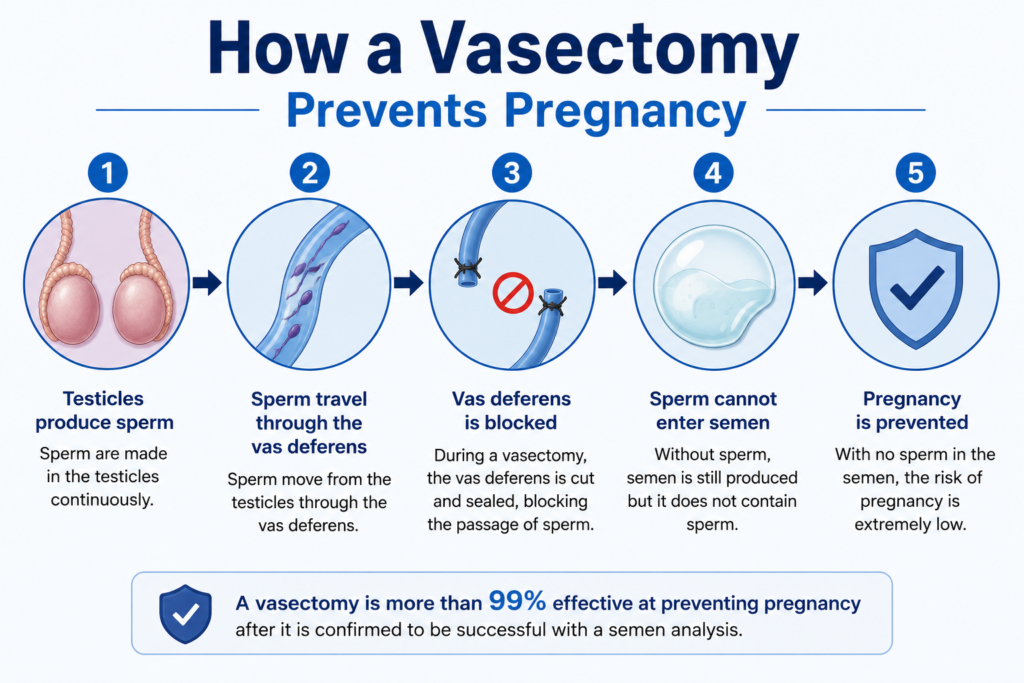
A vasectomy is more than 99% effective at preventing pregnancy once it has been confirmed to be successful with a semen analysis.
However, it is not effective immediately after the procedure.
Residual sperm remain in the reproductive tract for several weeks or months, so another form of contraception should be used until your healthcare provider confirms that no sperm are present in your semen.
Who Is a Good Candidate?
A vasectomy may be appropriate for men who:
- Are certain they do not want future biological children.
- Want a permanent form of contraception.
- Have completed their family.
- Prefer a highly effective birth control method without ongoing maintenance.
Because reversal is not always successful, vasectomy should be considered a permanent decision.
How Is a Vasectomy Performed?
The procedure is usually completed in a doctor’s office under local anesthesia and typically takes about 20 to 30 minutes.
There are two common techniques:
1. Conventional Vasectomy
Small incisions are made in the scrotum to access the vas deferens.
The tubes are then cut, sealed, tied, or cauterized before the incision is closed.
2. No-Scalpel Vasectomy
Instead of making an incision, the surgeon creates a tiny opening in the skin using a specialized instrument.
This technique often results in:
- Less bleeding
- Smaller wound
- Less discomfort
- Faster recovery
Both techniques are highly effective.
What Happens After the Procedure?
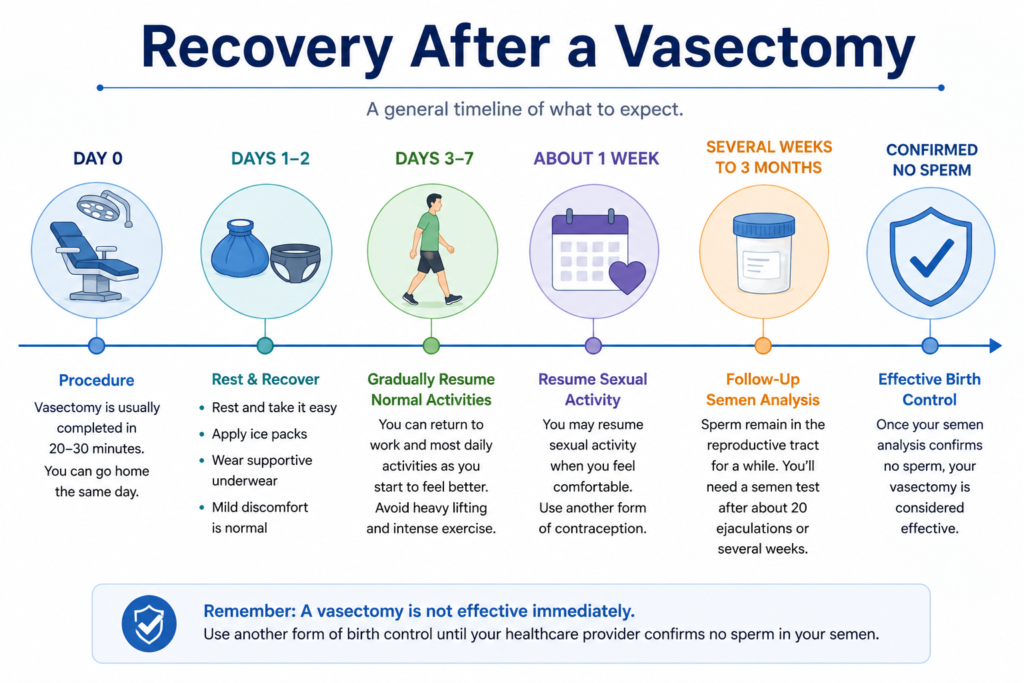
Most men return home shortly after the procedure.
Recovery recommendations typically include:
- Rest for the first 24 to 48 hours
- Ice packs during the first day
- Wearing supportive underwear or an athletic supporter
- Avoiding strenuous activity for several days
- Keeping the area clean and dry
Most men return to desk work within one to three days, although physically demanding jobs may require additional recovery time.
When Does a Vasectomy Start Working?
A common misconception is that a vasectomy works immediately.
In reality, sperm already present in the reproductive tract must be cleared through ejaculation.
Most men require:
- Approximately 20 ejaculations
- Or several weeks to three months
before semen no longer contains sperm.
A semen analysis is necessary to confirm that the vasectomy has been successful.
Until then, another method of birth control should be used.
Does a Vasectomy Affect Sexual Function?
No.
A vasectomy does not:
- Reduce testosterone
- Cause erectile dysfunction
- Lower sex drive
- Affect orgasm
- Change the ability to ejaculate
Because the testicles continue producing testosterone, hormone levels remain normal.
Possible Risks and Complications
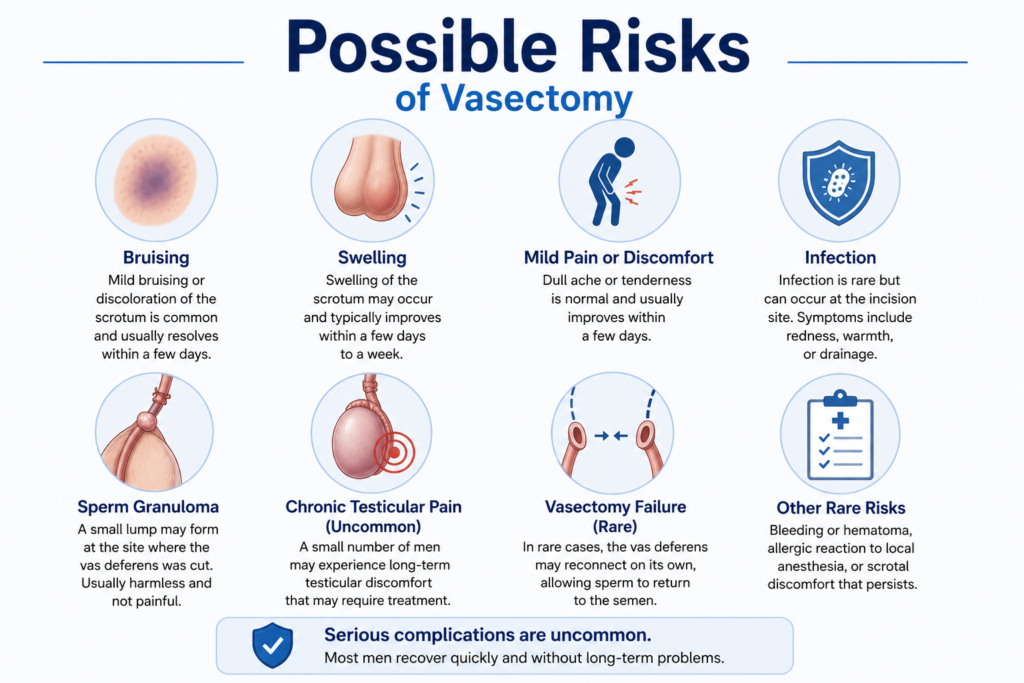
Although complications are uncommon, they can occur.
Potential risks include:
- Bruising
- Swelling
- Mild bleeding
- Infection
- Temporary discomfort
- Sperm granuloma
- Chronic testicular pain (uncommon)
- Vasectomy failure (rare)
Most complications are mild and improve with conservative treatment.
Frequently Asked Questions
Can a Vasectomy Be Reversed?
A vasectomy reversal reconnects the vas deferens to restore the passage of sperm.
Although pregnancy is possible after reversal, success depends on several factors, including:
- Time since vasectomy
- Surgical technique
- Partner’s fertility
- Surgeon experience
Because reversal is not guaranteed, vasectomy should be viewed as permanent contraception.
Does a Vasectomy Increase the Risk of Cancer or Heart Disease?
No.
Large studies have found no convincing evidence that vasectomy increases the risk of:
- Prostate cancer
- Testicular cancer
- Heart disease
Major medical organizations continue to consider vasectomy a safe and effective contraceptive option.
Will I still ejaculate after a vasectomy?
Yes. Semen production continues normally, but it no longer contains sperm.
Will anyone notice a difference?
Most men notice no visible change in the amount or appearance of semen.
Can I have sex after a vasectomy?
Most men can resume sexual activity after about one week or when discomfort has resolved, following their healthcare provider’s instructions.
Remember that another form of contraception is still necessary until a semen analysis confirms the absence of sperm.
Can a vasectomy fail?
Rarely.
Occasionally the cut ends of the vas deferens reconnect, allowing sperm to reappear in the semen.
This is why follow-up semen testing is important.
Does a vasectomy protect against sexually transmitted infections?
No.
A vasectomy only prevents pregnancy. It does not protect against sexually transmitted infections.
Prognosis
A vasectomy is one of the safest and most effective permanent contraceptive procedures available. Most men recover quickly, experience few complications, and are satisfied with their decision. Following recovery instructions and completing the recommended follow-up semen analysis are important steps to ensure the procedure has been successful.
What Should You Do Next?
If you’re considering a vasectomy, discuss the procedure with a healthcare provider to determine whether permanent contraception is the right choice for you. Understanding the benefits, potential risks, recovery process, and the importance of follow-up semen testing can help you make an informed decision with confidence.
Add Your Heading Text Here
References
American Urological Association. Vasectomy Guideline.
https://www.auanet.org/guidelines
European Association of Urology. EAU Guidelines on Vasectomy.
https://uroweb.org/guidelines
Mayo Clinic. Vasectomy: Overview, Risks, and Recovery.
https://www.mayoclinic.org/tests-procedures/vasectomy
Cleveland Clinic. Vasectomy.
https://my.clevelandclinic.org/health/treatments/4423-vasectomy
Centers for Disease Control and Prevention. Contraception Guidance.
https://www.cdc.gov/contraception/
American Academy of Family Physicians. Counseling Patients About Vasectomy.
https://www.aafp.org/