
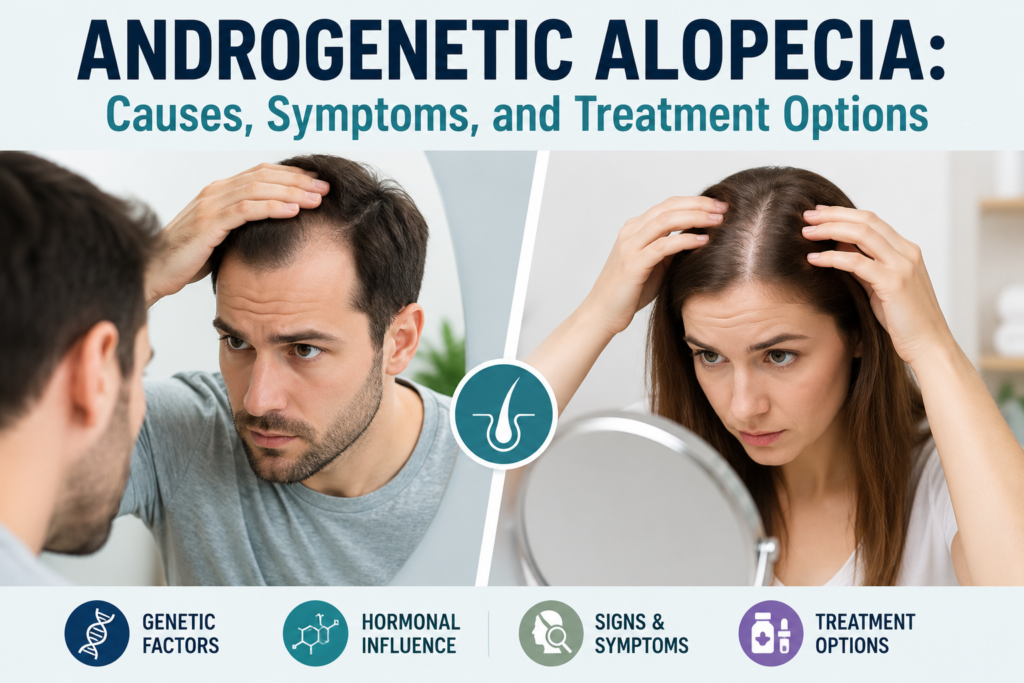
Androgenetic Alopecia: Causes, Symptoms, and Treatment Options
Finding more hair in your brush, noticing a widening part, or seeing your hairline slowly recede can be frustrating and concerning. Androgenetic alopecia is the most common cause of hair loss in both men and women. It develops gradually over time and is influenced by genetics and hormones.
Although androgenetic alopecia cannot be completely prevented, several treatments may help slow hair loss and, in some cases, promote new hair growth. Understanding how the condition develops can help you recognize it early and explore appropriate treatment options.
What Is Androgenetic Alopecia?
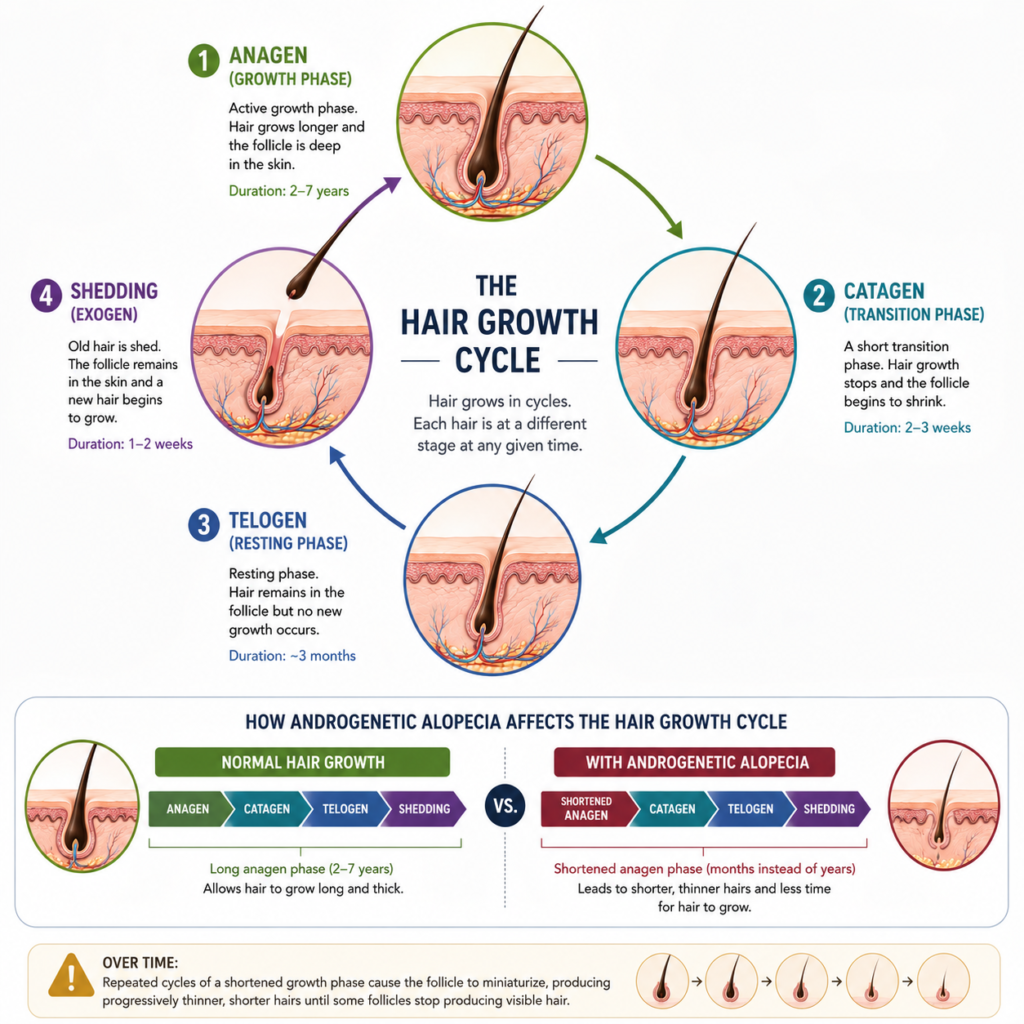
Androgenetic alopecia is a hereditary form of hair loss that causes hair follicles to gradually shrink over time. It is commonly referred to as:
• Male pattern baldness (in men)
• Female pattern hair loss (in women)
As hair follicles become smaller, they produce thinner, shorter hairs until some follicles eventually stop producing visible hair altogether.
Unlike sudden hair shedding caused by illness or stress, androgenetic alopecia develops gradually over many years.
What Causes Androgenetic Alopecia?
The condition develops from a combination of:
• Genetics
• Hormones
• Aging
The primary hormone involved is dihydrotestosterone (DHT).
DHT is produced when the enzyme 5-alpha reductase converts testosterone into DHT.
People who inherit genetically sensitive hair follicles are more likely to experience progressive follicle shrinkage over time.
How Does DHT Affect Hair?
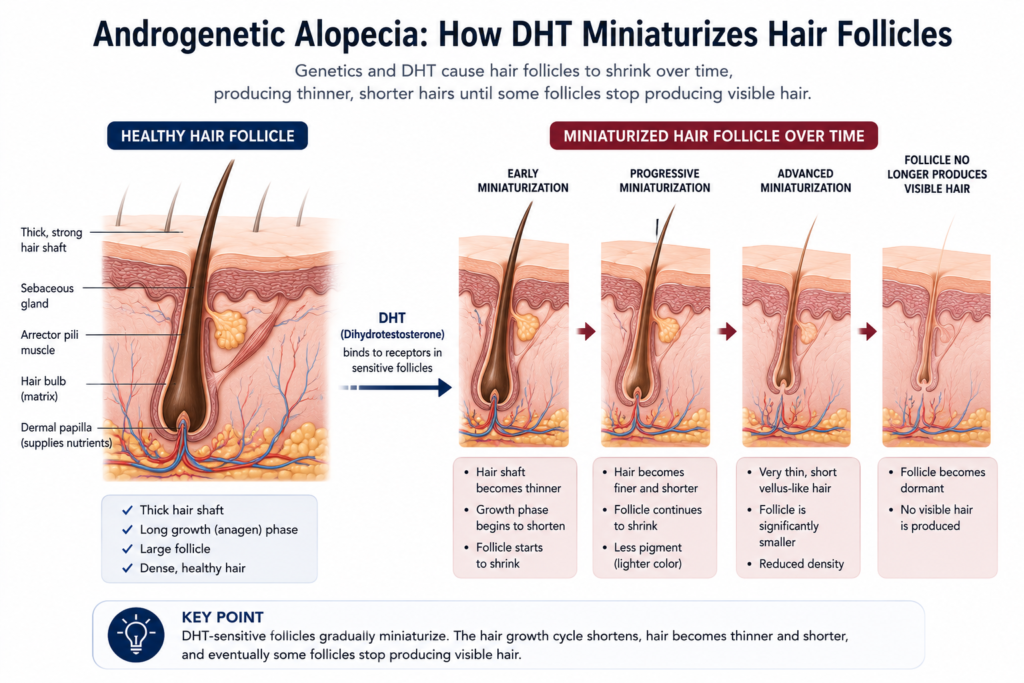
Healthy hair follicles normally produce thick, long-lasting hairs.
Over time, DHT-sensitive follicles undergo a process called miniaturization.
This causes:
• Shorter hair growth cycles
• Smaller hair follicles
• Thinner hairs
• Lighter-colored hairs
• Reduced hair density
Eventually, some follicles stop producing visible hair.
This process occurs gradually over years rather than all at once.
How Does Androgenetic Alopecia Look in Men?
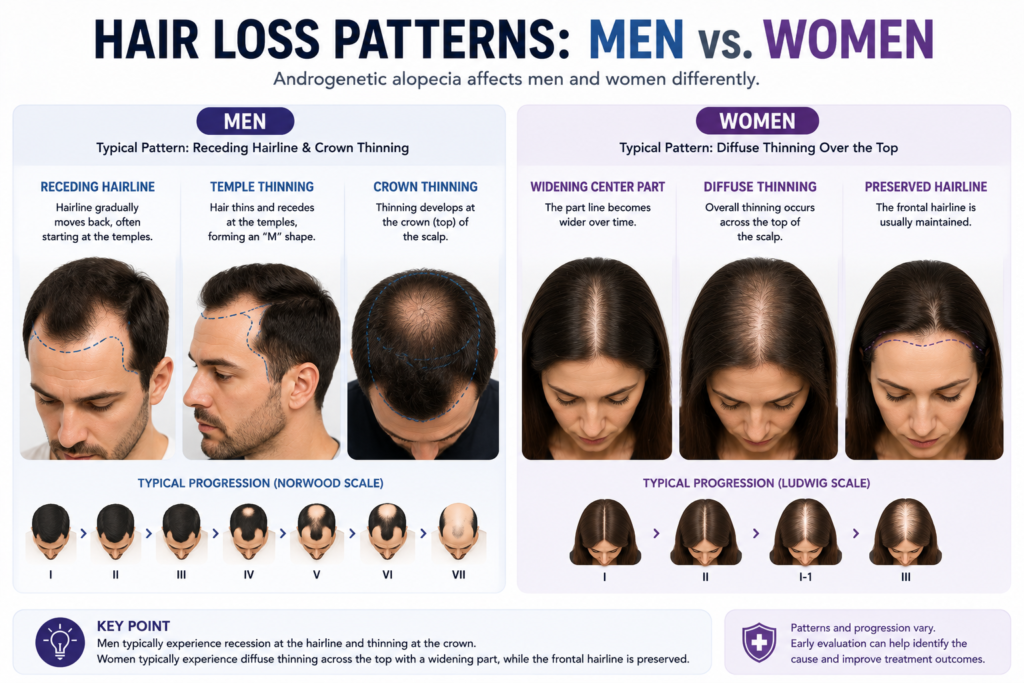
In men, hair loss usually follows a recognizable pattern.
Common features include:
• Receding hairline
• Thinning at the temples
• Thinning at the crown
• Progressive enlargement of bald areas
Hair along the sides and back of the scalp is typically preserved.
Healthcare professionals often describe progression using the Norwood Scale, which ranges from mild temple recession to extensive hair loss.
How Does Androgenetic Alopecia Look in Women?
Women usually experience a different pattern.
Instead of developing a receding hairline, they often notice:
• Widening of the center part
• Diffuse thinning across the top of the scalp
• Reduced hair volume
• Increased visibility of the scalp
Unlike men, women usually retain their frontal hairline, and complete baldness is uncommon.
Healthcare professionals often describe female hair loss using the Ludwig Scale.
Who Is at Risk?
Several factors increase the likelihood of developing androgenetic alopecia.
These include:
• Family history of hair loss
• Increasing age
• Male sex
• Hormonal changes
• Certain medical conditions, particularly in women
Having a family history does not guarantee hair loss, but it significantly increases the likelihood.
Is It Always Androgenetic Alopecia?
No.
Hair loss can occur for many different reasons.
Other possible causes include:
• Telogen effluvium
• Alopecia areata
• Iron deficiency
• Thyroid disorders
• Nutritional deficiencies
• Certain medications
• Scalp infections
• Autoimmune diseases
Sudden or patchy hair loss should be evaluated by a healthcare professional.
How Is Androgenetic Alopecia Diagnosed?
Diagnosis is usually based on:
• Medical history
• Family history
• Physical examination of the scalp
Your healthcare professional may also examine the pattern of hair loss and the appearance of individual hairs.
In some cases, additional testing such as blood work may be recommended to rule out other causes of hair loss, particularly if the pattern is unusual or hair loss occurs suddenly.
Treatment Options
Although there is no cure, several treatments may help slow progression and improve hair growth.
Topical Minoxidil
Minoxidil is applied directly to the scalp.
It may:
• Slow hair loss
• Increase hair density
• Stimulate hair regrowth in some individuals
Results usually require consistent use for several months.
Oral Finasteride
Finasteride works by reducing the conversion of testosterone to DHT.
It is approved for treating male pattern hair loss and may help preserve existing hair while promoting regrowth in some men.
Potential benefits and risks should be discussed with a healthcare professional.
Oral Minoxidil
Low-dose oral minoxidil is sometimes prescribed off-label for certain patients when topical treatment is not effective or tolerated.
Because it may cause side effects and is not appropriate for everyone, it should only be used under medical supervision.
Hair Transplant Surgery
Hair follicles are transplanted from areas with healthy hair growth to thinning areas.
Results are generally permanent but require evaluation by a qualified specialist.
Low-Level Laser Therapy
Some laser devices may modestly improve hair density in selected individuals.
Research is ongoing, and results vary among individuals.
When Will I See Results?
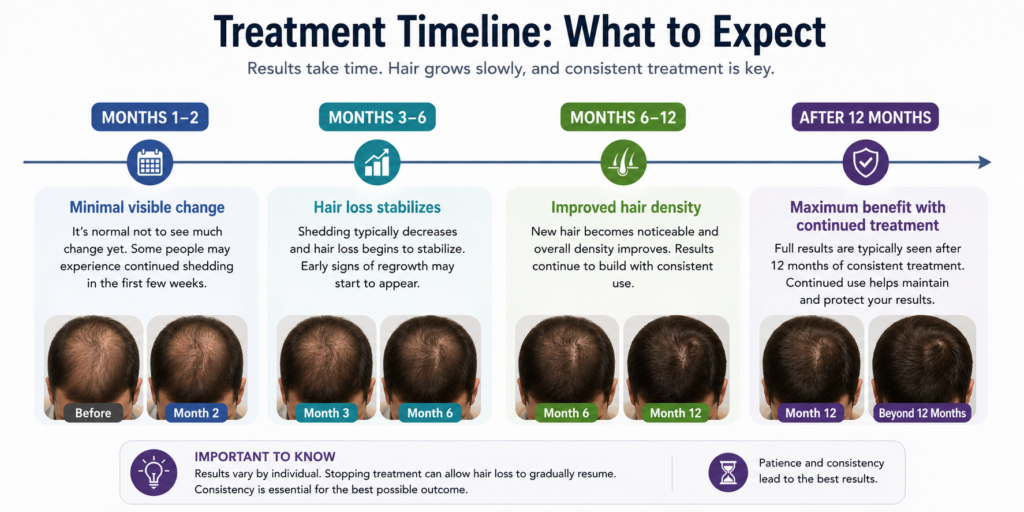
Hair grows slowly, so improvement takes time.
Typical timeline:
Months 1–2
Little visible change.
Some people notice continued shedding.
Months 3–6
Hair loss may begin to stabilize.
Some early regrowth may become noticeable.
Months 6–12
Improved hair density is often seen.
After 12 months
Maximum benefit is typically reached with continued treatment.
Stopping treatment may allow hair loss to gradually resume.
Common Myths
Wearing hats causes baldness.
False.
Normal hat use does not cause androgenetic alopecia.
Shampoo causes hair loss.
False.
Routine shampooing does not damage hair follicles.
Shaving your head makes hair grow back thicker.
False.
Shaving changes the appearance of the hair shaft but does not increase the number or size of hair follicles.
Stress causes androgenetic alopecia.
Not directly.
Stress can contribute to temporary hair shedding (telogen effluvium), but androgenetic alopecia is primarily caused by genetics and hormone sensitivity.
When Should You See a Healthcare Professional?
Consider an evaluation if:
• Hair loss develops suddenly.
• Hair falls out in patches.
• Your scalp becomes painful, inflamed, or develops sores.
• Hair loss occurs with fatigue, weight changes, or other symptoms.
• You’re concerned about progressive thinning.
Early evaluation may provide more treatment options before significant follicle miniaturization occurs.
Frequently Asked Questions
Can androgenetic alopecia be cured?
There is currently no cure, but several treatments can slow progression and help preserve or regrow hair in many people.
Is it inherited?
Yes. Genetics play a major role, although inheritance is influenced by multiple genes rather than a single parent.
Can women develop androgenetic alopecia?
Yes. Women commonly develop androgenetic alopecia, although the pattern of hair loss usually differs from that seen in men.
Does having normal testosterone mean I can’t develop it?
No. Most people with androgenetic alopecia have normal testosterone levels. The condition is related to how sensitive hair follicles are to DHT rather than how much testosterone a person has.
What Should You Do Next?
Androgenetic alopecia is the most common cause of hair loss and usually develops gradually over time. Recognizing the early signs and seeking evaluation before significant hair loss occurs may improve the effectiveness of available treatments. If you’re noticing progressive thinning or changes in your hairline, a healthcare professional can help determine the cause and discuss treatment options that may be appropriate for you.