
If it feels like your urinary tract infections (UTIs) keep coming back, you’re not alone. Recurrent UTIs are a common problem, particularly among women. While an occasional UTI is common, repeated infections can be frustrating, disruptive, and sometimes a sign that an underlying factor is increasing your risk.
Understanding why UTIs recur can help you take steps to reduce your risk and know when further evaluation may be needed.

What Is A Recurrent UTI?
A recurrent UTI is generally defined as:
• Two or more UTIs within six months, or
• Three or more UTIs within one year
Most recurrent UTIs are caused by bacteria from the digestive tract that enter the urinary tract and multiply within the bladder.
Why Do UTIs Keep Coming Back?
There is usually not one single cause. Instead, several factors may increase the likelihood of repeated infections.
1. Sexual Activity
Sexual activity can introduce bacteria into the urinary tract. This is one of the most common risk factors for recurrent UTIs in younger women.
2. Menopause
After menopause, estrogen levels decline. This can change the vaginal environment and reduce the number of protective bacteria that help prevent infection.
3. Previous UTIs
Having had one UTI increases the likelihood of future infections. Some individuals appear to be more susceptible to bacterial attachment within the urinary tract.
4. Certain Forms of Birth Control
Diaphragms and spermicides may increase the risk of recurrent UTIs in some people.
5. Incomplete Bladder Emptying
When urine remains in the bladder for prolonged periods, bacteria have more opportunity to grow. Conditions that affect bladder emptying can increase infection risk.
6. Urinary Tract Abnormalities
Less commonly, kidney stones, structural abnormalities, or urinary obstruction can contribute to recurrent infections.
7. Diabetes
Elevated blood sugar levels may increase susceptibility to infections and make them more difficult to clear.
Common Symptoms of a UTI
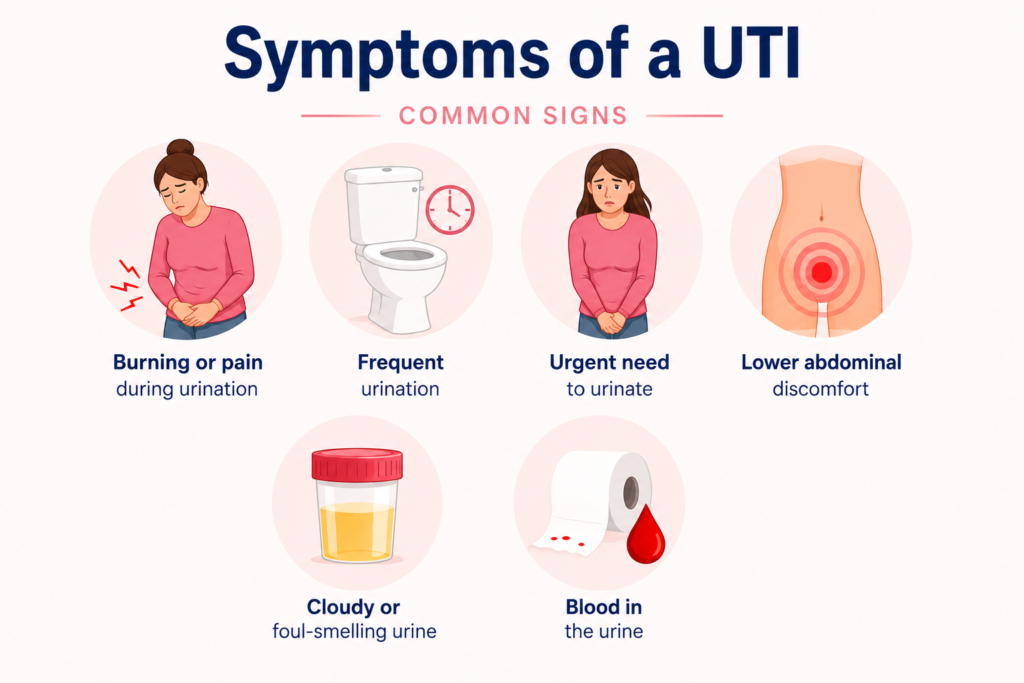
Symptoms may include burning or pain during urination, frequent urination, urgent need to urinate, lower abdominal discomfort, cloudy or foul-smelling urine, or blood in the urine. Not all urinary symptoms are caused by a UTI. Conditions such as overactive bladder, vaginal infections, pelvic floor dysfunction, and interstitial cystitis can sometimes cause similar symptoms.
When Recurrent UTIs May Signal an Underlying Problem
Most recurrent UTIs are uncomplicated, but certain situations may warrant further evaluation.
These include:
• Frequent infections despite preventive measures
• Kidney infections
• Kidney stones
• Blood in the urine that persists after treatment
• Difficulty emptying the bladder
• UTIs occurring in men
• Recurrent infections associated with fever or severe symptoms
A healthcare professional may recommend additional testing to identify contributing factors.
Can Recurrent UTIs Be Prevented?
While prevention is not always possible, several strategies may help reduce the risk.
1. Stay Well Hydrated
Drinking adequate fluids may help flush bacteria from the urinary tract.
2. Avoid Delaying Urination
Regular bladder emptying may help reduce bacterial growth.
3. Urinate After Sexual Activity
Some individuals find that urinating after intercourse may help lower their risk of infection.
4. Manage Chronic Health Conditions
Proper management of conditions such as diabetes may help reduce infection risk.
5. Discuss Menopause-Related Changes
For some postmenopausal women, healthcare professionals may recommend treatments that help restore the protective vaginal environment.
6. Avoid Unnecessary Antibiotic Use
Repeated antibiotic exposure can contribute to bacterial resistance and may not always be the best long-term prevention strategy.
Myths About Recurrent UTIs

Myth: Every Episode of Burning Means a UTI
Truth: Several conditions can mimic UTI symptoms. Proper evaluation may be necessary when symptoms repeatedly occur.
Myth: Cranberry Products Cure UTIs
Truth: Research on cranberry products has shown mixed results. They may help reduce recurrence in some individuals, but they are not a treatment for an active infection.
Myth: Poor Hygiene Causes Most Recurrent UTIs
Truth: While hygiene plays a role in overall health, recurrent UTIs are often related to biological factors, hormonal changes, anatomy, or bladder function rather than poor hygiene.
When Should You Seek Medical Attention?
Contact a healthcare professional if you develop:
• Fever
• Chills
• Flank or back pain
• Nausea or vomiting
• Blood in the urine
• Symptoms that are severe or worsening
• Recurrent urinary symptoms
These symptoms may indicate a more serious infection or another condition requiring evaluation.
Key Takeaways
Recurrent UTIs are common and can occur for many different reasons. Sexual activity, menopause, bladder-emptying problems, diabetes, and individual susceptibility may all contribute. Although repeated infections can be frustrating, identifying risk factors and addressing underlying causes may help reduce future episodes.
Final Note
If you find yourself dealing with UTIs again and again, you’re not alone. Recurrent urinary symptoms can be frustrating, disruptive, and sometimes confusing. Understanding the factors that contribute to recurrent UTIs is an important first step toward protecting your urinary health.
Explore more evidence-based health guides from Ecura Health to learn about common symptoms, chronic conditions, preventive care, and wellness topics designed to help you make informed decisions about your health.
References
- Anger J, Lee U, Ackerman AL, et al. Recurrent Uncomplicated Urinary Tract Infections in Women: AUA/CUA/SUFU Guideline. American Urological Association.
- Schaeffer AJ, Nicolle LE. Recurrent Urinary Tract Infections. StatPearls Publishing.
- National Institute of Diabetes and Digestive and Kidney Diseases. Urinary Tract Infections.
- American College of Obstetricians and Gynecologists. UTIs After Menopause: Why They’re Common and What to Do About Them.
- Cleveland Clinic. Why Do I Get Urinary Tract Infections So Often?