
Shingles: Symptoms, Causes, Treatment, and Prevention
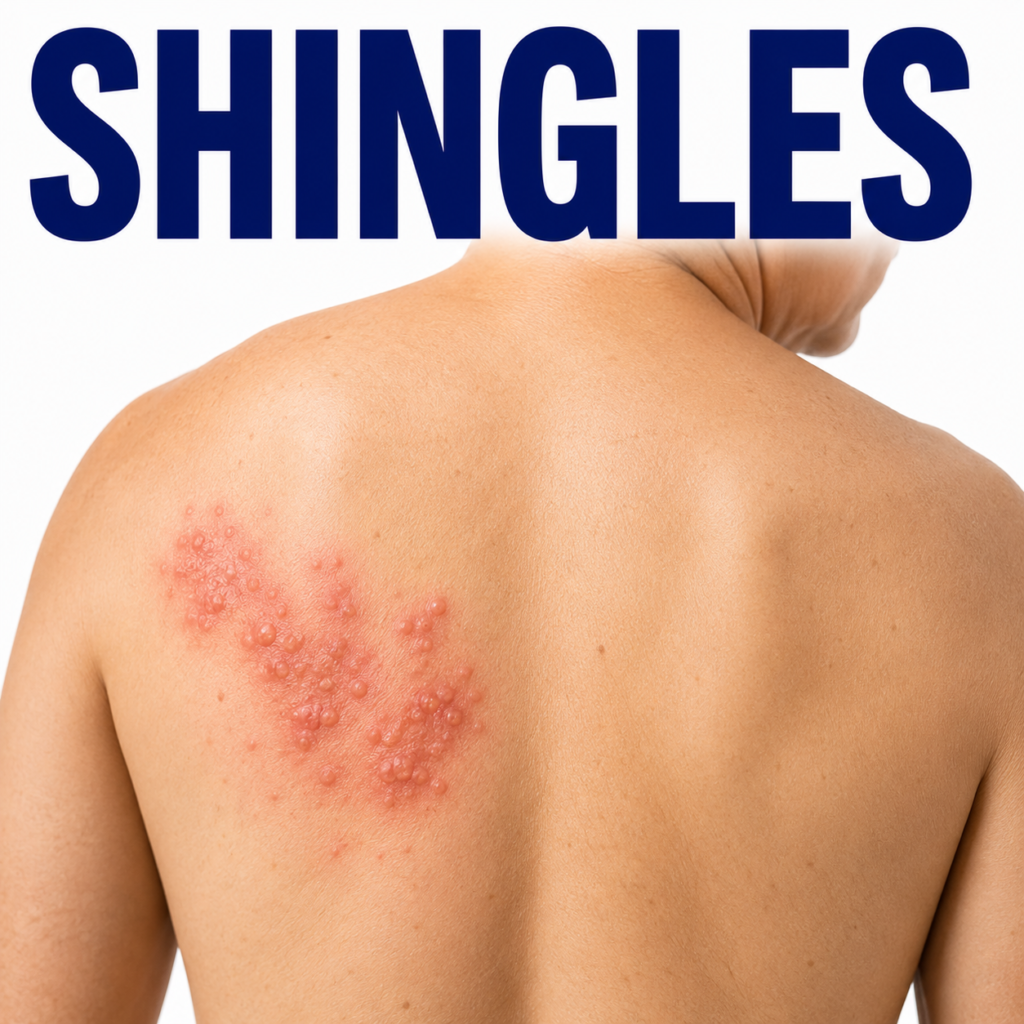
What Is Shingles?
Shingles, also called herpes zoster, is caused by the varicella zoster virus, the same virus that causes chickenpox.
After someone recovers from chickenpox, the virus remains inactive in nerve tissue for years. It can reactivate later in life and cause shingles.
Shingles usually appears as a painful rash on one side of the body or face.
Common Symptoms
Early symptoms often begin several days before the rash appears.
Symptoms may include:
- Pain, burning, tingling, or itching
- Sensitivity to touch
- Headache
- Fever
- Fatigue
- A red rash that develops into fluid filled blisters
- Blisters that scab over within 7 to 10 days
The rash usually heals within 2 to 4 weeks.
Shingles at a Glance
| Mild Illness | More Severe Illness |
|---|---|
| Rash limited to one area | Rash involving the eye or widespread rash |
| Pain improves as rash heals | Persistent nerve pain after the rash heals |
| Heals within several weeks | Complications affecting vision or the nervous system |
| Responds well to early antiviral treatment | May require urgent medical care |
Did You Know?
About 1 in 3 people in the United States will develop shingles during their lifetime. The risk increases with age, especially after age 50.
What Causes Shingles?
Shingles occurs when the inactive varicella zoster virus becomes active again.
Factors that increase the risk include:
- Older age
- A weakened immune system
- Certain cancers
- HIV infection
- Medications that suppress the immune system
- Physical or emotional stress
You cannot catch shingles from someone who has shingles. However, someone with shingles can spread the varicella zoster virus to a person who has never had chickenpox or the chickenpox vaccine, causing that person to develop chickenpox rather than shingles.
Who Is More Likely to Get Shingles?
Your risk is higher if you:
- Are age 50 or older
- Previously had chickenpox
- Have a weakened immune system
- Take immunosuppressive medications
- Have certain cancers or HIV infection
Although shingles is more common in older adults, younger adults can also develop it.
How Is Shingles Treated?
Treatment works best when started within 72 hours of the rash appearing.
| Treatment | How It Helps |
| Valacyclovir | Shortens illness and reduces complications |
| Acyclovir | Antiviral medication that helps stop viral replication |
| Famciclovir | Alternative antiviral medication |
| Pain relievers | Help reduce discomfort |
| Cool compresses | Soothe irritated skin |
| Calamine lotion or oatmeal baths | Help relieve itching |
Early antiviral treatment may reduce the risk of developing postherpetic neuralgia, the most common complication of shingles.
How Can You Help Prevent Shingles?
Vaccination is the most effective way to prevent shingles and its complications.
| Prevention Tips |
| Receive the Shingrix vaccine if you are eligible |
| Manage chronic medical conditions |
| Get adequate sleep |
| Maintain a healthy lifestyle to support your immune system |
| Avoid direct contact with shingles blisters if you have never had chickenpox or the chickenpox vaccine |
The CDC recommends Shingrix for:
- Adults 50 years and older
- Adults 19 years and older with weakened immune systems due to disease or therapy
Myths vs. Facts
| Myth | Fact |
| Shingles is the same as chickenpox. | Shingles is caused by reactivation of the chickenpox virus years after the original infection. |
| You can catch shingles from someone who has shingles. | You cannot catch shingles directly, but you can develop chickenpox if you have never been infected or vaccinated and are exposed to the virus. |
| Only older adults get shingles. | The risk increases with age, but younger adults can also develop shingles. |
| Once the rash heals, the pain always goes away. | Some people develop postherpetic neuralgia, which can last for months or even years. |
When Should You See a Healthcare Provider?
Schedule an appointment immediately if you:
- Develop a painful rash on one side of your body or face
- Have tingling or burning followed by blisters
- Are over age 50 and suspect shingles
- Have a weakened immune system
- Are pregnant and develop shingles
Seek emergency medical care if:
- The rash involves your eye or eyelid
- You develop vision changes or eye pain
- The rash becomes widespread
- You develop confusion, severe headache, or weakness
Shingles involving the eye can threaten vision and requires prompt treatment.
Frequently Asked Questions
Is shingles contagious?
Shingles itself is not contagious. However, the virus can spread from open blisters to someone who has never had chickenpox or the chickenpox vaccine, causing chickenpox.
How long does shingles last?
Most cases improve within 2 to 4 weeks, although nerve pain may last much longer in some people.
What is postherpetic neuralgia?
Postherpetic neuralgia is persistent nerve pain that continues after the shingles rash has healed. It is the most common complication of shingles.
Should I get the shingles vaccine if I’ve already had shingles?
Yes. The CDC recommends Shingrix even if you have previously had shingles because it helps reduce the risk of future episodes.
What Should You Do Next?
If you think you have shingles, contact a healthcare provider as soon as possible. Starting antiviral medication within the first 72 hours offers the greatest benefit and may reduce your risk of long term nerve pain. If you are age 50 or older, or have a weakened immune system, ask your healthcare provider whether the Shingrix vaccine is right for you.
References
Centers for Disease Control and Prevention. About Shingles (Herpes Zoster)
https://www.cdc.gov/shingles/about/
Centers for Disease Control and Prevention. Shingles Symptoms and Complications
https://www.cdc.gov/shingles/signs-symptoms/
Centers for Disease Control and Prevention. Shingles Vaccination
https://www.cdc.gov/shingles/vaccines/
Mayo Clinic. Shingles: Symptoms and Causes
https://www.mayoclinic.org/diseases-conditions/shingles/symptoms-causes/syc-20353054