
Genital Herpes: Symptoms, Causes, Treatment, and Prevention
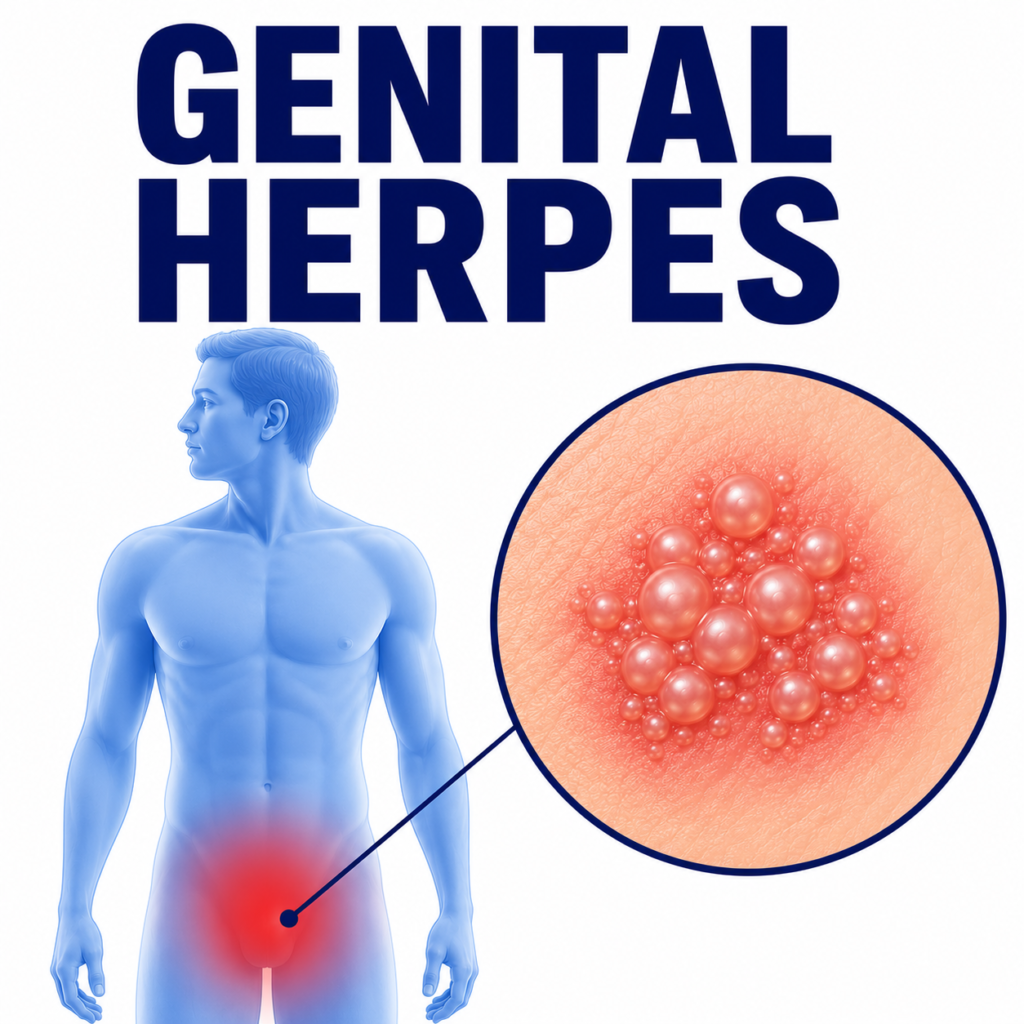
What Is Genital Herpes?
Genital herpes is a sexually transmitted infection caused by the herpes simplex virus (HSV).
Both HSV 1 and HSV 2 can cause genital herpes. After infection, the virus remains in the body for life and can reactivate, causing future outbreaks.
Many people never develop noticeable symptoms and may not realize they are infected.
Common Symptoms
When symptoms occur, they may include:
- Painful blisters or sores on or around the genitals, anus, buttocks, or upper thighs
- Tingling, itching, or burning before sores appear
- Painful urination
- Swollen lymph nodes in the groin
- Fever
- Body aches
- Fatigue
The first outbreak is usually the most severe. Future outbreaks are often shorter, milder, and less frequent over time.
Genital Herpes at a Glance
| First Outbreak | Recurrent Outbreak |
|---|---|
| Usually more painful | Usually milder |
| May include fever and body aches | Often limited to a few sores |
| Lasts 2 to 4 weeks | Usually heals within 1 to 2 weeks |
| Multiple sores may occur | Often fewer sores develop |
Did You Know?
Most people with genital herpes do not know they have it because symptoms may be absent or so mild that they are mistaken for pimples, ingrown hairs, or skin irritation. Even without symptoms, the virus can still spread to sexual partners.
What Causes Genital Herpes?
Genital herpes is spread through direct skin to skin contact during:
- Vaginal sex
- Anal sex
- Oral sex
- Genital to genital contact
The virus is most contagious during an outbreak, but it can also spread when no sores are visible because of asymptomatic viral shedding.
Who Is More Likely to Get Genital Herpes?
Your risk is higher if you:
- Have multiple sexual partners
- Have a partner with genital herpes
- Do not consistently use condoms
- Have another sexually transmitted infection
- Have a weakened immune system
Anyone who is sexually active can develop genital herpes.
How Is Genital Herpes Treated?
Although there is no cure, treatment can effectively manage symptoms.
| Treatment | How It Helps |
| Valacyclovir | Shortens outbreaks and reduces transmission risk |
| Acyclovir | Treats active outbreaks and suppresses recurrences |
| Famciclovir | Alternative antiviral medication |
| Daily suppressive antiviral therapy | Reduces frequent outbreaks and lowers the risk of spreading HSV to partners |
| Pain relievers | Help relieve discomfort |
| Warm baths and loose fitting clothing | Reduce irritation during outbreaks |
Starting antiviral medication as soon as symptoms begin is most effective. People with frequent outbreaks may benefit from taking antiviral medication every day.
How Can You Help Prevent Genital Herpes?
You can reduce your risk of spreading or acquiring genital herpes by:
| Prevention Tips |
| Use condoms consistently and correctly |
| Avoid sexual contact during outbreaks |
| Avoid sexual contact if tingling or burning begins before sores appear |
| Discuss your HSV status with sexual partners |
| Consider daily suppressive antiviral therapy if you have frequent outbreaks |
| Wash your hands after touching sores |
While condoms significantly reduce the risk of transmission, they do not eliminate it because the virus may be present on nearby skin that is not covered.
Myths vs. Facts
| Myth | Fact |
| Only people with visible sores can spread herpes. | The virus can spread even when no sores are present. |
| Genital herpes is caused only by HSV 2. | Both HSV 1 and HSV 2 can cause genital herpes. |
| People with herpes cannot have healthy relationships. | With treatment and precautions, many people have healthy relationships and greatly reduce transmission risk. |
| Genital herpes causes cancer. | Genital herpes does not increase the risk of cancer. |
When Should You See a Healthcare Provider?
Schedule an appointment if you:
- Develop painful blisters or sores around the genitals or anus
- Have burning or pain during urination along with sores
- Have a partner diagnosed with genital herpes
- Experience frequent outbreaks
- Are pregnant and have symptoms or a history of genital herpes
- Have a weakened immune system
Seek urgent medical attention if you develop severe pain, difficulty urinating, eye symptoms, or widespread sores.
Frequently Asked Questions
Can genital herpes be cured?
No. The virus remains in the body for life, but antiviral medications can reduce symptoms, shorten outbreaks, and lower the risk of transmission.
Can I spread herpes if I do not have sores?
Yes. HSV can spread through asymptomatic viral shedding even when no visible sores are present.
Will I always have frequent outbreaks?
No. Many people have fewer outbreaks over time, and some eventually have very infrequent recurrences.
Can I have children if I have genital herpes?
Yes. Many people with genital herpes have healthy pregnancies and healthy babies. Be sure to tell your obstetric provider if you have genital herpes because treatment near delivery may reduce the risk of passing the infection to your baby.
What Should You Do Next?
If you notice painful blisters, sores, or unusual genital symptoms, schedule an evaluation as soon as possible. Testing is most accurate when a fresh sore can be swabbed. If you are diagnosed with genital herpes, antiviral medications, safer sex practices, and open communication with partners can help reduce outbreaks and lower the risk of transmission.
References
-
Centers for Disease Control and Prevention. About Genital Herpes
https://www.cdc.gov/herpes/about/index.html
-
Centers for Disease Control and Prevention. Sexually Transmitted Infections Treatment Guidelines: Genital Herpes
https://www.cdc.gov/std/treatment-guidelines/herpes.htm
-
American Academy of Dermatology Association. Genital Herpes: Overview
https://www.aad.org/public/diseases/a-z/genital-herpes-overview
-
American Academy of Dermatology Association. Genital Herpes: Diagnosis and Treatment
https://www.aad.org/public/diseases/a-z/genital-herpes-treatment
-
Mayo Clinic. Genital Herpes: Symptoms and Causes
https://www.mayoclinic.org/diseases-conditions/genital-herpes/symptoms-causes/syc-20356161