
Cold Sores: Symptoms, Causes, Treatment, and Prevention
What Are Cold Sores?
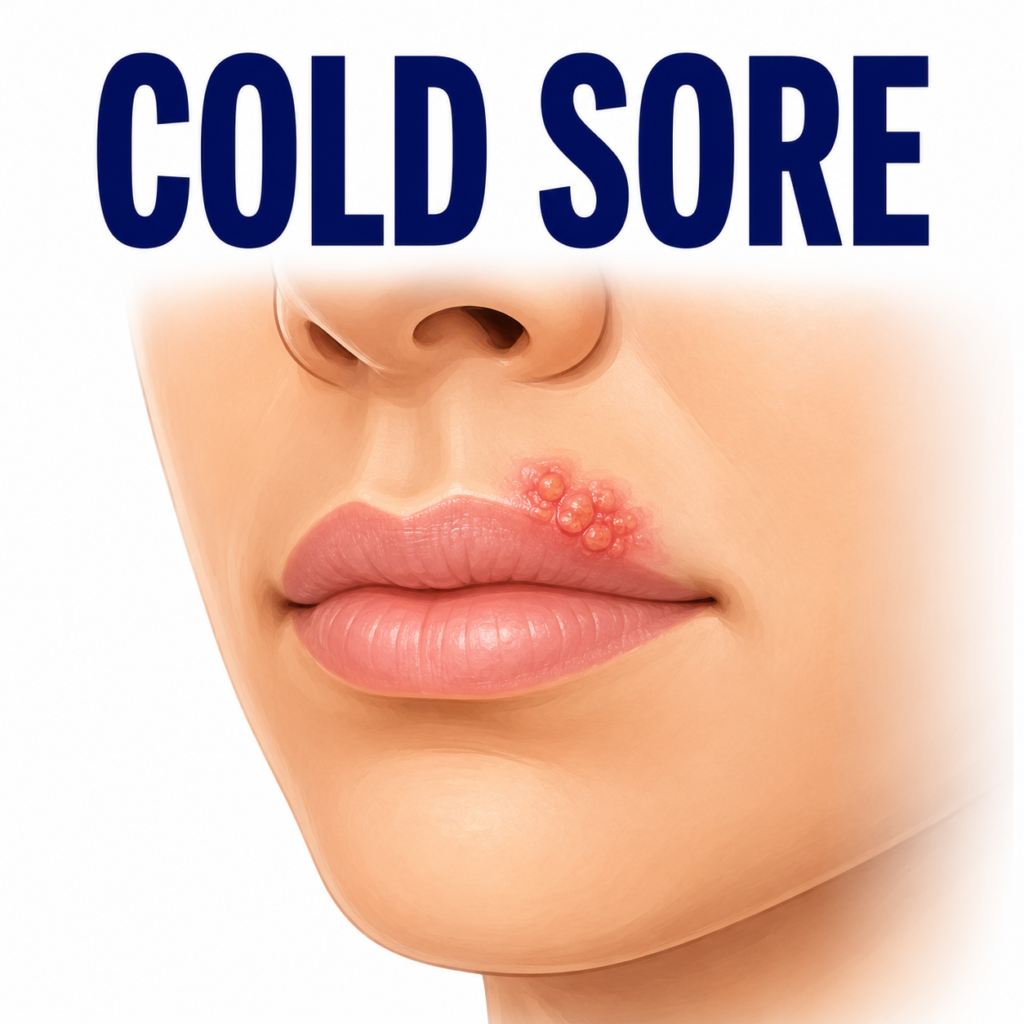
Cold sores, also called fever blisters or herpes labialis, are fluid filled blisters caused by the herpes simplex virus (HSV).
Most cold sores are caused by HSV 1, although HSV 2 can also cause oral infections.
After the first infection, the virus remains inactive in nearby nerve cells and may reactivate later, leading to recurrent outbreaks.
Common Symptoms
Many people experience warning symptoms one to two days before a cold sore appears.
Symptoms may include:
- Tingling
- Burning
- Itching
- Stinging
- Small fluid filled blisters
- Painful sores after the blisters break
- Crusting or scabbing as the sore heals
Most cold sores heal within 7 to 14 days in otherwise healthy people.
Cold Sores at a Glance
| First Outbreak | Recurrent Outbreak |
|---|---|
| Often more severe | Usually milder |
| May include fever and swollen lymph nodes | Usually limited to tingling and a few blisters |
| May involve sores inside the mouth | Usually affects the lips or skin around the mouth |
| May last longer | Usually heals within 1 to 2 weeks |
Did You Know?
More than half of Americans ages 14 to 49 carry the virus that commonly causes cold sores, but many never develop noticeable symptoms.
What Causes Cold Sores?
Cold sores are caused by infection with the herpes simplex virus.
After the initial infection, the virus remains in the body and can reactivate.
Common triggers include:
- Illness
- Fever
- Emotional stress
- Fatigue
- Sun exposure
- Hormonal changes
- Dental procedures
- Injury to the lips
Not everyone has the same triggers.
How Do Cold Sores Spread?
The virus spreads through direct contact with saliva or the sore itself.
Examples include:
- Kissing
- Sharing drinks or eating utensils
- Sharing lip balm
- Sharing razors
- Oral contact during an active outbreak
Cold sores are most contagious when blisters are present, but transmission can occasionally occur even when no sore is visible.
How Are Cold Sores Treated?
Starting treatment as early as possible, ideally during the tingling stage, works best.
| Treatment | How It Helps |
| Docosanol (Abreva®) | May shorten healing time if started early |
| Prescription acyclovir | Shortens outbreaks |
| Prescription valacyclovir | Shortens outbreaks and reduces symptoms |
| Prescription famciclovir | Alternative antiviral medication |
| Cold compresses | Relieve discomfort |
| Over the counter pain relievers | Help reduce pain |
People who develop frequent outbreaks may benefit from daily antiviral medication prescribed by their healthcare provider.
How Can You Help Prevent Cold Sores?
Although the virus cannot be eliminated, you can reduce outbreaks by:
| Prevention Tips |
| Use lip balm with sunscreen |
| Manage stress |
| Get adequate sleep |
| Avoid sharing lip balm, utensils, or drinks during an outbreak |
| Wash your hands after touching a cold sore |
| Avoid kissing or oral contact until the sore has completely healed |
Myths vs. Facts
| Myth | Fact |
| Cold sores are the same as canker sores. | Cold sores occur on the lips or around the mouth and are caused by HSV. Canker sores occur inside the mouth and are not caused by herpes. |
| Cold sores only spread when blisters are visible. | The virus is most contagious during an outbreak but can occasionally spread without visible sores. |
| Once a cold sore heals, the virus is gone. | HSV remains in the body for life and may reactivate later. |
| Antibiotics treat cold sores. | Cold sores are caused by a virus, so antiviral medications, not antibiotics, are used for treatment. |
When Should You See a Healthcare Provider?
Schedule an appointment if you:
- Have a cold sore lasting longer than two weeks
- Develop frequent outbreaks
- Have severe pain
- Have several cold sores at the same time
- Have a weakened immune system
- Develop a cold sore near your eye
Seek urgent medical care if you develop eye pain, redness, blurred vision, or sensitivity to light along with a cold sore, as herpes can affect the eye and threaten vision.
Frequently Asked Questions
Are cold sores contagious?
Yes. They spread through direct contact with saliva or the sore itself.
Can cold sores be cured?
No. The virus remains in the body for life, but antiviral medications can shorten outbreaks and reduce recurrences.
Can I kiss someone if I have a cold sore?
It is best to avoid kissing and oral contact until the sore has completely healed and the scab has fallen off.
Why do my cold sores keep coming back?
The virus remains dormant in nearby nerves and can reactivate during periods of stress, illness, sun exposure, or other triggers.
What Should You Do Next?
If you notice tingling or burning around your lips, start treatment as early as possible because antiviral medications work best during the first signs of an outbreak. If you develop frequent cold sores, severe symptoms, or sores near your eyes, schedule an evaluation with your healthcare provider to discuss prescription treatment and strategies to reduce future outbreaks.
References
-
American Academy of Dermatology Association. Cold Sores: Overview
https://www.aad.org/public/diseases/a-z/cold-sores-overview
-
American Academy of Dermatology Association. Cold Sores: Signs and Symptoms
https://www.aad.org/public/diseases/a-z/cold-sores-symptoms
-
American Academy of Dermatology Association. Cold Sores: Who Gets and Causes
https://www.aad.org/public/diseases/a-z/cold-sores-causes
-
American Academy of Dermatology Association. Cold Sores: Diagnosis and Treatment
https://www.aad.org/public/diseases/a-z/cold-sores-treatment
-
Mayo Clinic. Cold Sore: Symptoms and Causes
https://www.mayoclinic.org/diseases-conditions/cold-sore/symptoms-causes/syc-20371017