
Canker Sores: Symptoms, Causes, Treatment, and Prevention
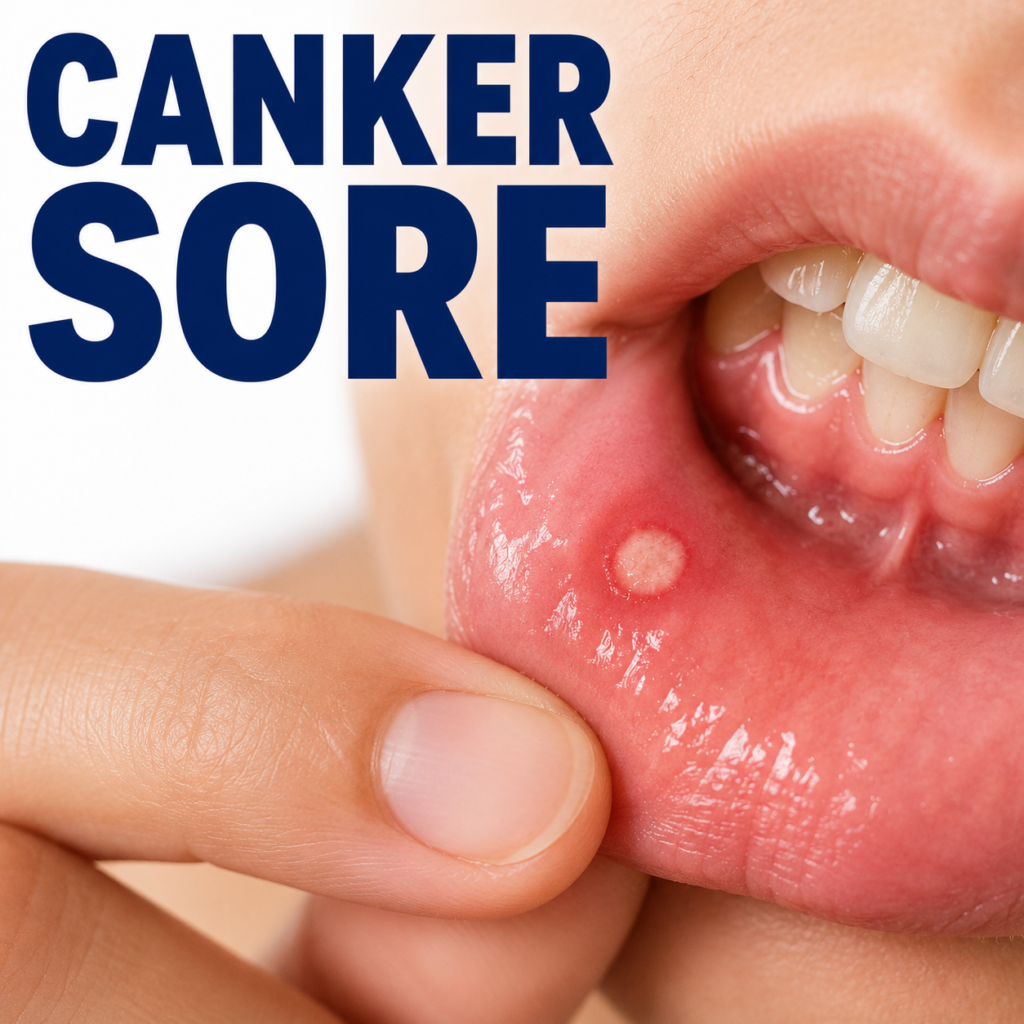
What Are Canker Sores?
Canker sores, also called aphthous ulcers or recurrent aphthous stomatitis, are shallow ulcers that develop on the soft tissues inside the mouth.
They commonly appear on the:
- Inside of the lips
- Inside of the cheeks
- Tongue
- Floor of the mouth
- Soft palate
Unlike cold sores, canker sores occur inside the mouth, are not caused by the herpes virus, and are not contagious.
Common Symptoms
You may notice:
- A small round or oval sore
- A white, yellow, or gray center
- A red border around the ulcer
- Pain when eating, drinking, or talking
- Tingling or burning before the sore appears
Most canker sores heal without leaving a scar.
Canker Sores at a Glance
| Minor Canker Sores | Major Canker Sores |
|---|---|
| Less than 1 cm in size | Larger than 1 cm |
| Heal within 7–14 days | May take several weeks to heal |
| Usually one to five sores | Often deeper and more painful |
| Heal without scarring | May leave scars |
Did You Know?
About 20% of people experience recurrent canker sores at some point in their lives, making them the most common ulcerative condition of the mouth.
What Causes Canker Sores?
The exact cause is not fully understood, but several factors may trigger them.
Common triggers include:
- Minor mouth injuries (biting your cheek or aggressive brushing)
- Emotional stress
- Lack of sleep
- Hormonal changes
- Acidic or spicy foods
- Toothpaste containing sodium lauryl sulfate (SLS)
- Iron deficiency
- Vitamin B12 deficiency
- Folate deficiency
Less commonly, recurrent canker sores may be associated with conditions such as celiac disease, inflammatory bowel disease, Behçet disease, or HIV infection.
Who Is More Likely to Get Canker Sores?
Your risk is higher if you:
- Are a teenager or young adult
- Have a family history of canker sores
- Experience frequent stress
- Have nutritional deficiencies
- Have certain autoimmune or gastrointestinal diseases
Women may notice flare-ups during hormonal changes.
How Are Canker Sores Treated?
Most canker sores heal without prescription treatment.
| Treatment | How It Helps |
| Saltwater or baking soda rinses | Helps soothe irritation |
| Topical numbing gels (benzocaine) | Relieves pain temporarily |
| Protective oral pastes | Cover and protect the sore |
| Prescription corticosteroid dental paste | Reduces inflammation in painful or recurrent sores |
| Chlorhexidine mouth rinse | May reduce pain and promote healing in selected cases |
Avoid foods that irritate the sore, such as citrus fruits, spicy foods, and salty snacks, until healing occurs.
How Can You Help Prevent Canker Sores?
Although they cannot always be prevented, these habits may reduce flare-ups.
| Prevention Tips |
| Brush gently with a soft-bristled toothbrush |
| Avoid foods that trigger sores |
| Manage stress |
| Get adequate sleep |
| Maintain good oral hygiene |
| Correct vitamin or mineral deficiencies if present |
| Consider an SLS-free toothpaste if sores occur frequently |
Myths vs. Facts
| Myth | Fact |
| Canker sores are contagious. | They cannot spread from person to person. |
| Canker sores and cold sores are the same. | Cold sores are caused by herpes simplex virus and usually occur on the lips, while canker sores develop inside the mouth. |
| Spicy food causes every canker sore. | Spicy foods may trigger symptoms in some people but are not the underlying cause. |
| Antibiotics are needed. | Most canker sores heal without antibiotics. |
When Should You See a Healthcare Provider?
Schedule an appointment if you:
- Have sores lasting longer than two weeks
- Develop unusually large ulcers
- Have frequent recurrent sores
- Have difficulty eating or drinking because of pain
- Develop fever or swollen lymph nodes
- Have sores along with abdominal pain, diarrhea, genital ulcers, or other unexplained symptoms
- Persistent or recurrent ulcers may require evaluation for an underlying medical condition.
Frequently Asked Questions
How long do canker sores last?
Most minor canker sores heal within 7 to 14 days.
Are canker sores contagious?
No. They cannot be spread through kissing, sharing utensils, or other close contact.
Should I pop or scrape a canker sore?
No. Leave the ulcer alone and allow it to heal naturally.
Can stress cause canker sores?
Stress is one of the most commonly reported triggers in people who experience recurrent canker sores.
What Should You Do Next?
If you develop a painful sore inside your mouth, avoid foods that irritate it and consider using an over-the-counter numbing gel or protective paste for relief. If the sore lasts longer than two weeks, keeps returning, or is unusually large or painful, schedule an evaluation with your healthcare provider or dentist to determine whether additional treatment or testing is needed.
References
- American Family Physician. Common Oral Lesions
- https://www.aafp.org/pubs/afp/issues/2022/0400/p369.html
- American Family Physician. Management of Aphthous Ulcers
- https://www.aafp.org/pubs/afp/issues/2000/0701/p149.html
- DermNet NZ. Aphthous Ulcer
- https://dermnetnz.org/topics/aphthous-ulcer
- Cleveland Clinic. Canker Sores
- https://my.clevelandclinic.org/health/diseases/10945-canker-sores