
Nail Fungus: Symptoms, Causes, Treatment, and Prevention
What Is Nail Fungus?
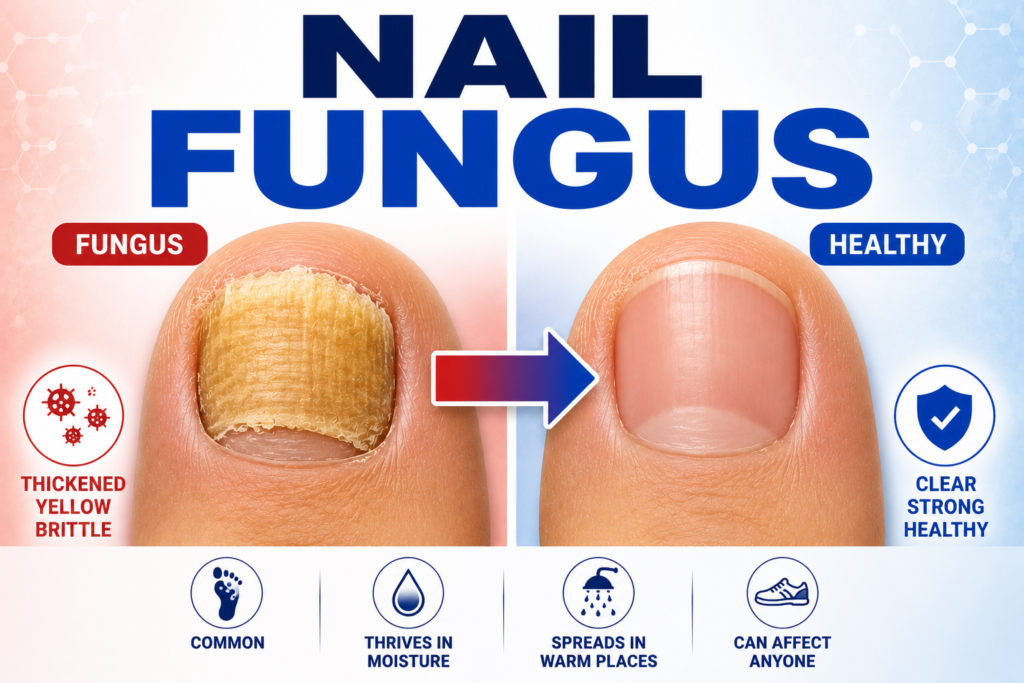
Nail fungus, also called onychomycosis, is a fungal infection of the nail.
It is most often caused by dermatophytes, the same fungi that cause athlete’s foot and ringworm. Less commonly, yeasts or molds can also infect the nail.
Toenails are affected much more often than fingernails because they spend more time in warm, moist environments inside shoes.
Common Symptoms
You may notice:
- Thickened nails
- Yellow, white, or brown discoloration
- Brittle or crumbly nails
- Nails that split or crack
- Distorted nail shape
- Debris building up underneath the nail
- Nail lifting away from the nail bed
- Mild discomfort or pain when wearing shoes
The infection usually starts at the edge of the nail and gradually spreads inward.
Nail Fungus at a Glance
| Mild Infection | More Advanced Infection |
|---|---|
| One small area of discoloration | Multiple nails affected |
| Slight thickening | Significant thickening and distortion |
| Minimal discomfort | Pain when walking or wearing shoes |
| Easier to treat | Often requires oral medication |
Did You Know?
Toenails grow very slowly, so even after successful treatment, it can take 9 to 18 months for a healthy toenail to completely grow back.
What Causes Nail Fungus?
Fungi enter through tiny cracks in the nail or surrounding skin.
Common sources include:
- Athlete’s foot
- Walking barefoot in public showers or locker rooms
- Wearing sweaty shoes for long periods
- Nail injuries
- Poor circulation
- Aging
The fungi thrive in warm, moist environments.
Who Is More Likely to Develop Nail Fungus?
Your risk is higher if you:
- Are over age 60
- Have athlete’s foot
- Have diabetes
- Have poor circulation
- Have a weakened immune system
- Sweat heavily
- Frequently walk barefoot in public locker rooms or pool areas
- Wear tight-fitting shoes
How Is Nail Fungus Treated?
Treatment depends on the severity of the infection.
| Treatment | How It Helps |
| Prescription oral terbinafine | Most effective treatment for many toenail infections |
| Prescription oral itraconazole | Alternative oral antifungal medication |
| Prescription topical antifungals (efinaconazole, tavaborole, ciclopirox) | Treat mild or early infections |
| Nail trimming and thinning | Improves medication penetration |
| Nail removal (rare cases) | Considered for severe or resistant infections |
Oral medications generally work better than topical medications for most toenail infections because they reach the fungus through the bloodstream.
How Can You Prevent Nail Fungus?
Healthy foot care can reduce your risk.
| Prevention Tips |
| Keep your feet clean and dry |
| Change socks daily |
| Wear breathable shoes |
| Rotate shoes to allow them to dry completely |
| Wear sandals in public showers and locker rooms |
| Treat athlete’s foot promptly |
| Trim nails straight across |
| Do not share nail clippers or footwear |
Myths vs. Facts
| Myth | Fact |
| Nail fungus is only a cosmetic problem. | Untreated infections can spread and become painful. |
| Home remedies cure most nail fungus. | Most home remedies have limited scientific evidence. |
| Painting over the nail cures the infection. | Nail polish hides the discoloration but does not treat the fungus. |
| Once cured, nail fungus never returns. | Reinfection is common without preventive measures. |
When Should You See a Healthcare Provider?
Schedule an appointment if you:
- Have diabetes and notice nail changes
- Have pain when walking or wearing shoes
- Have multiple nails involved
- Develop redness, swelling, or drainage around the nail
- Do not improve with treatment
- Are unsure whether the nail changes are caused by fungus
A healthcare provider can confirm the diagnosis, sometimes by testing a nail sample before starting oral medication.
Frequently Asked Questions
Will nail fungus go away on its own?
Usually not. Most infections require treatment to eliminate the fungus.
How long does treatment take?
Oral treatment often lasts several weeks to a few months, but a healthy toenail may take up to 18 months to fully grow back.
Can nail fungus spread?
Yes. It can spread to other nails, nearby skin, or other people through shared surfaces or personal items.
Can I wear nail polish?
You can, but polish does not treat the infection and may make it harder to monitor improvement.
What Should You Do Next?
If you notice thickened, discolored, or brittle nails, seek evaluation early. Treatment is generally more successful before the infection involves most of the nail. A healthcare provider can confirm the diagnosis and recommend the treatment most likely to clear the infection.
References
- American Academy of Dermatology Association. Nail Fungus: Diagnosis and Treatment
https://www.aad.org/public/diseases/a-z/nail-fungus-treatment - DermNet NZ. Onychomycosis (Fungal Nail Infection)
https://dermnetnz.org/topics/fungal-nail-infections - American Academy of Family Physicians. Onychomycosis: Rapid Evidence Review
https://www.aafp.org/pubs/afp/issues/2021/1000/p359.html - MedlinePlus Medical Encyclopedia. Fungal Nail Infection
https://medlineplus.gov/ency/article/001330.htm