
Eyelash Thinning: Causes, Treatment, and When to Be Concerned
What Is Eyelash Thinning?
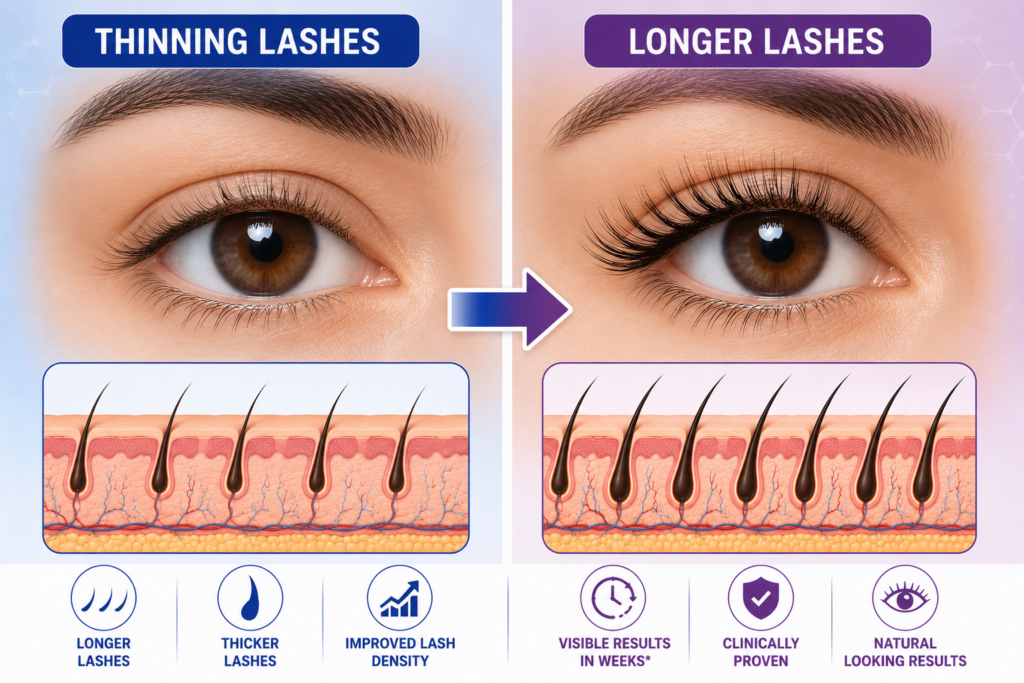
Eyelash thinning, also called eyelash hypotrichosis or madarosis when there is significant loss, occurs when eyelashes become fewer, shorter, or less dense than normal.
Like the hair on your scalp, eyelashes naturally grow, rest, and shed as part of a normal growth cycle.
Most people lose 1 to 5 eyelashes per day, which is considered normal. Excessive shedding or thinning may indicate another problem.
Common Symptoms
You may notice:
- Thinner or less dense eyelashes
- Patchy areas where lashes are missing
- Shorter eyelashes than before
- Eyelashes that break easily
- Increased eyelash shedding when washing your face or removing makeup
Some people also experience eyelid redness, itching, or crusting if inflammation is the cause.
Eyelash Thinning at a Glance
| Normal Shedding | Possible Eyelash Thinning |
|---|---|
| Lose 1 to 5 lashes daily | Noticeable loss of lash volume |
| Eyelashes regrow naturally | Lashes become sparse or patchy |
| No eyelid irritation | May have redness, scaling, or itching |
| Temporary shedding | Persistent thinning over weeks or months |
Did You Know?
The only FDA-approved prescription medication specifically approved to increase eyelash growth is bimatoprost (Latisse®). It works by extending the natural growth phase of eyelashes.
What Causes Eyelash Thinning?
Many different conditions can lead to eyelash loss.
Common causes include:
- Aging
- Blepharitis (eyelid inflammation)
- Excessive rubbing of the eyes
- False eyelashes or eyelash extensions
- Allergic reactions to eye makeup or adhesives
- Thyroid disease
- Alopecia areata
- Certain medications, including chemotherapy
- Nutritional deficiencies such as iron deficiency
- Trichotillomania (hair-pulling disorder)
Identifying the underlying cause is important because treatment depends on the reason for the hair loss.
Who Is More Likely to Experience Eyelash Thinning?
Your risk may be higher if you:
- Frequently wear eyelash extensions
- Use waterproof mascara daily
- Rub your eyes often
- Have eczema, rosacea, or seborrheic dermatitis
- Have thyroid disease or autoimmune disorders
- Receive chemotherapy
- Have nutritional deficiencies
How Is Eyelash Thinning Treated?
Treatment depends on the underlying cause.
| Treatment | How It Helps |
| Treating blepharitis | Reduces eyelid inflammation |
| Stopping irritating cosmetic products | Allows follicles to recover |
| Bimatoprost (Latisse®) | Promotes longer and fuller eyelashes |
| Correcting nutritional deficiencies | Supports healthy hair growth |
| Treating thyroid or autoimmune disease | Addresses the underlying condition |
| Taking a break from eyelash extensions | Reduces traction and follicle damage |
Recovery may take several months because eyelashes grow slowly.
Tips for Healthier Eyelashes
Healthy habits can help protect your eyelashes.
- Remove eye makeup gently each night.
- Avoid pulling or rubbing your eyelashes.
- Replace old eye makeup regularly.
- Use eyelash extensions sparingly.
- Eat a balanced diet with adequate protein, iron, and vitamins.
- Treat eyelid irritation promptly.
Myths vs. Facts
| Myth | Fact |
| Losing a few eyelashes means something is wrong. | Losing a small number of lashes each day is normal. |
| Eyelash extensions are harmless. | Frequent extensions can damage natural lashes over time. |
| Mascara permanently damages eyelashes. | Most mascaras are safe when removed gently. |
| Eyelash thinning is always due to aging. | Medical conditions, medications, and inflammation are also common causes. |
When Should You See a Healthcare Provider?
Schedule an appointment if you:
- Develop sudden or severe eyelash loss
- Lose eyelashes along with eyebrow or scalp hair
- Have eyelid redness, swelling, or crusting
- Experience changes in vision or eye pain
- Notice symptoms of thyroid disease, such as fatigue or weight changes
- Do not improve after removing possible irritants
These symptoms may require evaluation for an underlying medical condition.
Frequently Asked Questions
Is it normal to lose eyelashes?
Yes. Most people naturally lose between one and five eyelashes each day.
Will my eyelashes grow back?
In many cases, yes. If the hair follicle remains healthy, eyelashes usually regrow after the underlying cause is treated.
Do eyelash extensions damage natural lashes?
They can. Repeated use or improper removal may lead to traction-related eyelash loss.
Does castor oil regrow eyelashes?
There is little scientific evidence that castor oil stimulates eyelash growth. Prescription bimatoprost is currently the only FDA-approved medication specifically indicated for increasing eyelash growth.
What Should You Do Next?
If you notice persistent eyelash thinning or patchy eyelash loss, avoid further irritation from cosmetics or eyelash extensions and schedule an evaluation with a healthcare provider. Identifying the underlying cause early can help preserve healthy eyelash follicles and improve the chances of regrowth.
References
Cleveland Clinic. Why Are My Eyelashes Falling Out?
https://health.clevelandclinic.org/why-are-my-eyelashes-falling-out
Mayo Clinic. Hair Loss: Symptoms and Causes
https://www.mayoclinic.org/diseases-conditions/hair-loss/symptoms-causes/syc-20372926
American Academy of Dermatology Association. Hair Loss Types: Alopecia Areata Diagnosis and Treatment
https://www.aad.org/public/diseases/hair-loss/types/alopecia/treatment
U.S. Food and Drug Administration. LATISSE® (bimatoprost ophthalmic solution) Information
https://www.accessdata.fda.gov/drugsatfda_docs/label/