
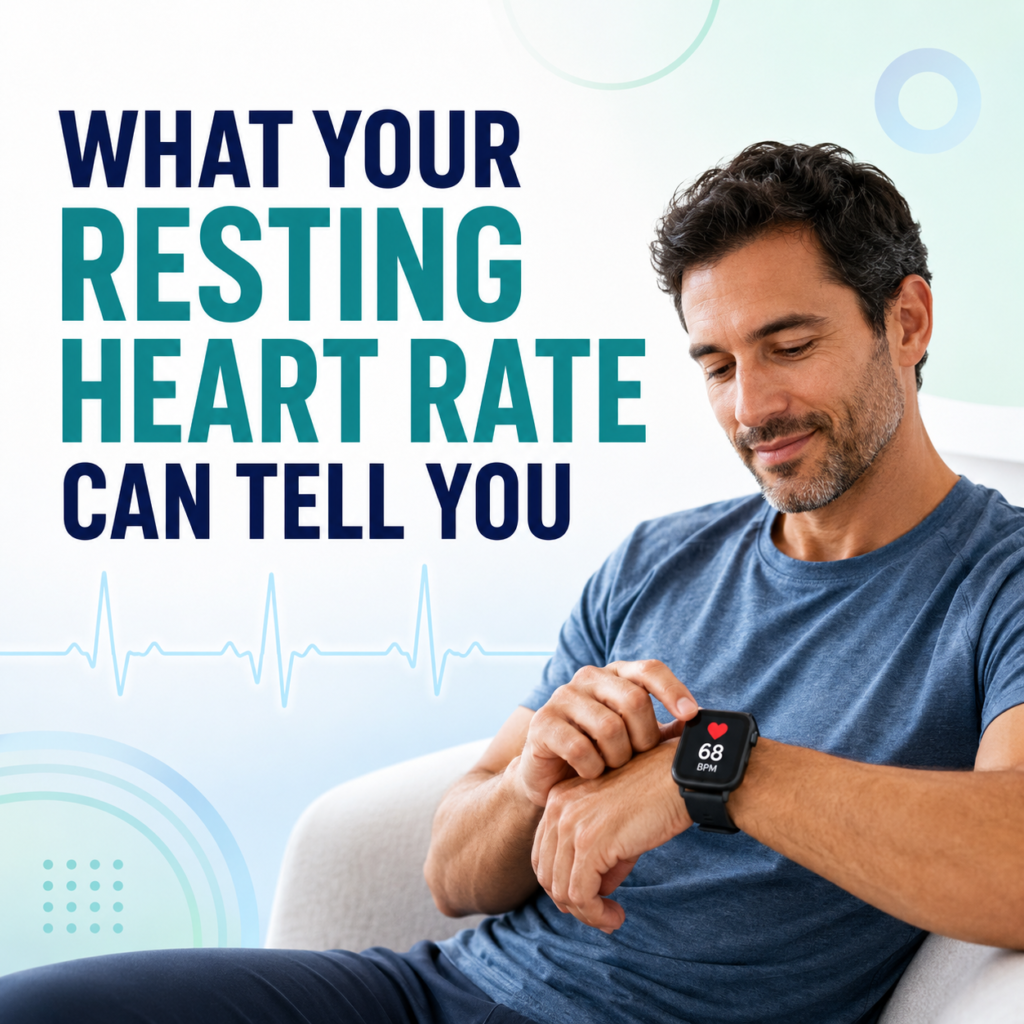
How to measure your pulse, understand normal variation, and recognize a meaningful change
Your resting heart rate is the number of times your heart beats each minute when you are awake, calm, and not exercising. It is a useful vital sign, but it is not a score of how healthy you are. A single number must be interpreted alongside symptoms, fitness, medicines, illness, and your usual pattern.
For most adults, a resting heart rate between 60 and 100 beats per minute is considered typical. Well-trained athletes and people taking certain medicines may have a lower rate. A temporary rise can occur with exercise, stress, fever, dehydration, pain, caffeine, or poor sleep.
What the number can and cannot tell you
Heart rate reflects how often the heart contracts, not how forcefully it pumps or whether every beat is normal. It is different from blood pressure. A person can have a normal pulse and high blood pressure, or an unusual pulse with otherwise normal blood pressure.
Resting heart rate can help reveal trends. A persistent change from your baseline may signal that the body is under stress or that a medicine or medical condition is affecting the heart. It cannot, by itself, diagnose an arrhythmia, anemia, thyroid disorder, infection, or heart disease.
How to measure your resting heart rate
Measure when you have been sitting or lying quietly for several minutes. Morning, before getting out of bed or having caffeine, can provide a consistent baseline.
- Place the tips of your index and middle fingers on the thumb side of the palm-facing surface of your opposite wrist.
- Do not use your thumb because it has a pulse of its own.
- Press gently until you feel the beats. Count for 30 seconds and multiply by two if the rhythm is regular.
- If the rhythm feels irregular, count for a full 60 seconds and note the irregularity.
- Record the number, time, recent activity, symptoms, and any relevant medicine or illness.
A wearable device can make trends easier to see, but consumer devices can misread motion, poor skin contact, irregular rhythms, or low circulation. Confirm an unexpected value manually when possible and use symptoms to guide urgency.
Why resting heart rate changes
Fitness and recovery
Regular aerobic activity often allows the heart to pump more efficiently, so some trained people have lower resting rates. A lower number is not automatically better. A rate that is unusually low for you and causes dizziness, fainting, weakness, or shortness of breath needs evaluation.
Stress, sleep, pain, and stimulants
Adrenaline can increase heart rate during anxiety, excitement, pain, or acute stress. Sleep loss, caffeine, nicotine, decongestants, and some other stimulants can also raise it. The effect varies by person and dose.
Fever, dehydration, and illness
The heart may beat faster when the body is fighting an infection, losing fluid, or compensating for reduced oxygen delivery. A sustained higher rate can occur with fever, dehydration, anemia, lung disease, or an overactive thyroid. The pulse is one clue among many.
Medicines
Beta blockers and some calcium channel blockers may lower heart rate. Thyroid medicine, stimulants, decongestants, and other drugs may raise it. Never adjust a prescription solely because of a pulse reading without speaking with the prescriber.
Heart rhythm changes
Some arrhythmias cause a pulse that is fast, slow, irregular, or difficult to count. Palpitations can feel like racing, fluttering, pounding, or skipped beats. A normal reading between episodes does not rule out an intermittent rhythm problem.
Pay attention to the trend
For a useful baseline, measure under similar conditions on several days rather than reacting to one reading. Ask:
- Is the rate consistently different from my usual value?
- Does it remain high after rest, hydration, and recovery from activity?
- Does it feel irregular or come with palpitations?
- Did the change begin after illness, a new medicine, or a dose adjustment?
- Are there symptoms such as chest discomfort, shortness of breath, dizziness, fainting, or unusual fatigue?
When to seek medical care
Schedule a routine evaluation
Contact a clinician if your resting rate repeatedly falls outside your usual range, remains above or below the typical adult range without an obvious explanation, feels irregular, or is associated with recurrent palpitations or reduced exercise tolerance. Athletes and people taking rate-lowering medicines may have expected values below 60, so context matters.
Get urgent help
Seek urgent medical care if a sudden very high or very low heart rate occurs with chest pain, severe shortness of breath, fainting, near-fainting, confusion, new weakness, or other concerning symptoms. If you are unsure and feel acutely unwell, call emergency services.
The bottom line
Resting heart rate is most useful as a personal trend, not a contest or a diagnosis. Measure it correctly, compare similar conditions, and pay attention to symptoms. A meaningful change from your baseline is worth discussing, even when the number still falls inside a broad reference range.
This content is for educational purposes only and is not a substitute for professional medical advice. Seek urgent care for severe or rapidly worsening symptoms.