
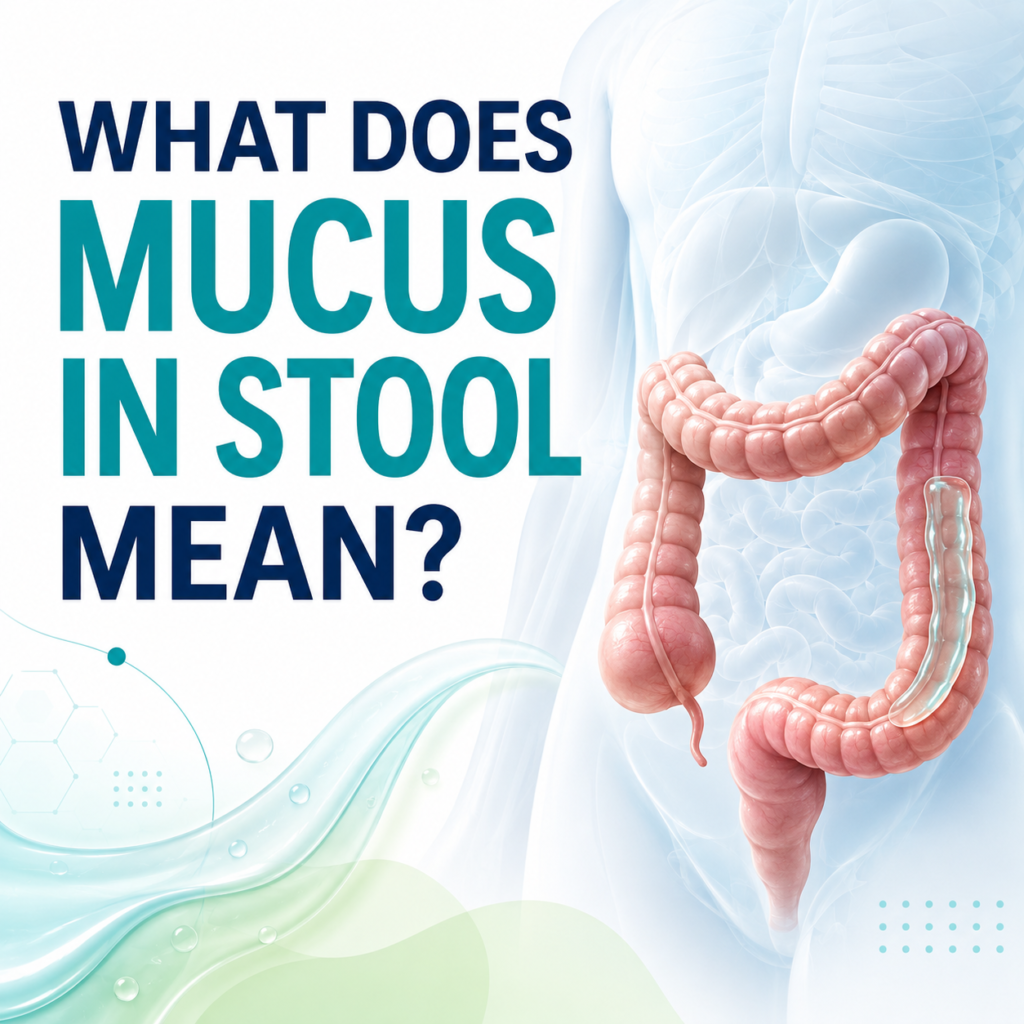
What Does Mucus in Stool Mean?
Estimated read time: 2 minutes.
What is mucus—and why is it in stool?
The intestines naturally make mucus. This slippery substance helps protect the bowel lining and allows stool to move more easily. A small amount may be present without being noticeable. Seeing more mucus than usual does not identify a diagnosis by itself; its meaning depends on how long it lasts and whether other symptoms occur.
Common contexts
Temporary bowel irritation, constipation, or diarrhea may make mucus easier to see. Irritable bowel syndrome (IBS) can also occur with changes in bowel movements and abdominal pain, although a clinician should assess a new pattern rather than assuming IBS. Inflammation of the rectum or colon can produce mucus, especially when it occurs with urgency, pain, diarrhea, or blood. Infections and inflammatory bowel diseases such as ulcerative colitis or Crohn’s disease are among the conditions a clinician may consider.
Details that help your clinician
Note when the change began, how often it occurs, stool frequency and consistency, abdominal pain, urgency, fever, blood, recent travel, recent antibiotics, and unintentional weight loss. A photograph or brief symptom log can sometimes be more useful than trying to remember every detail. Avoid using appearance alone to diagnose an infection, food intolerance, or inflammatory condition.
When to arrange an evaluation
Contact a healthcare professional if mucus is persistent, repeatedly increasing, or accompanied by ongoing diarrhea, constipation, abdominal pain, rectal pain, or a major change in bowel habits. Prompt evaluation is especially important with blood in the stool, fever, dehydration, unexplained weight loss, severe pain, black or tarry stool, or symptoms that wake you from sleep.
What an evaluation may involve
A clinician may review medications and recent illnesses, examine the abdomen, and decide whether stool tests, blood tests, or further digestive evaluation are appropriate. Testing depends on the complete pattern; not everyone needs the same workup.
Bottom line
A small, occasional amount of mucus may reflect the bowel’s normal protective lining. A persistent change—or mucus with bleeding, pain, fever, weight loss, or significant bowel changes—deserves medical assessment.
This content is for educational purposes only and is not a substitute for professional medical advice.
Sources
National Institute of Diabetes and Digestive and Kidney Diseases: Irritable Bowel Syndrome
National Institute of Diabetes and Digestive and Kidney Diseases: Proctitis
National Institute of Diabetes and Digestive and Kidney Diseases: Ulcerative Colitis
National Institute of Diabetes and Digestive and Kidney Diseases: Crohn’s Disease