
Yeast Infection: Symptoms, Causes, Treatment, and Prevention
What Is a Yeast Infection?
A vaginal yeast infection, also called vaginal candidiasis, occurs when a type of fungus called Candida grows more than it should inside the vagina.
Candida normally lives on the skin and in the vagina without causing problems. A yeast infection develops when something disrupts the normal balance of bacteria and yeast, allowing Candida to multiply.
Yeast infections are not considered sexually transmitted infections (STIs).
Common Symptoms
Symptoms often develop suddenly and can range from mild to severe.
You may experience:
- Intense vaginal itching
- Burning around the vaginal opening
- Thick white discharge that looks like cottage cheese
- Redness or swelling of the vulva
- Pain during urination when urine touches irritated skin
- Pain during sexual intercourse
Some women have only itching, while others have several symptoms.
Yeast Infection at a Glance
| Typical Symptoms | Usually Not Present |
|---|---|
| Intense itching | Fishy odor |
| Thick white discharge | Thin gray discharge |
| Redness and swelling | Fever |
| Burning | Severe pelvic pain |
A strong fishy odor is more common with bacterial vaginosis than with a yeast infection.
What Causes a Yeast Infection?
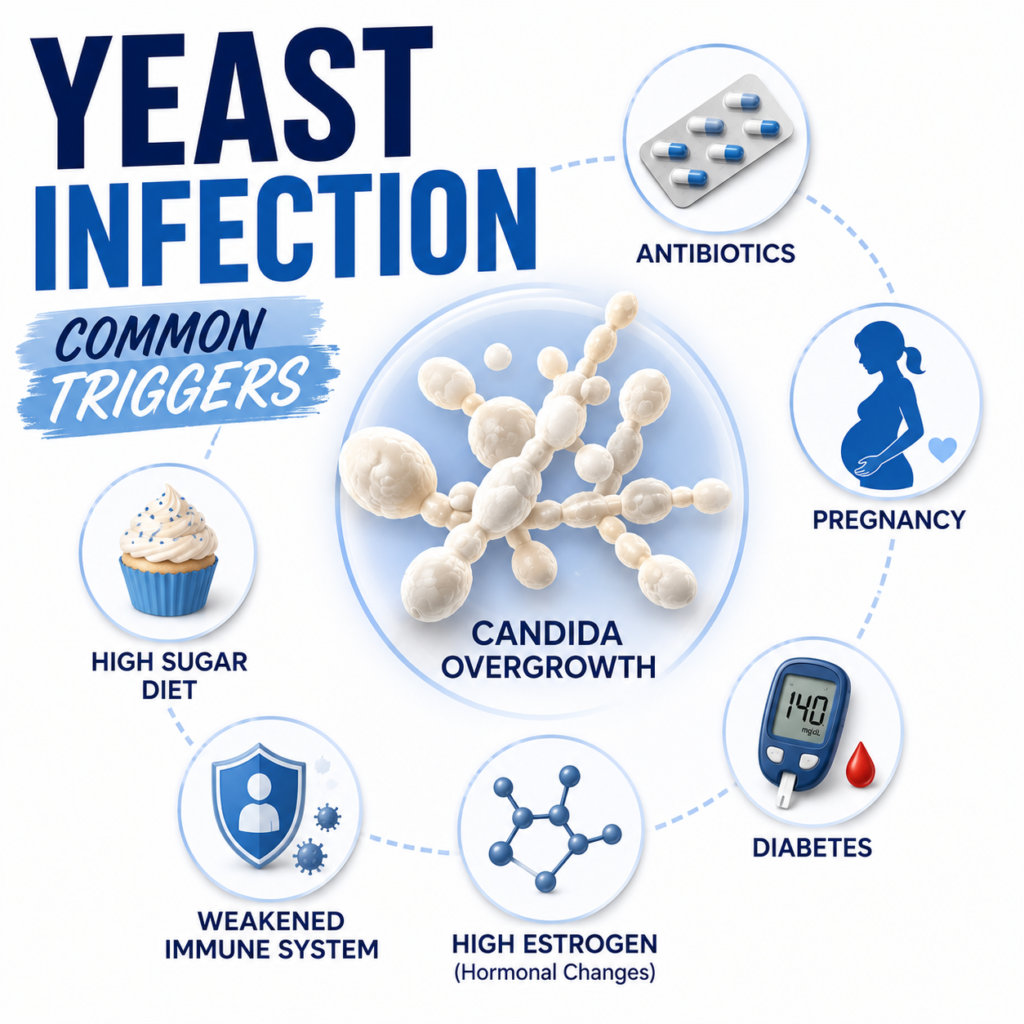
Several things can allow yeast to overgrow.
Common causes include:
- Taking antibiotics
- Pregnancy
- Diabetes, especially if blood sugar is not well controlled
- A weakened immune system
- Higher estrogen levels
- Previous yeast infections
Sometimes a yeast infection develops without an obvious reason.
Who Is More Likely to Get One?
Your risk is higher if you:
- Recently took antibiotics
- Are pregnant
- Have diabetes
- Have had previous yeast infections
- Have a weakened immune system
Yeast infections are common and are not caused by poor hygiene.
How Is a Yeast Infection Diagnosed?
Many women recognize the symptoms because they have had a yeast infection before.
Your healthcare provider may:
- Ask about your symptoms
- Perform a pelvic examination
- Examine a sample of vaginal discharge under a microscope
- Send a sample to a laboratory if the diagnosis is uncertain or infections keep returning
Because bacterial vaginosis and sexually transmitted infections can cause similar symptoms, testing may be needed.
How Is a Yeast Infection Treated?
Treatment depends on whether the infection is uncomplicated or more severe.
Common treatments include:
| Treatment | Examples |
| Oral antifungal medication | Fluconazole |
| Vaginal antifungal creams | Miconazole, Clotrimazole |
| Vaginal suppositories | Several prescription and over the counter options |
Most uncomplicated infections improve within a few days after treatment begins.
Take your medication exactly as directed, even if your symptoms improve quickly.
Can You Prevent Yeast Infections?
You cannot always prevent a yeast infection, but these habits may lower your risk.
| Healthy Habits |
| Keep diabetes well controlled |
| Avoid unnecessary antibiotics |
| Wear breathable cotton underwear |
| Change out of wet swimsuits promptly |
| Avoid scented vaginal sprays or douches |
These steps help maintain the normal balance of bacteria and yeast.
References
Centers for Disease Control and Prevention. Vulvovaginal Candidiasis (Yeast Infection)
https://www.cdc.gov/std/treatment-guidelines/candidiasis.htm
American College of Obstetricians and Gynecologists. Vaginitis
https://www.acog.org/womens-health/faqs/vaginitis
Office on Women’s Health. Vaginal Yeast Infections
https://www.womenshealth.gov/a-z-topics/vaginal-yeast-infections
MSD Manual Consumer Version. Vaginal Yeast Infection
https://www.msdmanuals.com/home/women-s-health-issues/vaginitis/vaginal-yeast-infection