
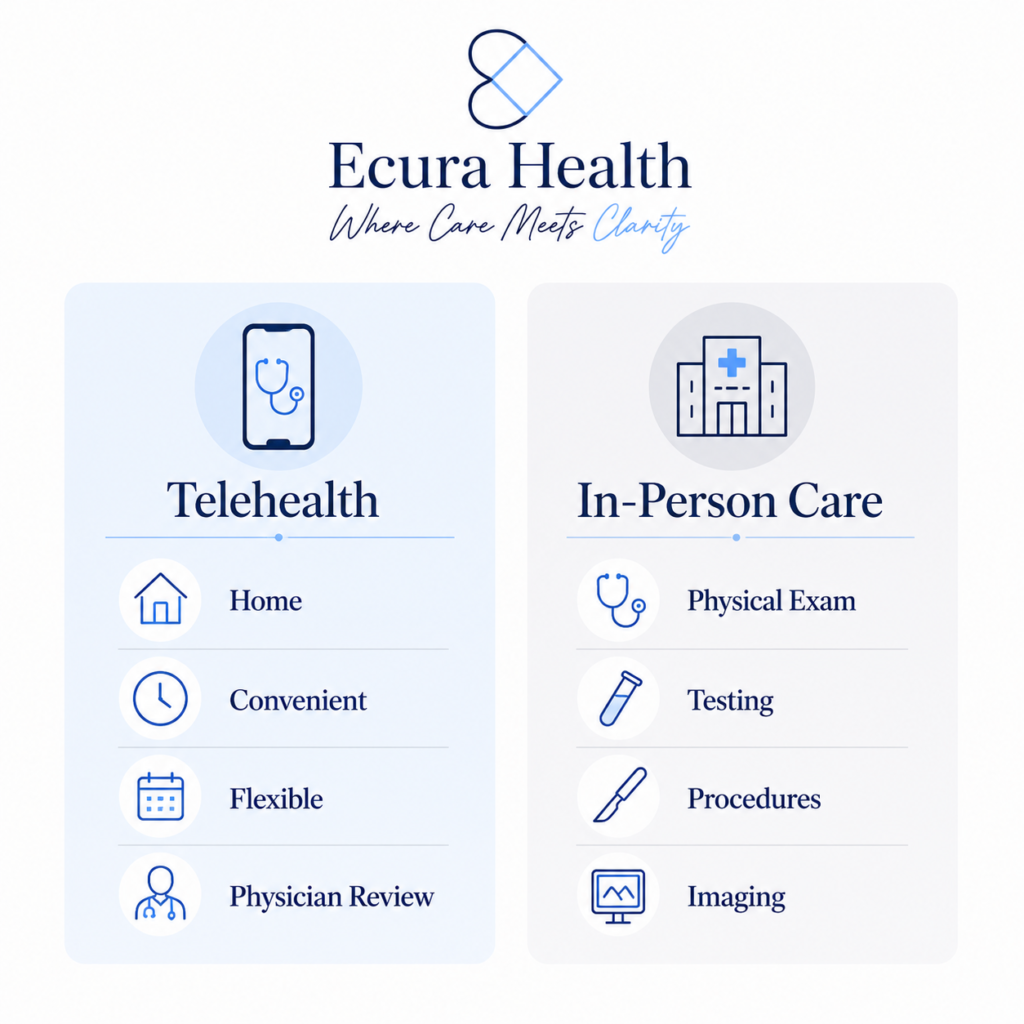
Telehealth vs. In-Person Care
Healthcare is no longer limited to the traditional doctor’s office. Today, many medical concerns can be evaluated through telehealth, giving patients more flexibility in how they receive care.
But does that mean telehealth replaces in-person visits?
Not at all.
Both telehealth and office visits play important roles in modern healthcare. Understanding when each approach is appropriate can help you choose the option that best fits your needs.
What Is Telehealth?
Telehealth uses secure technology to connect patients with healthcare professionals remotely.
Depending on the healthcare practice, telehealth may include:
- Video visits
- Telephone visits
- Secure messaging
- Online physician review
- Remote patient monitoring
The goal is to make healthcare more convenient while maintaining high-quality medical care.
What Is In-Person Care?
An in-person visit takes place at a clinic, urgent care center, or healthcare office.
These visits allow healthcare professionals to perform physical examinations, diagnostic testing, procedures, vaccinations, and other services that require patients to be seen face to face.
Benefits of Telehealth
For many common medical concerns, telehealth offers several advantages:
- Receive care from home
- No travel or waiting rooms
- Greater scheduling flexibility
- Easier access for people with busy schedules
- Convenient for many routine medical concerns
For millions of patients, telehealth has become an important part of everyday healthcare.
Benefits of In-Person Care
Traditional office visits continue to play an essential role in healthcare.
Some situations require services that can only be provided in person, such as:
- Physical examinations
- Laboratory testing
- Imaging studies
- Vaccinations
- Medical procedures
Healthcare professionals determine the most appropriate type of visit based on each patient’s individual needs.
It's Not About Which Is Better
Telehealth and in-person care are not competing approaches. They complement one another.
Many common medical concerns can be effectively managed through telehealth, while other situations are better served by an office visit.
The right choice depends on your symptoms, medical history, and the type of care you need.
How Ecura Health Fits In
Ecura Health provides physician-led telehealth for carefully selected medical conditions.
Every medical request is individually reviewed by a licensed physician who considers your symptoms, medical history, medications, allergies, and other relevant health information before making personalized treatment recommendations.
Our goal is to provide convenient, evidence-based care while helping patients choose the right healthcare option for their needs.
What Should You Do Next?
Whether you choose telehealth or an office visit, understanding your options helps you make informed healthcare decisions. Explore our physician-reviewed Health Guides to learn more about common medical conditions, preventive care, and how telehealth continues to expand access to quality healthcare.
References
- Health Resources and Services Administration (HRSA). What Is Telehealth?
https://www.hrsa.gov/telehealth/what-is-telehealth - U.S. Department of Health and Human Services (HHS). What Is Telehealth?
https://www.hhs.gov/hipaa/for-professionals/faq/3015/what-is-telehealth/index.html - MedlinePlus. Telehealth.
https://medlineplus.gov/telehealth.html - Mayo Clinic. Telehealth: Technology Meets Health Care.
https://www.mayoclinic.org/healthy-lifestyle/consumer-health/in-depth/telehealth/art-20044878