
Orgasm Difficulties in Women (Female Orgasmic Disorder)
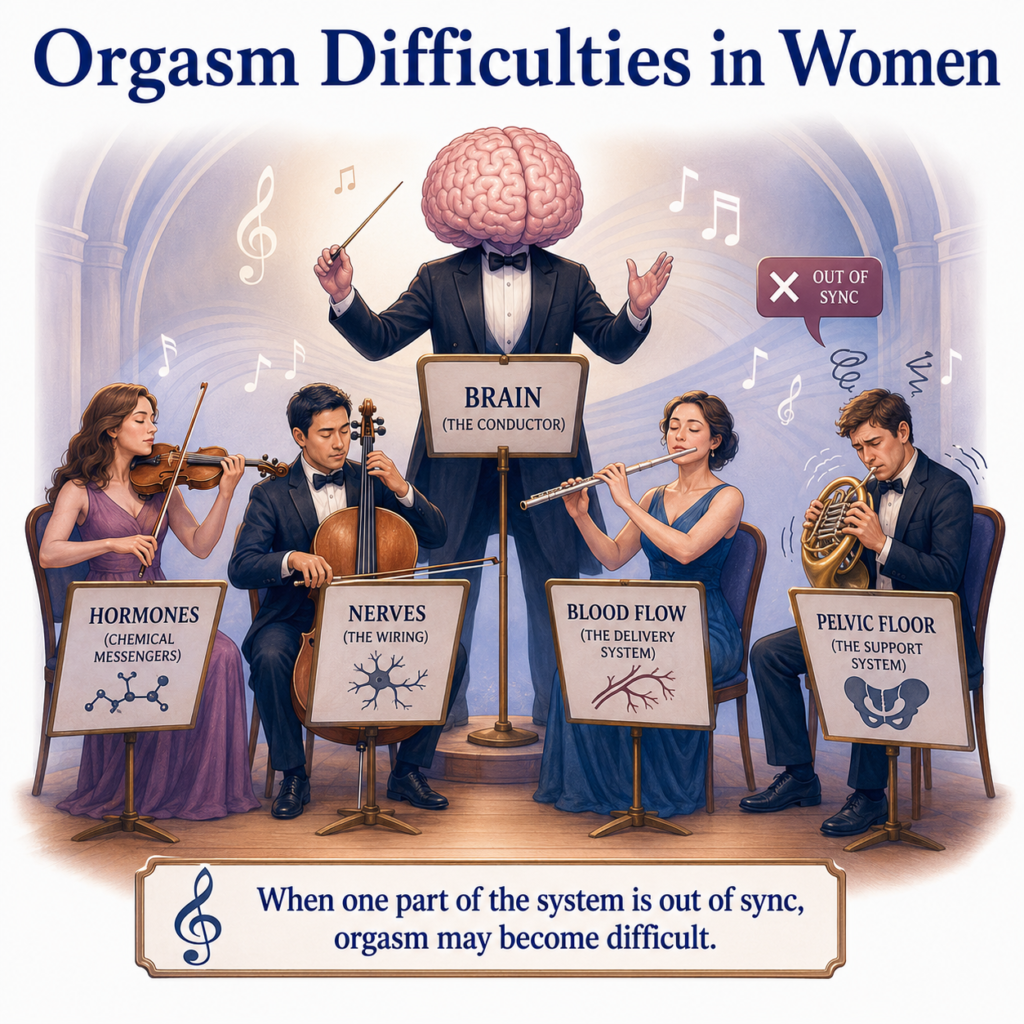
Orgasm difficulties are a common but often overlooked aspect of women’s sexual health. Some women have never experienced an orgasm, while others notice changes over time due to hormonal shifts, medical conditions, medications, stress, or relationship factors. Although occasional difficulty reaching orgasm is normal, persistent problems that cause distress deserve medical attention. Understanding the possible causes and available treatment options can help women improve their sexual health, intimacy, and overall quality of life.
What Are Orgasm Difficulties?
Orgasm difficulties refer to persistent problems reaching orgasm, taking much longer than expected to achieve orgasm, or experiencing orgasms that are less intense than desired despite adequate sexual stimulation. While occasional difficulty is common, persistent symptoms that cause personal distress may indicate a condition known as Female Orgasmic Disorder (FOD).
Orgasm difficulties can occur at any age and are often related to physical, hormonal, emotional, relationship, or medication-related factors. In many cases, the underlying cause can be identified and treated.
How Common Are Orgasm Difficulties?
Difficulty reaching orgasm is one of the most common sexual concerns among women.
Research suggests:
- Up to 40% of women report occasional difficulty reaching orgasm.
- Approximately 10% to 15% experience persistent symptoms that cause significant distress.
- The likelihood increases after menopause but may occur at any age.
How Orgasm Occurs
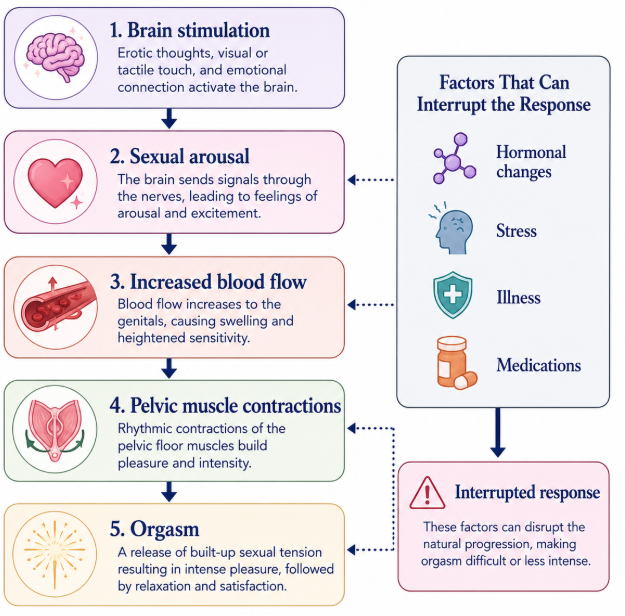
An orgasm is the result of multiple body systems working together.
These include:
- Brain
- Hormones
- Nerves
- Blood flow
- Pelvic floor muscles
- Emotional well-being
- Sexual stimulation
- Relationship satisfaction
Problems affecting any of these systems may interfere with orgasm.
Types of Orgasm Difficulties
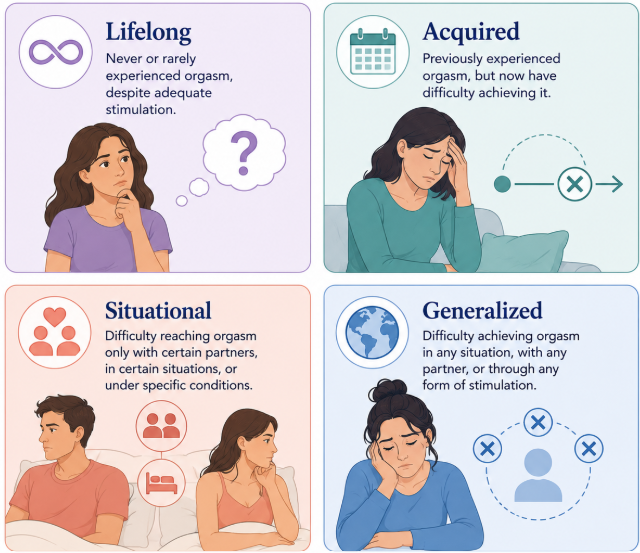
Healthcare providers generally describe four patterns.
Primary (Lifelong)
The woman has never experienced an orgasm.
Secondary (Acquired)
She previously had orgasms but now has difficulty reaching orgasm.
Situational
Orgasm occurs only under certain circumstances or with certain types of stimulation.
Generalized
Difficulty occurs in nearly all sexual situations.
Common Symptoms
Symptoms may include:
- Inability to reach orgasm
- Delayed orgasm despite adequate stimulation
- Less intense orgasms than before
- Needing much more stimulation than previously
- Frustration during intimacy
- Reduced sexual satisfaction
- Relationship distress related to sexual function
Common Causes
1. Hormonal Changes
Hormones play an important role in sexual response.
Common causes include:
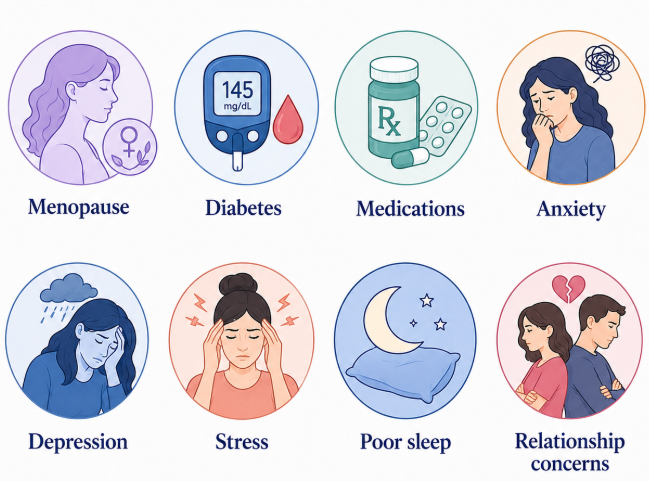
- Menopause
- Perimenopause
- Breastfeeding
- Pregnancy
- Low estrogen
- Surgical menopause
2. Medical Conditions
Certain medical conditions can affect nerve function, blood flow, and sexual response.
Examples include:
- Diabetes
- Multiple sclerosis
- Parkinson disease
- Stroke
- Thyroid disorders
- Chronic kidney disease
- Heart disease
- Chronic pain
- Pelvic floor disorders
3. Medications
Many medications may interfere with orgasm.
Common examples include:
- SSRIs
- SNRIs
- Antipsychotics
- Blood pressure medications
- Opioids
- Some seizure medications
Never stop a prescribed medication without consulting your healthcare provider.
4. Mental Health
Psychological health plays a major role.
Possible contributors include:
- Anxiety
- Depression
- Stress
- Sexual trauma
- Low self-esteem
- Performance anxiety
5. Relationship Factors
Relationship concerns may contribute.
Examples include:
- Poor communication
- Lack of emotional intimacy
- Conflict
- Mismatched sexual expectations
- Partner sexual dysfunction
6. Lifestyle Factors
Healthy sexual function is closely tied to overall health.
Factors include:
- Poor sleep
- Fatigue
- Smoking
- Excess alcohol
- Lack of exercise
- Chronic stress
Menopause and Orgasm
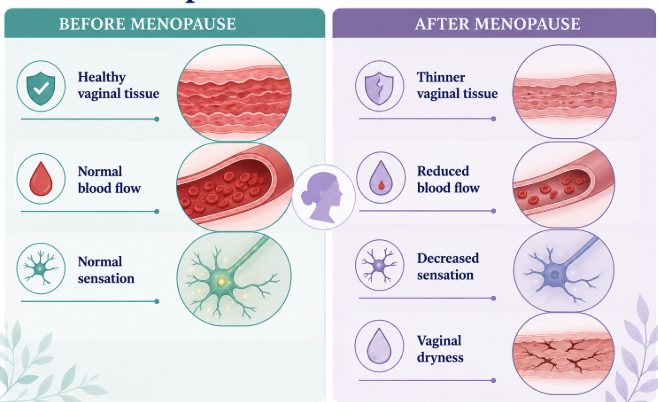
Declining estrogen levels during menopause may contribute to:
- Vaginal dryness
- Pain during intercourse
- Reduced genital blood flow
- Less genital sensation
- Longer time to orgasm
Treating vaginal symptoms often improves sexual function.
How Are Orgasm Difficulties Diagnosed?
There is no single diagnostic test.
Evaluation typically includes:
Medical History
Your healthcare provider may ask about:
- When symptoms began
- Previous sexual function
- Medications
- Medical conditions
- Menstrual history
- Relationship concerns
- Emotional health
Physical Examination
A pelvic examination may be recommended when pain, dryness, or other pelvic symptoms are present.
Laboratory Testing
Testing depends on your symptoms and medical history.
Possible tests include:
- Thyroid function
- Blood sugar
- Iron studies
- Hormone testing in selected patients
Routine hormone testing is not necessary for every woman.
Treatment Options
Treatment depends on the underlying cause.
Education
Understanding normal sexual response often reduces anxiety and improves outcomes.
Lifestyle Changes
Healthy habits can improve sexual function.
These include:
- Regular exercise
- Adequate sleep
- Stress reduction
- Limiting alcohol
- Quitting smoking
Pelvic Floor Physical Therapy
Women with pelvic floor dysfunction may benefit from specialized physical therapy to improve muscle coordination and sexual function.
Medication Review
If medications are contributing, your healthcare provider may recommend alternatives when appropriate.
Vaginal Estrogen
For postmenopausal women with vaginal dryness or pain, local estrogen therapy may improve comfort and sexual satisfaction.
Counseling and Sex Therapy
Counseling may help address:
- Anxiety
- Depression
- Trauma
- Relationship concerns
- Communication
- Sexual education
Many women benefit from working with a certified sex therapist.
Sexual Stimulation
Many women require direct clitoral stimulation to achieve orgasm. Open communication with a partner and understanding personal preferences can improve sexual satisfaction. This is a normal aspect of female sexual function.
Can Medications Help?
Unlike low sexual desire, there are currently no FDA-approved medications specifically for female orgasmic disorder.
Treatment focuses on correcting contributing medical, hormonal, psychological, and relationship factors.
When Should You See a Healthcare Provider?
Schedule an evaluation if:
- Symptoms persist for several months
- Difficulty reaching orgasm causes distress
- Symptoms began after starting a medication
- You have pain during intercourse
- You have menopause symptoms
- Sexual problems affect your relationship
- You have symptoms of depression or anxiety
What Should You Do Next?
If you’ve noticed persistent difficulty reaching orgasm, know that you’re not alone. Female orgasmic disorder is common and often has more than one contributing factor. A healthcare provider can help identify underlying medical conditions, medication effects, hormonal changes, or emotional concerns and recommend treatment options tailored to your needs. Seeking help can improve sexual health, relationship satisfaction, and overall quality of life.If you’ve noticed persistent difficulty reaching orgasm, know that you’re not alone. Female orgasmic disorder is common and often has more than one contributing factor. A healthcare provider can help identify underlying medical conditions, medication effects, hormonal changes, or emotional concerns and recommend treatment options tailored to your needs. Seeking help can improve sexual health, relationship satisfaction, and overall quality of life.
References
American College of Obstetricians and Gynecologists. Female Sexual Dysfunction. https://www.acog.org/womens-health
International Society for the Study of Women’s Sexual Health (ISSWSH). Clinical Practice Guidelines. https://www.isswsh.org
The Menopause Society. Sexual Health and Menopause. https://menopause.org/patient-education
American Family Physician. Female Sexual Dysfunction: Evaluation and Management. https://www.aafp.org/pubs/afp.html
UpToDate. Female orgasmic disorder: Evaluation and management.
Diagnostic and Statistical Manual of Mental Disorders, Fifth Edition (DSM-5-TR). American Psychiatric Association.