
Balanitis: Causes, Symptoms, Treatment, and Prevention
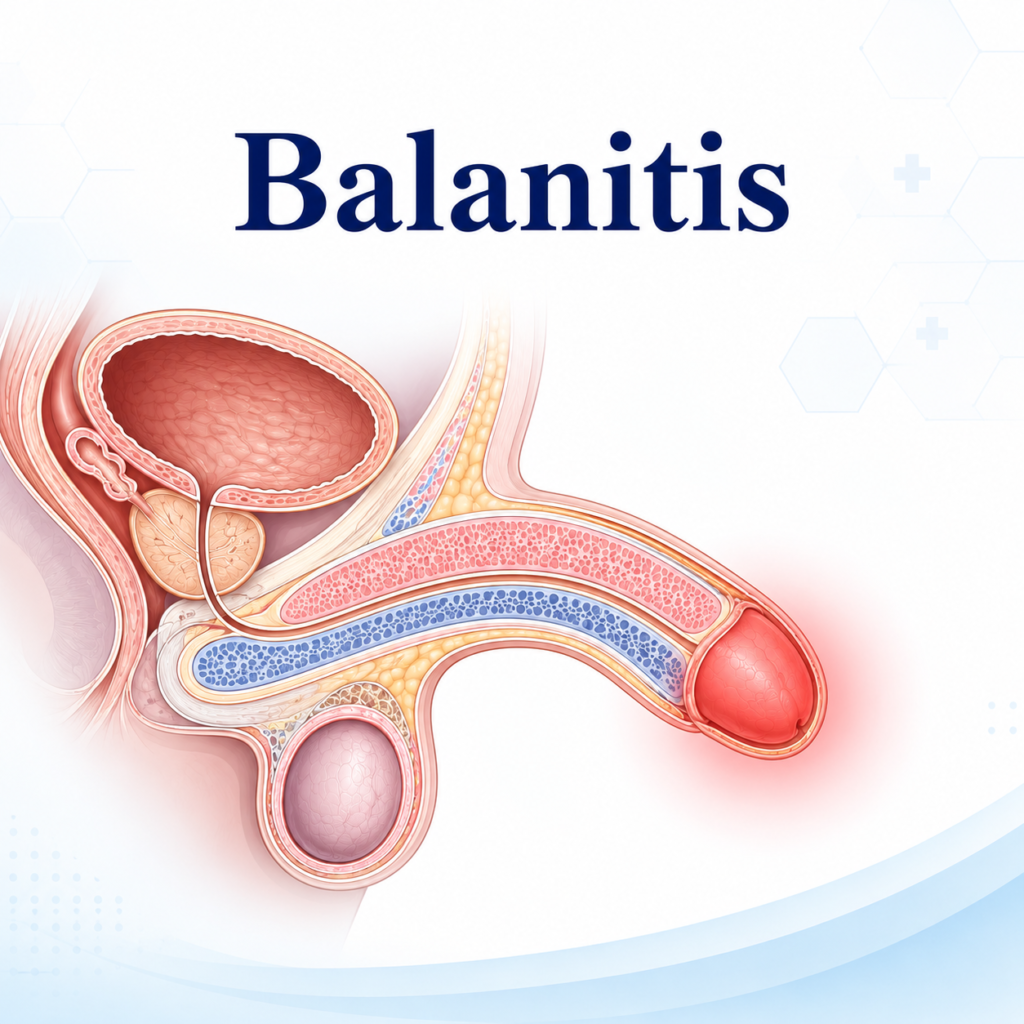
Balanitis is inflammation of the glans (head) of the penis. It commonly causes redness, irritation, itching, pain, and sometimes discharge. Although balanitis can affect males of any age, it is most common in uncircumcised men because moisture, bacteria, and fungi can become trapped beneath the foreskin.
Most cases improve with appropriate treatment, but recurrent episodes may indicate an underlying condition such as diabetes, poor hygiene, or a chronic skin disorder.
What Is Balanitis?
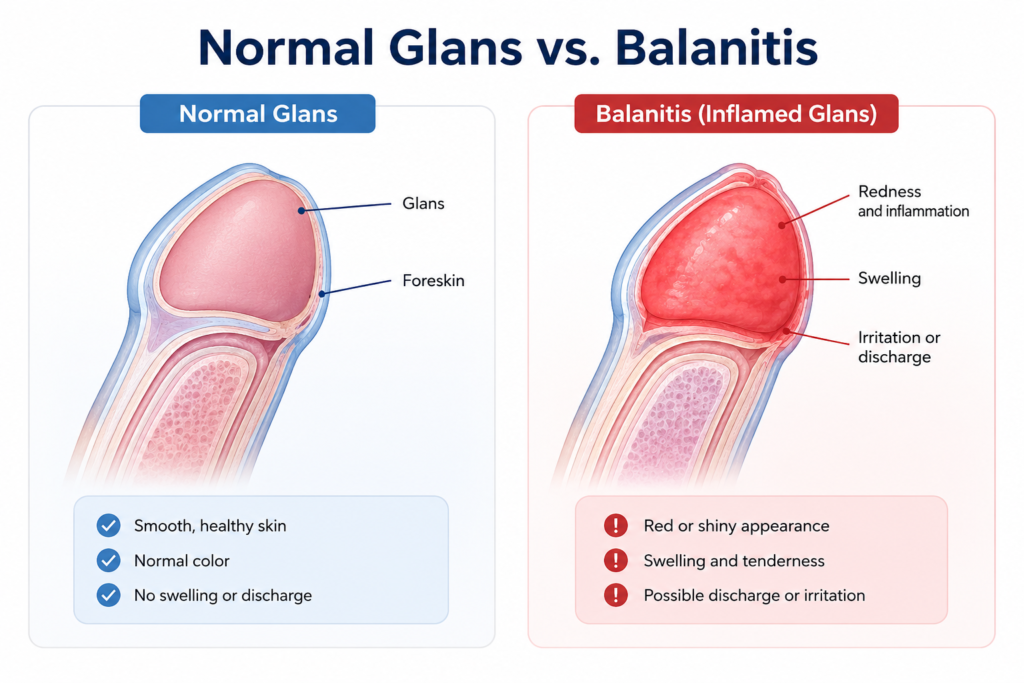
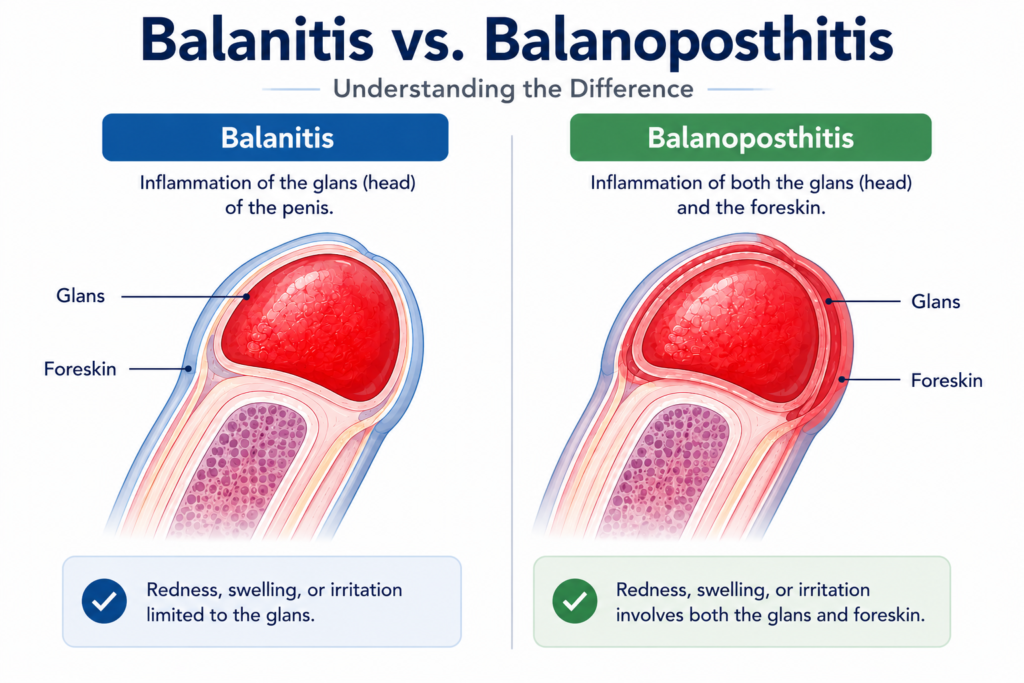
Balanitis refers to inflammation of the glans penis.
When both the glans and foreskin become inflamed, the condition is called balanoposthitis.
Inflammation may result from infection, irritation, allergic reactions, or certain skin conditions.
Common Causes of Balanitis
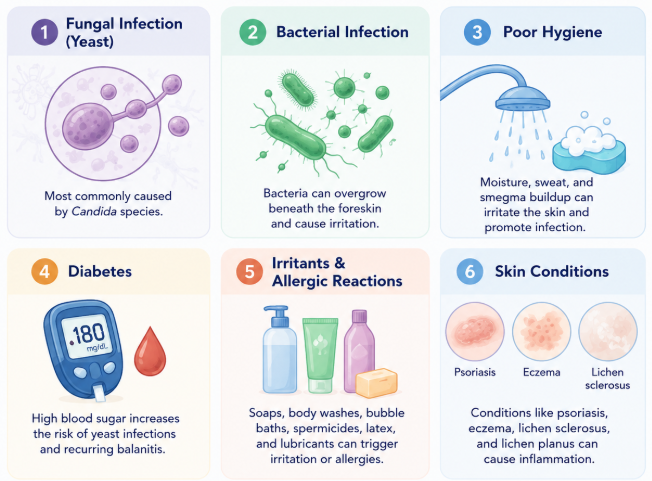
Balanitis has many possible causes, including:
1. Fungal Infection (Yeast)
The most common infectious cause.
Usually caused by Candida species.
2. Bacterial Infection
May occur when bacteria overgrow beneath the foreskin.
3. Poor Hygiene
Accumulation of moisture, sweat, and smegma can irritate the skin and promote infection.
4. Diabetes
Poorly controlled blood sugar increases the risk of recurrent yeast infections and balanitis.
5. Irritants and Allergic Reactions
Possible triggers include:
- Scented soaps
- Bubble baths
- Harsh cleansers
- Spermicides
- Latex
- Personal lubricants
6. Skin Conditions
Examples include:
- Psoriasis
- Eczema
- Lichen sclerosus
- Lichen planus
- Contact dermatitis
Risk Factors
The risk of balanitis is higher in people who:
- Are uncircumcised
- Have diabetes
- Have phimosis
- Have poor genital hygiene
- Have obesity
- Have weakened immune systems
- Take antibiotics frequently
Symptoms
Symptoms may include:
- Redness of the glans
- Itching
- Burning
- Swelling
- Pain
- Rash
- White patches
- Thick discharge beneath the foreskin
- Unpleasant odor
- Pain during urination
- Difficulty retracting the foreskin
How Is Balanitis Diagnosed?
Diagnosis usually involves:
- Medical history
- Physical examination
Depending on the cause, your healthcare provider may also recommend:
- Swab for infection
- Urinalysis
- Blood glucose testing
- Testing for sexually transmitted infections (when appropriate)
- Skin biopsy (rarely)
Treatment Options
| Cause | Typical Treatment | Goal |
|---|---|---|
| Yeast (Candida) infection | Antifungal cream (such as clotrimazole or miconazole) | Eliminate the fungal infection and reduce inflammation |
| Bacterial infection | Topical or oral antibiotics (when indicated by a healthcare provider) | Treat the bacterial infection |
| Inflammatory skin conditions (eczema, psoriasis, lichen sclerosus) | Topical corticosteroid cream or other condition-specific therapy | Reduce inflammation and relieve symptoms |
| Poor hygiene | Gentle cleansing with warm water and thorough drying beneath the foreskin | Remove irritants and prevent recurrence |
| Diabetes-related balanitis | Improve blood sugar control and treat the underlying infection | Reduce the risk of recurrent infections |
| Recurrent balanitis with phimosis | Circumcision may be recommended in selected cases | Prevent recurrent inflammation and improve hygiene |
Possible Complications
Although most cases of balanitis improve with appropriate treatment, untreated or recurrent inflammation can sometimes lead to complications, including:
| Complication | What It Means |
|---|---|
| Phimosis | The foreskin becomes too tight to pull back over the head (glans) of the penis, making hygiene, urination, erections, or sexual activity difficult or painful. |
| Paraphimosis | The foreskin is pulled back behind the head of the penis and becomes trapped, causing swelling and reduced blood flow. This is a medical emergency that requires immediate treatment. |
| Recurrent balanitis | Episodes of inflammation continue to return, often because an underlying cause such as diabetes, poor hygiene, or a chronic skin condition has not been addressed. |
| Pain during sexual activity | Inflammation and swelling may make erections or intercourse uncomfortable or painful until the condition resolves. |
| Scarring | Repeated inflammation can cause scar tissue to form, reducing the elasticity of the foreskin and increasing the risk of phimosis. |
| Difficulty urinating (rare) | Significant swelling or severe inflammation may partially block urine flow, making urination difficult. |
Prevention
You may reduce your risk by:
- Washing gently with warm water
- Drying beneath the foreskin completely
- Avoiding scented soaps and irritants
- Managing diabetes
- Practicing safe sex
- Seeking treatment early if symptoms develop

Is balanitis contagious?
Balanitis itself is not contagious, but infections that cause balanitis, such as yeast or certain sexually transmitted infections, may be transmissible.
Can balanitis go away on its own?
Mild irritation may improve, but persistent redness, pain, discharge, or swelling should be evaluated by a healthcare provider.
Does balanitis mean I have an STI?
No. Many cases are caused by yeast, irritation, poor hygiene, or skin conditions rather than sexually transmitted infections.
Can balanitis come back?
Yes. Recurrence is more common if underlying risk factors, such as diabetes, phimosis, or chronic skin irritation, are not addressed.
Prognosis
Most cases of balanitis respond well to treatment once the underlying cause is identified. Early evaluation and appropriate therapy can relieve symptoms quickly and help prevent recurrent infections, scarring, and foreskin complications.
What Should You Do Next?
If you notice redness, swelling, itching, pain, discharge, or difficulty retracting the foreskin, schedule an evaluation with a healthcare provider. Prompt treatment can relieve symptoms, identify the underlying cause, and reduce the risk of complications such as phimosis or recurrent infections.
References
American Urological Association. Urologic Conditions Guidelines.
https://www.auanet.org/guidelinesMayo Clinic. Balanitis: Symptoms and Causes.
https://www.mayoclinic.org/Cleveland Clinic. Balanitis.
https://my.clevelandclinic.org/health/diseases/21186-balanitisMerck Manual Consumer Version. Inflammation of the Penis (Balanitis).
https://www.merckmanuals.com/homeBMJ Best Practice. Balanitis.
https://bestpractice.bmj.com/