
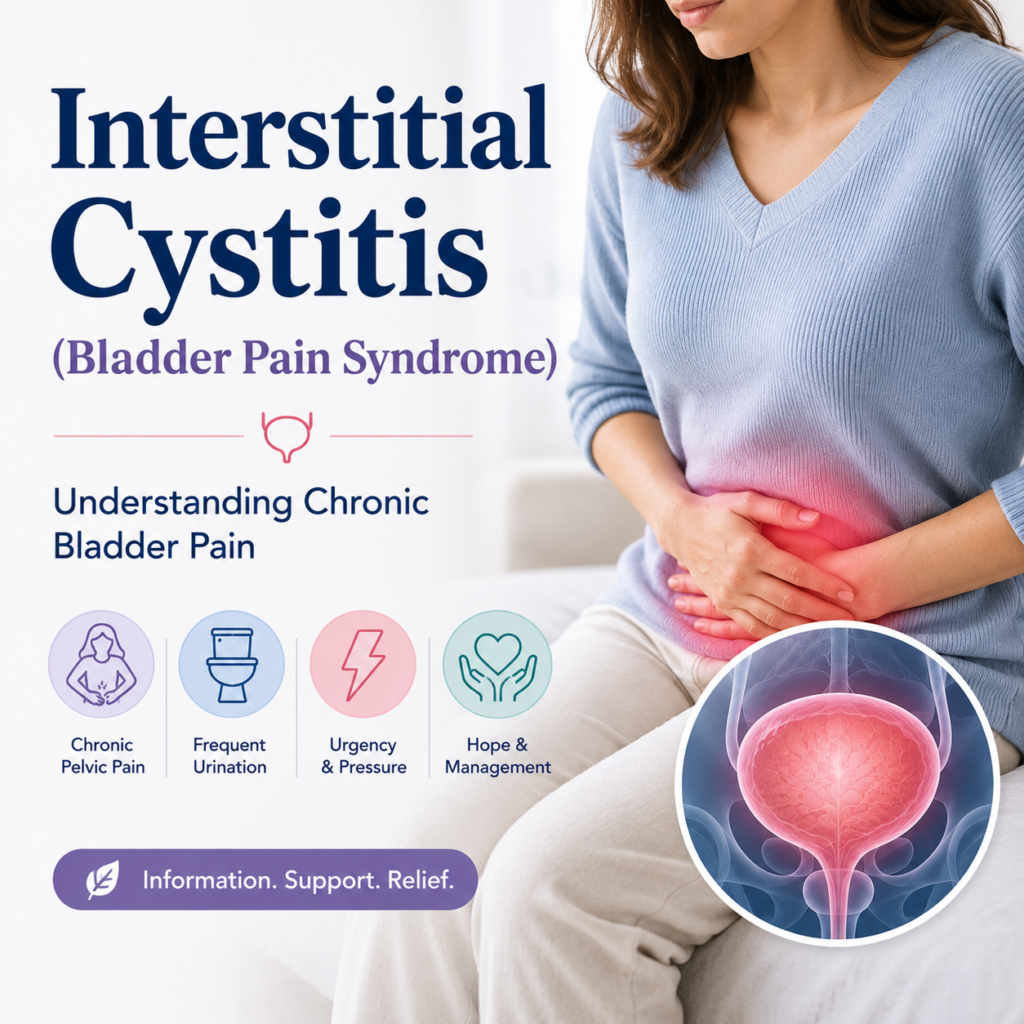
Interstitial Cystitis (Bladder Pain Syndrome): Understanding Chronic Bladder Pain
Interstitial cystitis (IC), also called bladder pain syndrome (BPS), is a chronic condition that causes bladder pain, pressure, and urinary symptoms without evidence of a urinary tract infection or another obvious cause. Symptoms can come and go over time and may significantly affect daily activities, sleep, work, and quality of life.
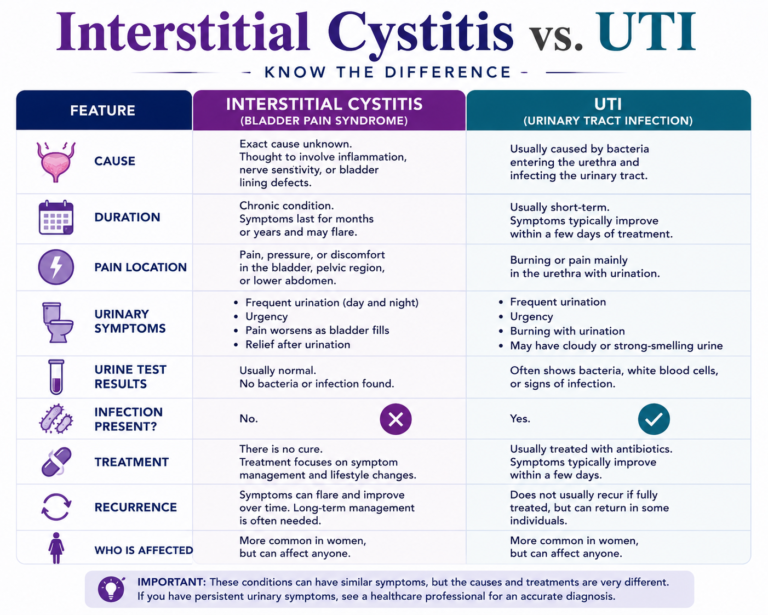
Because the symptoms often resemble those of a urinary tract infection (UTI), many people are treated for repeated infections before receiving the correct diagnosis.
What Is Interstitial Cystitis?
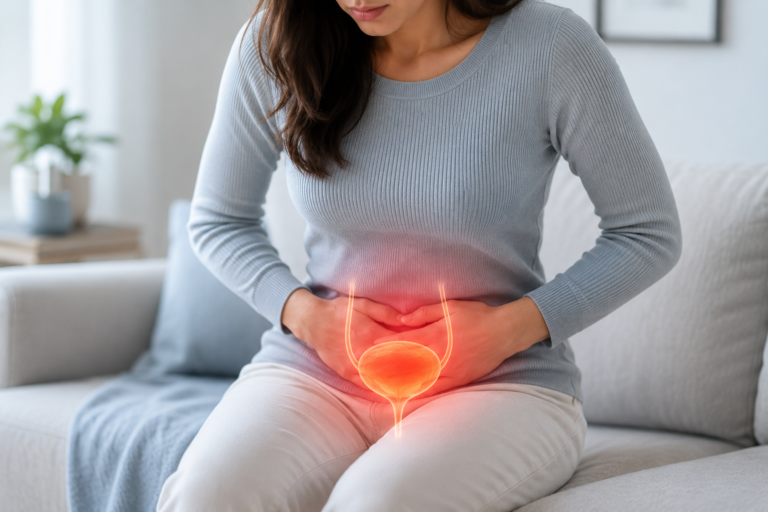
Interstitial cystitis is a chronic bladder condition characterized by:
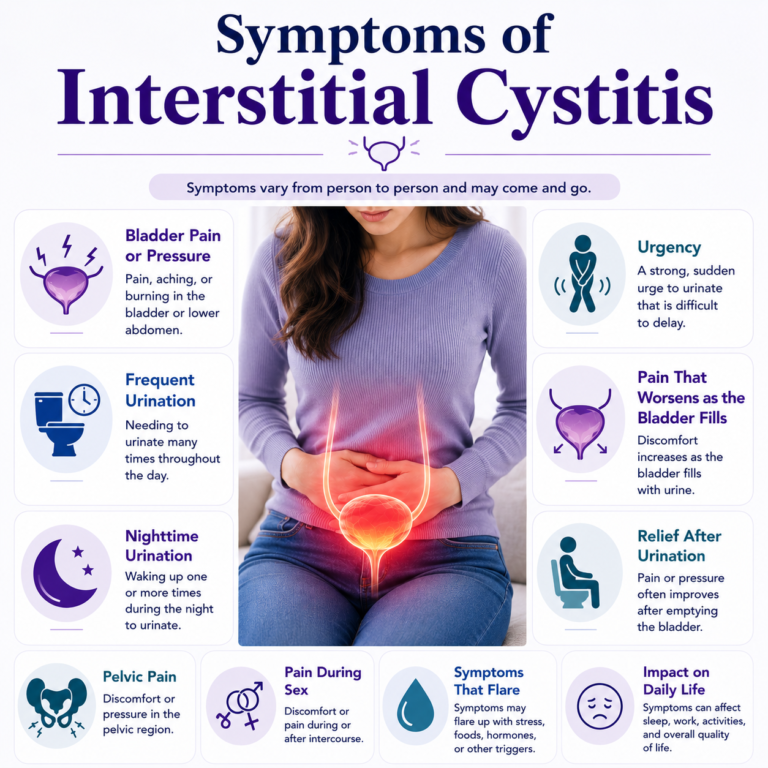
• Bladder pain or pressure
• Frequent urination
• Urinary urgency
• Pain that often improves after emptying the bladder
Unlike a UTI, interstitial cystitis is not caused by bacteria, so urine cultures are usually negative.
Although the exact cause remains unknown, researchers believe it may involve changes in the bladder lining, nerve sensitivity, immune system dysfunction, or inflammation.
Common Symptoms
What Causes Interstitial Cystitis?
The exact cause is unknown, but several theories exist.
Possible contributing factors include:
• Damage to the protective bladder lining
• Increased bladder nerve sensitivity
• Chronic inflammation
• Autoimmune processes
• Pelvic floor muscle dysfunction
• Genetic predisposition
No single cause has been identified, and different factors may contribute in different individuals.
Conditions That Can Mimic Interstitial Cystitis
Because symptoms overlap with many other conditions, a careful evaluation is important.
Conditions that may cause similar symptoms include:
| Condition | Similar Symptoms |
| Urinary tract infection | Burning, urgency, frequency |
| Overactive bladder | Urgency and frequent urination |
| Kidney stones | Pelvic pain and urinary symptoms |
| Bladder cancer | Blood in urine and urinary symptoms |
| Endometriosis | Pelvic pain |
| Pelvic floor dysfunction | Pelvic pain and urinary symptoms |
| Sexually transmitted infections | Burning or urinary discomfort |
Risk Factors
Factors associated with interstitial cystitis include:
• Female sex
• Middle age (although it can occur at any age)
• Chronic pelvic pain disorders
• Irritable bowel syndrome (IBS)
• Fibromyalgia
• Chronic fatigue syndrome
• Autoimmune diseases
Some people have more than one chronic pain condition.
How Is Interstitial Cystitis Diagnosed?
There is no single test that confirms interstitial cystitis.
A healthcare professional may review your symptoms, medical history, medications, and perform an examination when appropriate.
Additional testing may be recommended to rule out other causes of bladder pain.
Laboratory Testing
Depending on your symptoms, testing may include:
• Urinalysis
• Urine culture
• Urine testing for blood
• Testing for sexually transmitted infections when appropriate
Imaging and Procedures
Some individuals may require additional evaluation, including:
• Pelvic ultrasound
• Cystoscopy (a procedure that allows a healthcare professional to examine the inside of the bladder)
These tests are primarily used to exclude other conditions rather than confirm interstitial cystitis.
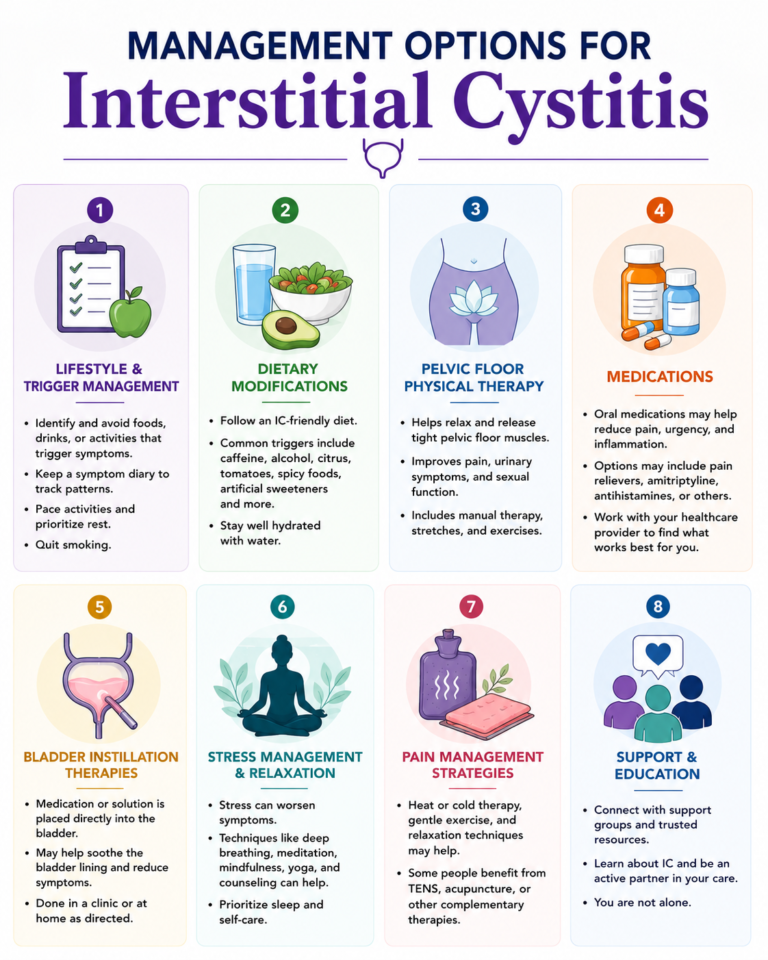
Management Options
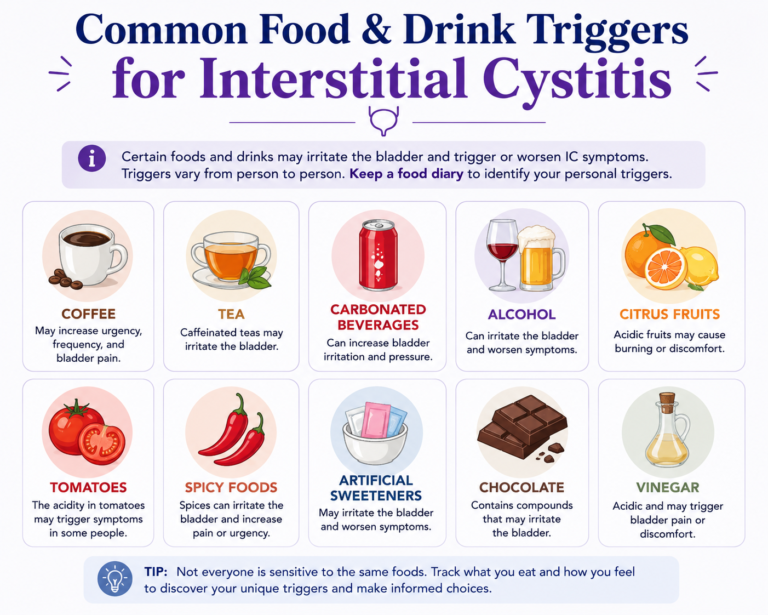
Common Food and Drink Triggers
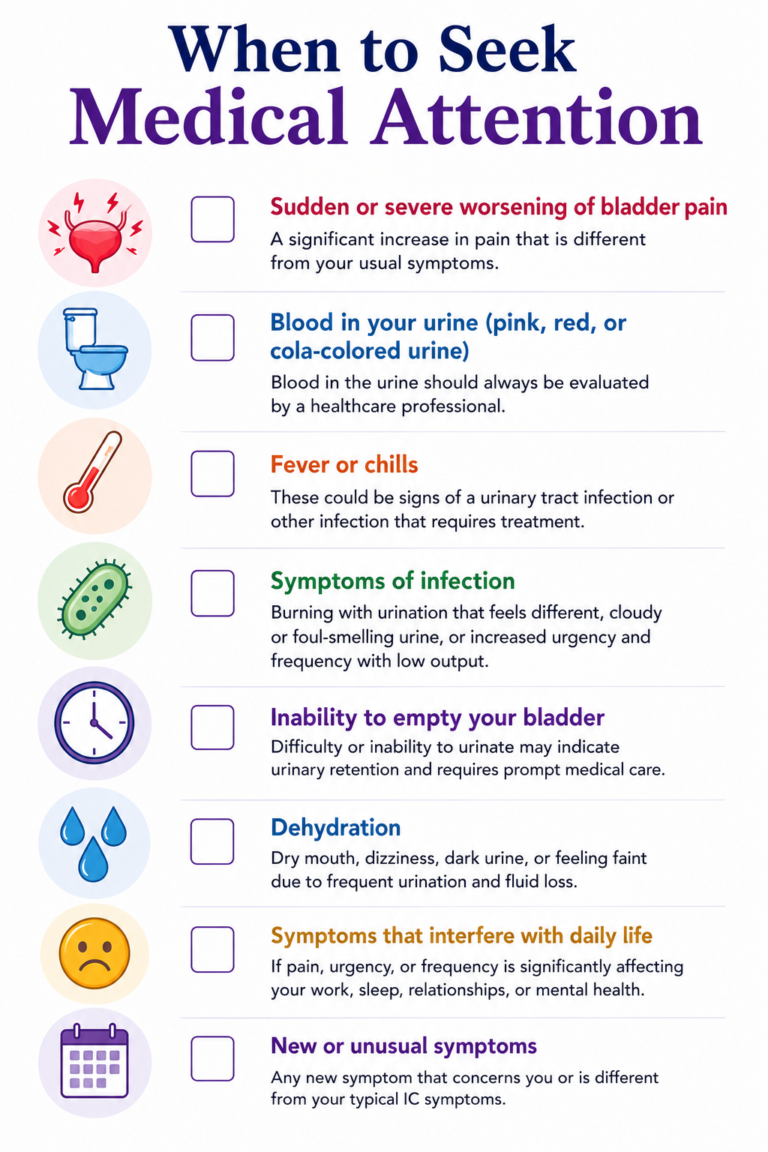
When Should You Seek Medical Attention?
Key Takeaway
Interstitial cystitis is a chronic bladder condition that causes pain, urinary urgency, and frequent urination without an active infection. Although its exact cause remains unknown, appropriate evaluation can help rule out other conditions and guide a personalized treatment plan. Many people experience meaningful improvement with a combination of lifestyle changes, physical therapy, medications, and other supportive therapies.
What Should You Do Next?
If you have ongoing bladder pain, frequent urination, or urgency that continues despite negative urine cultures or repeated treatment for urinary tract infections, consider discussing your symptoms with a healthcare professional. Early evaluation may help identify interstitial cystitis or another condition causing your symptoms and allow you to explore appropriate management options.
References
American Urological Association (AUA): Diagnosis and Treatment of Interstitial Cystitis/Bladder Pain Syndrome Guideline
National Institute of Diabetes and Digestive and Kidney Diseases (NIDDK): Interstitial Cystitis (Bladder Pain Syndrome)
Mayo Clinic: Interstitial Cystitis Symptoms and Causes
Cleveland Clinic: Interstitial Cystitis
Urology Care Foundation: Interstitial Cystitis/Bladder Pain Syndrome