
Vulvodynia: When Vulvar Pain Has No Obvious Cause
Many people experience burning, stinging, or irritation in the vulvar area at some point in their lives. Often, these symptoms are caused by infections, skin conditions, or other identifiable medical problems. However, some individuals experience persistent vulvar pain even when testing and examinations appear normal.
This condition is known as vulvodynia.
Although vulvodynia affects millions of people, it often goes unrecognized, leading many individuals to undergo repeated treatments for infections that are not actually present. Understanding vulvodynia can be an important step toward obtaining an accurate diagnosis and appropriate care.
What Is Vulvodynia?
Vulvodynia is chronic vulvar pain lasting at least 3 months without an identifiable cause such as infection, skin disease, neurologic disorder, or other medical condition.
The vulva includes the external female genital structures surrounding the vaginal opening.
The pain may be:
• Constant or intermittent
• Localized to one area or more widespread
• Mild, moderate, or severe
• Triggered by touch or present even without contact
What Does Vulvodynia Feel Like?
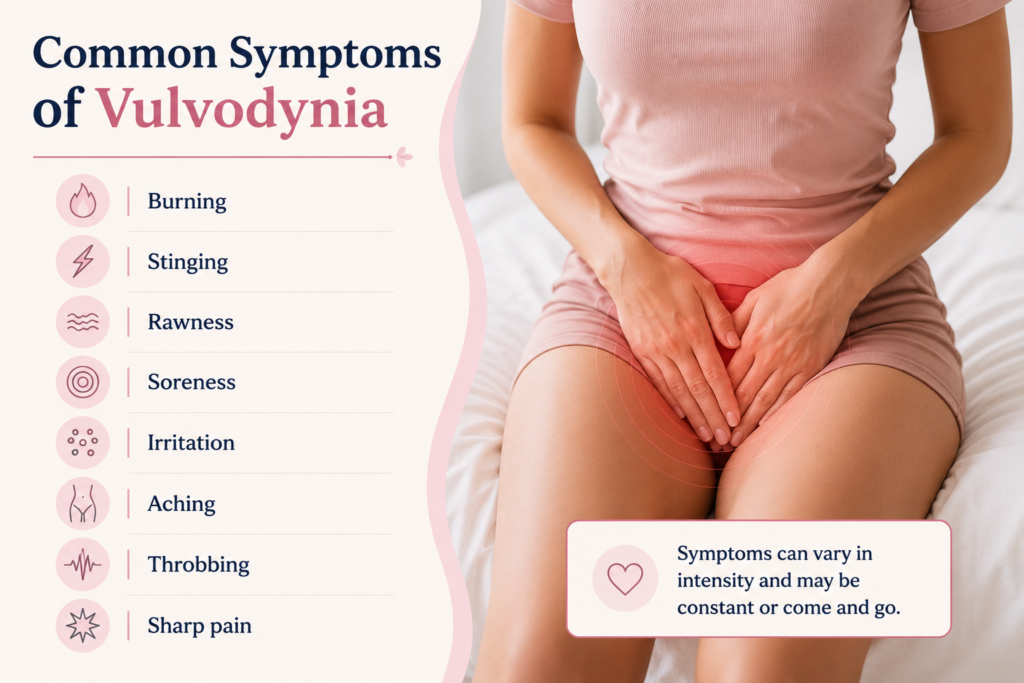
The appearance of the vulva is often normal despite significant discomfort.
Types of Vulvodynia
Localized Vulvodynia
Pain occurs in a specific area of the vulva.
One of the most common forms is vestibulodynia, which affects the tissue surrounding the vaginal opening.
Pain may occur with:
• Tampon insertion
• Sexual activity
• Pelvic examinations
• Tight clothing
Generalized Vulvodynia
Pain affects multiple areas of the vulva.
Symptoms may occur even without touch or pressure.
What Causes Vulvodynia?
The exact cause remains unclear.
Researchers believe multiple factors may contribute, including:
• Increased sensitivity of nerve fibers
• Chronic inflammation
• Pelvic floor muscle dysfunction
• Hormonal influences
• Previous infections
• Genetic factors
• Pain processing abnormalities within the nervous system
In many cases, no single cause can be identified.
Conditions That Can Mimic Vulvodynia
Several conditions can produce similar symptoms.
These include:
• Yeast infections
• Bacterial vaginosis
• Contact dermatitis
• Lichen sclerosus
• Lichen planus
• Genital herpes
• Menopause-related vulvovaginal changes
• Pelvic floor dysfunction
Because symptoms overlap, evaluation by a healthcare professional is important.
How Is Vulvodynia Diagnosed?
There is no single laboratory test that confirms vulvodynia.
Diagnosis typically involves:
1. Medical History
A healthcare professional will review symptoms, duration, triggers, and prior treatments.
2. Physical Examination
A careful examination helps evaluate for skin conditions, infection, and other causes of vulvar pain.
3. Cotton Swab Testing
A cotton swab may be gently applied to different areas of the vulva to identify areas of tenderness and determine whether pain is localized or generalized.
4. Additional Testing
Depending on symptoms, testing may be performed to rule out:
• Yeast infections
• Bacterial infections
• Sexually transmitted infections
• Skin disorders
Treatment Options
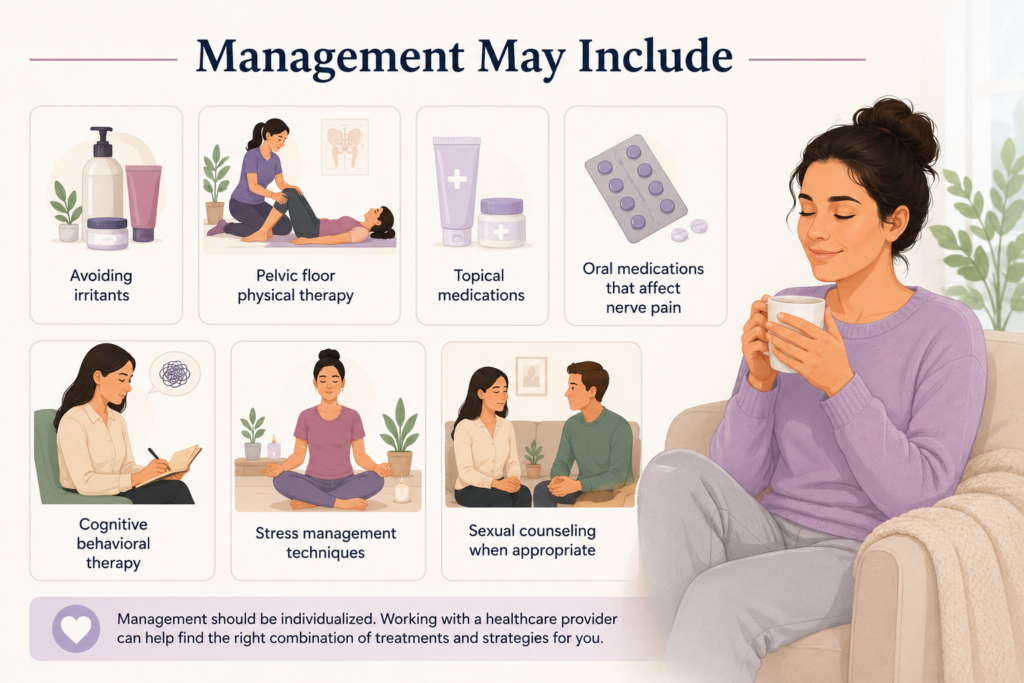
Self-Care Measures
Some people find symptom relief by:
• Wearing loose-fitting cotton underwear
• Avoiding scented soaps and feminine hygiene products
• Using gentle, fragrance-free cleansers
• Avoiding prolonged pressure on the vulvar area
• Using water-based lubricants when appropriate
• Applying cool compresses during symptom flares
These measures do not cure vulvodynia but may help reduce irritation.
When Should You Seek Medical Attention?
Consider medical evaluation if:
• Burning or vulvar pain lasts longer than a few weeks
• Symptoms repeatedly return despite treatment
• You continue to experience symptoms despite negative infection testing
• Sexual activity becomes painful
• Symptoms interfere with daily activities or quality of life
Key Takeaway
Vulvodynia is a chronic pain condition affecting the vulva that can cause burning, stinging, soreness, and discomfort even when examinations and testing appear normal. Because its symptoms often resemble infections or skin conditions, many people experience delays in diagnosis. Fortunately, treatment options are available, and many individuals experience improvement with appropriate evaluation and management.
Final Note
Have you been treated multiple times for yeast infections, BV, or irritation without lasting relief? Persistent vulvar pain deserves medical attention. Keeping track of symptoms, triggers, and previous treatments can help guide discussions with your healthcare provider and support a more accurate diagnosis.
References
- American College of Obstetricians and Gynecologists (ACOG): Persistent Vulvar Pain
- National Vulvodynia Association
- International Society for the Study of Vulvovaginal Disease (ISSVD)
- Mayo Clinic: Vulvodynia Symptoms and Causes
- National Health Service (NHS): Vulvodynia
- American Academy of Family Physicians: Vulvodynia Diagnosis and Management