
Heavy Periods: What is Normal?
Many people assume that heavy menstrual bleeding is simply something they have to live with. While menstrual flow varies from person to person, excessively heavy periods are not always normal and can sometimes indicate an underlying medical condition.
Understanding what is considered normal menstrual bleeding can help you recognize when it may be time to speak with a healthcare professional.
What Is a Normal Period?
A typical menstrual period lasts between 2 and 7 days and occurs approximately every 21 to 35 days.
Normal menstrual bleeding generally:
• Lasts less than 7 days
• Does not interfere significantly with daily activities
• Does not cause severe fatigue or symptoms of anemia
• Does not require changing menstrual products unusually often
Typical Menstrual Cycle
| Characteristic | Typical Range |
|---|---|
| Cycle length | 21–35 days |
| Period duration | 2–7 days |
| Average blood loss | Approximately 30–40 mL |
| Heavy bleeding threshold | More than 80 mL per cycle |
Because most people do not measure blood loss, healthcare professionals often rely on symptoms rather than exact volume.
What Is Considered a Heavy Period?
Heavy menstrual bleeding, sometimes called menorrhagia, refers to bleeding that is excessive or interferes with physical, social, emotional, or daily activities.
Signs of heavy menstrual bleeding may include:
• Bleeding lasting longer than 7 days
• Soaking through a pad or tampon every hour for several consecutive hours
• Needing to use multiple menstrual products at the same time
• Frequently changing menstrual products overnight
• Passing large blood clots
• Limiting work, school, exercise, or social activities because of bleeding
• Symptoms of anemia such as fatigue, weakness, dizziness, or shortness of breath
Normal vs Heavy Periods
| Feature | Usually Normal | May Be Heavy |
|---|---|---|
| Duration | 2–7 days | More than 7 days |
| Pad or tampon changes | Every 3–6 hours | Every 1–2 hours or less |
| Overnight bleeding | Usually manageable with routine product changes | Frequent nighttime changes or leaking through products |
| Blood clots | Small, occasional clots | Large or frequent clots |
| Impact on daily life | Minimal disruption | Interferes with work, school, exercise, or social activities |
| Energy levels | No significant symptoms | Fatigue, weakness, dizziness, or symptoms of anemia |
| Menstrual flow | Consistent and manageable | Feels difficult to control or significantly heavier than usual |
Common Causes Of Heavy Periods
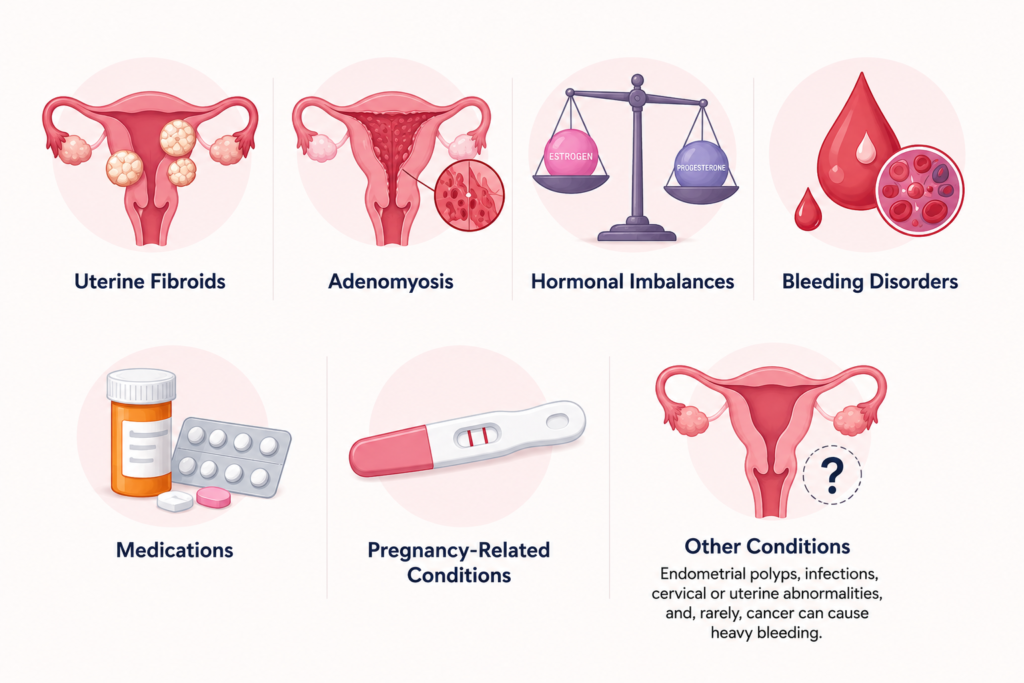
1. Uterine Fibroids
Fibroids are noncancerous growths of the uterus that can cause:
• Heavy bleeding
• Pelvic pressure
• Frequent urination
• Painful periods
2. Adenomyosis
Adenomyosis occurs when tissue similar to the uterine lining grows into the muscular wall of the uterus.
Symptoms may include:
• Heavy bleeding
• Severe cramping
• Pelvic pain
3. Hormonal Imbalances
Hormonal changes can affect how the uterine lining builds up and sheds.
Examples include:
• Polycystic ovary syndrome (PCOS)
• Thyroid disorders
• Perimenopause
4. Bleeding Disorders
Some individuals have inherited bleeding disorders that may first become noticeable during menstruation.
One example is von Willebrand disease.
Can Heavy Periods Cause Anemia?
Yes.
Heavy menstrual bleeding is one of the most common causes of iron deficiency anemia.
Symptoms may include:
• Fatigue
• Weakness
• Shortness of breath
• Dizziness
• Pale skin
• Headaches
When Should You Seek Medical Attention?
• Bleed longer than 7 days
• Frequently soak through menstrual products every hour
• Pass large blood clots
• Experience severe fatigue or dizziness
• Develop symptoms of anemia
• Have bleeding between periods
• Notice sudden changes in your menstrual pattern
• Have heavy bleeding after menopause
Seek Urgent Medical Attention If:
• You are soaking through multiple pads per hour
• You feel faint or lose consciousness
• You experience severe dizziness
• Heavy bleeding occurs during pregnancy
How Are Heavy Periods Evaluated?
If heavy bleeding persists, a healthcare professional may recommend further evaluation to determine the cause. Medical evaluation often begins with a review of symptoms, menstrual history, medications, and a physical examination.
Laboratory Testing
Possible tests may include:
| Possible Test | Purpose |
| Complete blood count (CBC) | Evaluate for anemia |
| Iron studies | Assess iron deficiency |
| Pregnancy test | Rule out pregnancy |
| Thyroid function tests | Evaluate thyroid disorders |
| Coagulation studies | Assess for bleeding disorders |
Imaging
A pelvic ultrasound may be recommended to evaluate for:
• Fibroids
• Adenomyosis
• Ovarian abnormalities
• Other structural causes of bleeding
Treatment Depends on the Cause
Treatment varies depending on the underlying diagnosis and individual circumstances.
Options may include:
• Observation
• Iron supplementation
• Hormonal therapies
• Nonhormonal medications
• Procedures to treat fibroids or other structural causes
• Surgical treatment in selected cases
The most appropriate approach depends on age, symptoms, medical history, and reproductive goals.
Key Takeaway
A heavy period is not simply defined by how much bleeding occurs but by how the bleeding affects your health and daily life. If menstrual bleeding is causing fatigue, disrupting daily activities, or requiring frequent product changes, it may be worth discussing with a healthcare professional. Many causes of heavy menstrual bleeding can be identified and effectively treated.
Final Note
Do your periods seem heavier than they used to be? Tracking the duration of bleeding, how often you change menstrual products, and any associated symptoms can provide valuable information for your healthcare provider and help determine whether further evaluation is needed.
References
- American College of Obstetricians and Gynecologists (ACOG): Heavy Menstrual Bleeding FAQ
- National Institute for Health and Care Excellence (NICE): Heavy Menstrual Bleeding Guideline
- Office on Women’s Health: Heavy Menstrual Bleeding
- American Academy of Family Physicians: Abnormal Uterine Bleeding in Premenopausal Women
- ACOG Practice Bulletin: Management of Abnormal Uterine Bleeding Associated With Ovulatory Dysfunction
- Mayo Clinic: Menorrhagia (Heavy Menstrual Bleeding)
- Centers for Disease Control and Prevention: Von Willebrand Disease and Women