
PMS vs PMDD: Understanding the Difference
Many people experience physical or emotional changes before their menstrual period. For some, these symptoms are mild and manageable. For others, they can become severe enough to disrupt work, school, relationships, and daily life. Understanding the difference between Premenstrual Syndrome (PMS) and Premenstrual Dysphoric Disorder (PMDD) can help individuals recognize when symptoms may warrant medical evaluation and treatment.
What Is PMS?
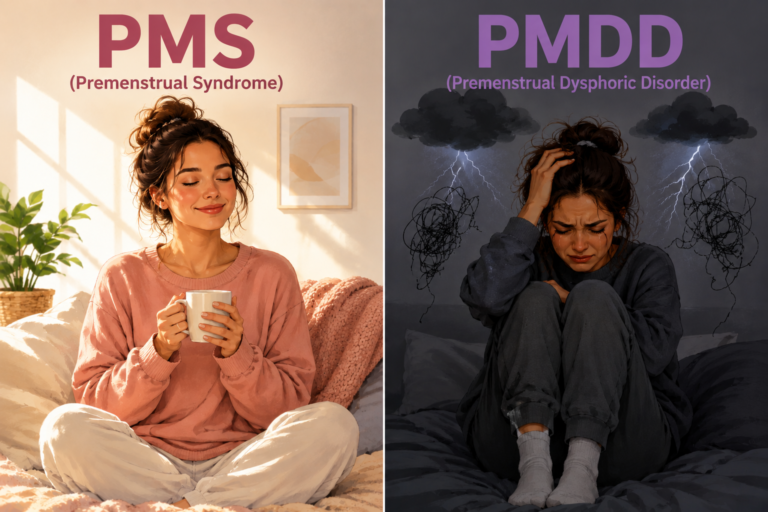
Premenstrual Syndrome (PMS) refers to a group of physical, emotional, and behavioral symptoms that occur during the days or weeks before a menstrual period and improve once menstruation begins. PMS is common and can vary significantly from person to person.
Common PMS symptoms include:
• Bloating
• Breast tenderness
• Fatigue
• Headaches
• Food cravings
• Mood swings
• Irritability
• Anxiety
• Difficulty concentrating
• Changes in sleep patterns
Symptoms typically begin after ovulation and improve within a few days of the start of menstruation.
What Is PMDD?
Premenstrual Dysphoric Disorder (PMDD) is a much more severe form of premenstrual symptoms. PMDD is recognized as a medical condition that can significantly affect emotional well-being, relationships, work performance, and quality of life.
While PMDD can include many of the same physical symptoms seen with PMS, emotional and mood-related symptoms are typically much more severe.
Common PMDD symptoms include:
• Severe irritability or anger
• Marked mood swings
• Anxiety or feelings of tension
• Depressed mood or hopelessness
• Feeling overwhelmed or out of control
• Loss of interest in usual activities
• Difficulty concentrating
• Fatigue or low energy
• Sleep disturbances
• Appetite changes
• Physical symptoms such as bloating, breast tenderness, or muscle aches
Symptoms occur during the week or two before menstruation and improve shortly after the period begins
PMS vs PMDD: Key Differences
| Feature | PMS | PMDD |
|---|---|---|
| Symptom severity | Mild to moderate | Moderate to severe |
| Emotional symptoms | Present but usually manageable | Often intense and debilitating |
| Impact on daily life | Usually limited | Significant interference with work, school, or relationships |
| Depression or hopelessness | Less common | Common |
| Irritability or anger | Mild to moderate | Often severe |
| Diagnostic criteria | Symptom-based | Requires specific diagnostic criteria |
| Need for medical treatment | Sometimes | Often beneficial |
The primary difference is not the type of symptoms but the severity and impact on daily functioning. PMDD can significantly impair quality of life, whereas PMS symptoms are generally less disruptive.
How Is PMDD Diagnosed?
There is no blood test, imaging study, or laboratory test that confirms PMDD. Diagnosis is based on symptom patterns over time. Healthcare professionals often recommend tracking symptoms daily for at least two menstrual cycles.
According to DSM-5 criteria, PMDD requires:
• At least five symptoms during the week before menstruation
• Improvement shortly after menstruation begins
• Significant interference with daily activities or relationships
• At least one prominent mood-related symptom such as depression, anxiety, irritability, or mood swings
Why Does PMDD Occur?
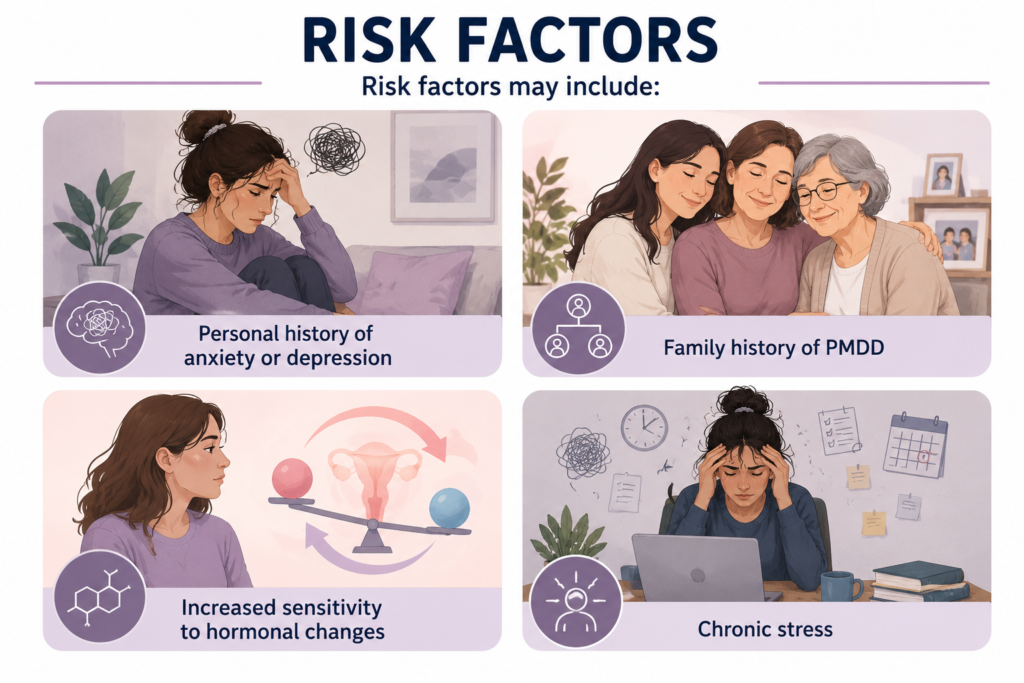
Researchers do not believe PMDD is caused by abnormal hormone levels. Instead, evidence suggests that some individuals have an increased sensitivity to the normal hormonal fluctuations that occur during the menstrual cycle. These hormonal changes may affect neurotransmitters such as serotonin, which plays a key role in mood regulation.
What Are Some Treatment Options?
Treatment depends on symptom severity and individual preferences. The American College of Obstetricians and Gynecologists (ACOG) recommends a multimodal approach when needed.
Potential management strategies may include:
• Regular exercise
• Adequate sleep
• Stress management techniques
• Cognitive behavioral therapy (CBT)
• Selective serotonin reuptake inhibitors (SSRIs)
• Hormonal contraceptives in selected patients
• Symptom tracking and lifestyle modifications
Treatment should always be individualized and discussed with a healthcare professional.
When Should You Seek Medical Attention?
Consider speaking with a healthcare professional if:
• Symptoms interfere with work, school, or relationships
• Mood symptoms become severe
• You experience depression, hopelessness, or anxiety before your period each month
• Symptoms are worsening over time
• You are unsure whether your symptoms represent PMS, PMDD, or another condition
If you experience thoughts of self-harm or suicide, seek immediate emergency medical care or contact emergency services. PMDD can be associated with significant emotional distress and should not be ignored.
Key Takeaway
PMS and PMDD share many symptoms, but PMDD is substantially more severe and can significantly affect daily life. If monthly symptoms are causing major emotional distress, affecting relationships, or interfering with normal activities, it may be more than typical PMS. Recognizing the difference is the first step toward getting appropriate support and treatment.
Final Note
Do your symptoms seem worse than typical PMS? Tracking your symptoms over several menstrual cycles can provide valuable information and help guide discussions with your healthcare provider. If premenstrual symptoms are affecting your quality of life, consider seeking professional evaluation to explore possible causes and treatment options.
References
- American College of Obstetricians and Gynecologists (ACOG) PMS FAQ
- American College of Obstetricians and Gynecologists (ACOG) Management of Premenstrual Disorders Guideline
- Johns Hopkins Medicine: Premenstrual Dysphoric Disorder (PMDD)
- National Institute of Mental Health (NIMH): Premenstrual Dysphoric Disorder
- WomensHealth.gov: Premenstrual Dysphoric Disorder (PMDD)
- StatPearls: Premenstrual Dysphoric Disorder
- NCBI Bookshelf: DSM Diagnostic Criteria for PMDD
- ACOG Clinical Practice Guideline: Management of Premenstrual Disorders
- Mayo Clinic: Premenstrual Syndrome (PMS) Symptoms and Causes
- Cleveland Clinic: Premenstrual Dysphoric Disorder (PMDD)